Wave Hill Station
Sam Croker, the station manager they called "Greenhide Sam," named the place after the sharp undulations of the plateau caught his eye. It was 1891, and Wave Hill was already nearly a decade old, a sprawling cattle run on the high open downs of the Northern Territory where basalt plains rolled under Mitchell grass and the Victoria River watered the western boundary. The Gurindji people had known this country for roughly 60,000 years before Nathaniel Buchanan drove 1,000 head of cattle across it in 1884. The collision between those two timescales would define everything that followed.
Empire of Grass and Cattle
Wave Hill Station was established in 1883 by Nathaniel Buchanan, a renowned explorer and bushman who took delivery of his first thousand head of cattle in May 1884. By late 1885, another 3,000 had been overlanded from Cloncurry in Queensland. The property grew with astonishing speed. By 1901 it carried 20,000 head; by 1907, an estimated 58,000. In 1904, a droving feat moved 20,000 cattle from Wave Hill to Killarney Station near Narrabri in New South Wales, a journey that took eighteen months. Two years later, William Philips set a droving record by overlanding 1,260 bullocks some 2,100 miles to Burrendilla near Charleville in just 32 weeks. The scale of these operations was staggering even by outback standards. When Buchanan put the property up for auction in 1894, he advertised 1,100 square miles of high open downs, basalt plains with rich black soil, 15,000 cattle, and horses. His brother William bought it, only to face a devastating tick infestation that killed cattle and closed the Western Australian border to Wave Hill stock in 1896.
The Vestey Years
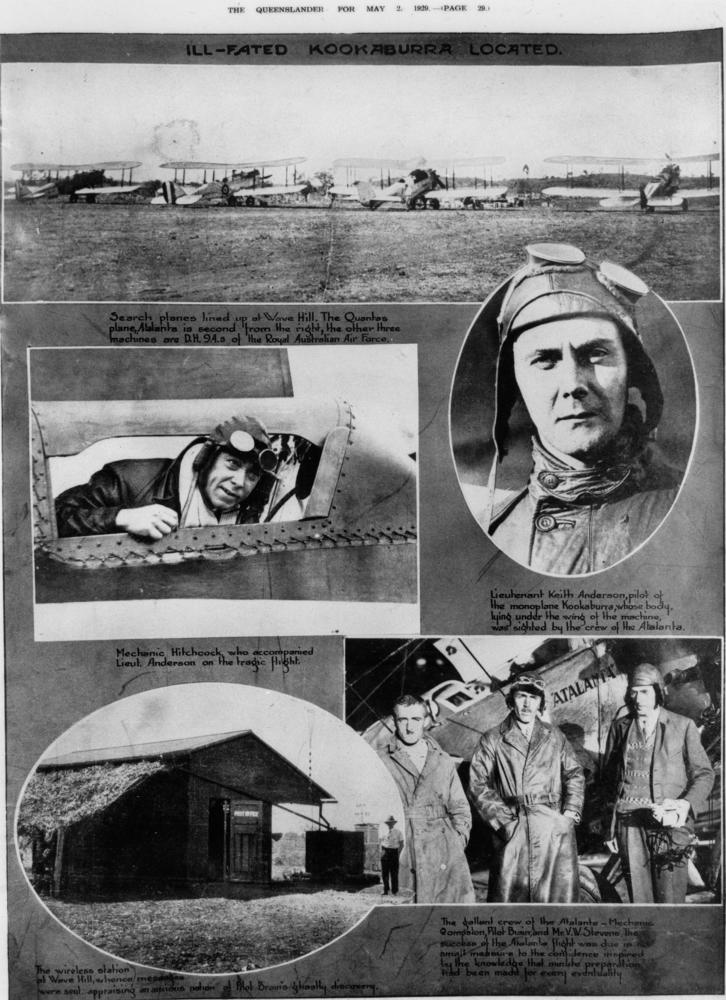
Buchanan died in 1901, and by 1914 the station had passed to the Union Cold Storage Company, part of the British-owned Vestey Group. The sale price reflected a property advertised at 10,415 square miles with 75,000 cattle and 1,400 horses. Under Vestey ownership, Wave Hill endured a relentless cycle of droughts, floods, and disease. The 1924 floods swept away buildings, plant, and stock worth thousands of pounds, forcing the construction of a new homestead on safer ground. A wireless station built in 1925 could reach Camooweal 500 miles away and towns as distant as Darwin and Townsville. When Charles Kingsford Smith's aircraft the Southern Cross vanished in April 1929 during a flight from Sydney to Wyndham, the Wave Hill wireless played a role in the search. The rescue plane Kookaburra, which had been expected to refuel at Wave Hill, was later found crashed in desert country to the southeast, its pilot Keith Anderson dead alongside his mechanic R. Hitchcock. Droughts in 1932 and 1936 devastated the herd, and the 1954 drought forced six mobs of roughly 1,300 cattle each on a 400-mile trek to Helen Springs Station, with only 60 percent expected to survive.
The Workers Who Built the Station
Behind the cattle numbers and droving records stood the Gurindji people, whose labor sustained Wave Hill for generations under conditions that were, by any measure, exploitative. A 1946 report by anthropologists Catherine and Ronald Berndt exposed the reality: Aboriginal children under twelve working illegally, inadequate food and housing, sexual abuse of Aboriginal women, no safe drinking water. Workers lived in humpies made of corrugated iron, without floors, lighting, sanitation, or cooking facilities. As early as 1938, Aboriginal workers were ready to walk off over a shortage of basic food supplies during the wet season, a violation of the Pastoral Award. The station owners defused the situation by transferring workers to other properties. Yet alongside the exploitation, Wave Hill was also a site of cultural exchange. Aboriginal station workers from different language groups shared songs and performed wajarra, public musical traditions that crossed linguistic boundaries. The station was a place of suffering and resilience simultaneously, a contradiction that would eventually break open.
Walk-off and Reckoning
On 23 August 1966, 200 Gurindji stockmen, house servants, and their families walked off Wave Hill Station under the leadership of Vincent Lingiari. What began as a strike against wages and conditions became a seven-year campaign for the return of traditional lands. The Gurindji settled at Wattie Creek, which they named Daguragu, and refused every incentive to return. The walk-off persisted until 16 August 1975, when Prime Minister Gough Whitlam traveled to Daguragu and symbolically poured soil through Lingiari's hands, returning a portion of the land to its traditional owners. The event was a catalyst for the Aboriginal Land Rights Act 1976, the first Australian legislation allowing Indigenous people to claim freehold title over traditional lands. In 2007, the walk-off route from the old homestead to Daguragu was heritage listed. In 2020, a native title determination granted the Gurindji people rights over 5,000 square kilometers of Wave Hill Station land. The station still operates as a cattle property today, its pastoral lease held by the Oxenford family's Gambamora Industries, but the story it is remembered for has nothing to do with cattle.
From the Air
Located at 17.39S, 131.12E in the remote Victoria River region of the Northern Territory. The station is visible as a large pastoral property on high open downs with basalt plains, bordered by the Victoria River to the west and the Camfield River to the east. The heritage-listed walk-off route runs from the old homestead to the Daguragu community. Nearest airfield is Katherine (YPTN), approximately 460 km northeast. Darwin Airport (YPDN) lies about 550 km north. Fly at 3,000-5,000 ft AGL for perspective on the scale of this vast pastoral lease. Best visibility in the dry season (April-October).