Wave Organ
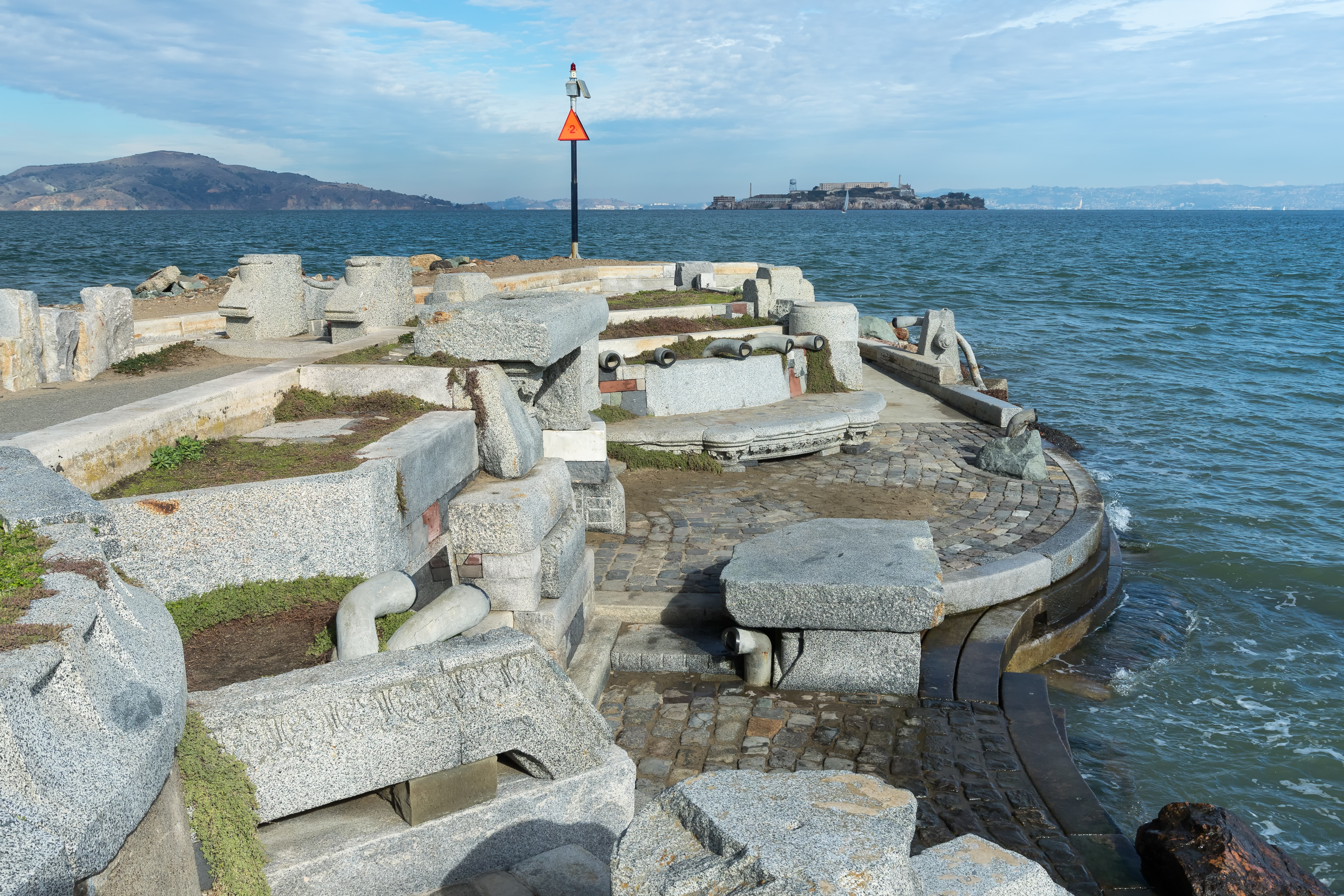
Walk to the end of a narrow jetty past the Golden Gate Yacht Club, sit on a bench made from cemetery stone, and press your ear to a pipe. What you hear is the San Francisco Bay itself -- rumbling, gurgling, hissing, sloshing through 25 PVC tubes that translate the tide into sound. The Wave Organ is not loud. It does not perform on command. You have to come at high tide and listen carefully, which is exactly the point.
Oppenheimer's Last Gift
The Wave Organ was conceived by Peter Richards, an installation artist and artist-in-residence at the Exploratorium, San Francisco's legendary science museum. Richards worked with stonemason George Gonzales to build the sculpture on the shore of San Francisco Bay in May 1986. The project is dedicated to Frank Oppenheimer, the Exploratorium's founding director, who led the fundraising efforts for the Wave Organ but died seven months before construction began. Oppenheimer had spent his career making science tangible and accessible -- the Wave Organ extends that mission into the realm of art, turning the invisible physics of tides into audible experience.
Stones from the Dead
The Wave Organ sits at the end of a spit of land extending from the Golden Gate Yacht Club, commanding a panoramic view across the narrow channel toward the Fort Mason piers and Crissy Field. What makes the structure haunting beyond its sound is its material: the stone platforms and benches where visitors sit were salvaged from the demolished Laurel Hill Cemetery. You listen to the bay while sitting on stone that once marked graves -- a reminder that this city has always been comfortable recycling its past. The cemetery, once one of San Francisco's largest, was removed in the mid-twentieth century as the city expanded, its remains scattered and its stones repurposed for seawalls, gutters, and one remarkable instrument.
How the Bay Speaks
Through its 25 PVC pipes, positioned at different depths and angles, the Wave Organ captures the bay's movement and channels it to listening stations where visitors can sit and hear. The sounds vary with the tide: at high tide, the organ produces its richest repertoire of rumbles and gurgles. At low tide, it whispers or falls nearly silent. The effect is meditative rather than dramatic -- this is not a concert but a conversation between the built environment and the natural one, audible only to those who make the effort to walk out to the point and lean in close. The New York Times described the installation's aesthetic as "audio aesthetics a bit removed from the standard do-re-mi."
Finding the Organ
The Wave Organ is wheelchair accessible, with a trailhead at the Marina Green park. The walk out to the point is part of the experience -- the city recedes behind you as the bay opens up ahead. From the organ's stone platforms, you can see the towers of the Financial District, the masts of the yacht clubs, the eucalyptus groves of Crissy Field. But the real view is acoustic. Close your eyes, put your ear to the pipe, and let the bay tell you what it knows. It has been doing this long before Peter Richards gave it a voice, and it will continue long after the last PVC pipe cracks and the cemetery stones finally crumble back to sand.
From the Air
Located at 37.809N, 122.440W at the tip of a jetty extending from the Golden Gate Yacht Club in San Francisco's Marina District. The small stone structure is visible at the water's edge. Nearest airports: KSFO (12nm south), KOAK (11nm east). Best viewed at 1,000-2,000 ft AGL.