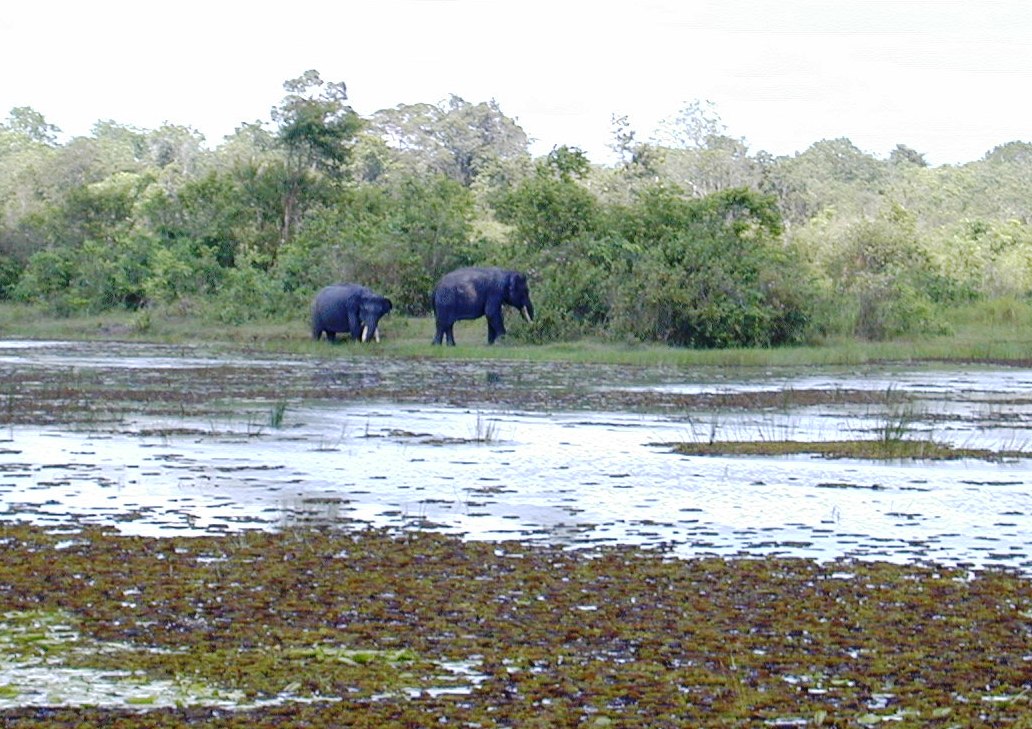
Way Kambas National Park
Ten rhinos have names. Sedah Mirah, Rosa, Bina, Ratu, Delilah, Anggi, Andalas, Harapan, Andatu, and Indra -- the newest, a male calf born in November 2023. They live behind closed gates in the Sumatran Rhino Sanctuary at Way Kambas National Park, a patch of lowland forest in Lampung province where some of Earth's rarest animals make what may be their final stand. The sanctuary is not open to the public. These ten rhinos, each known individually, represent an outsized share of a species that numbers fewer than fifty individuals in the wild. That they exist at all is a story of stubbornness against collapse.
A Forest That Grew Back
Way Kambas is not pristine wilderness. Extensive logging in the 1960s and 1970s stripped the park's lowland rainforest and swamp forest down to stumps, and what stands today is largely secondary growth -- younger trees filling the gaps left by industrial chainsaws. That this regrowth has been vigorous enough to support Sumatran elephants, tigers, tapirs, and hundreds of bird species speaks to the resilience of tropical ecosystems when given half a chance. The sandy shores are lined with casuarina trees, while deeper in the park, dipterocarps and mangroves compete for space. In 2016, Way Kambas earned recognition as an ASEAN Heritage Park, a designation that affirms what the wildlife already knew: this forest, scarred as it is, remains irreplaceable.
Ghosts in the Undergrowth
The numbers tell a story of slow erosion. An estimated 247 Sumatran elephants roamed the park in 2015. The Sumatran tiger population declined from 36-40 individuals in 2000 to fewer than 30. Among the 405 bird species recorded here are Storm's stork and the great argus, species that need deep forest and quiet water to survive. Then there are the wells -- thousands of them, left behind when communities were relocated out of the park in 1984. These abandoned shafts became death traps for baby elephants, rhinos, and tigers that stumbled into them. Between 2008 and 2010, conservationists sealed roughly 2,000 wells, plugging one lethal hazard while others persisted. Poaching has been a chronic threat, sometimes involving soldiers and, in a 2002 case, military officers.
The Rhino's Last Bet
The Sumatran Rhino Sanctuary was founded with five animals, most transferred from zoos to large enclosures that mimic natural habitat. Since 1997, Rhino Protection Units -- trained teams of four to six people -- have patrolled the park's key areas at least fifteen days each month, deactivating traps and tracking illegal intruders. The International Rhino Foundation worked in 2019 and 2021 to capture three additional wild rhinos and bring them into the breeding program, a calculated gamble that concentrating the species' survivors might prevent genetic collapse. The sanctuary's population has grown to ten. Every birth is a headline; every death would be a crisis. This is conservation at its most intimate and its most desperate, measured not in hectares protected but in individual animals named and watched.
Elephants at the Edge
Beyond the sanctuary's fences, a different conflict plays out along the park's borders. Wild elephants raid surrounding farms, and the damage is not abstract: a 1990s study documented over 45 hectares of corn, rice, cassava, and other crops destroyed, along with some 900 coconut and banana trees across eighteen villages. Over twelve years, elephants killed or injured 24 people near the park. Villagers dig trenches, guard fields through the night, and light bonfires to keep herds at bay. Forest rangers deploy tame elephants from the Elephant Conservation Centre -- established in the 1980s -- to drive wild herds back into the forest. The Centre's elephants also work in ecotourism, patrol duty, and breeding programs. In an unexpected sideline, some have learned to paint, and their artwork is sold online through a partnership with the National Geographic Society, with half the proceeds supporting elephant conservation across Asia.
Holding the Line
Way Kambas exists in tension. It is a regenerating forest doing the work of an old-growth one, sheltering species that cannot afford to wait for ecological perfection. During 2016 and 2017 alone, the Elephant Conservation Centre celebrated six new calves. But the park's borders are porous, its wildlife populations fragile, and the pressures of a growing human population relentless. What makes Way Kambas remarkable is not that it has solved these problems but that people keep showing up to fight them -- the patrol teams walking fifteen days a month through leech-filled undergrowth, the keepers who know each rhino by name, the villagers who light fires at night so elephants will turn back into the trees.
From the Air
Located at 4.94S, 105.76E in southern Sumatra's Lampung province. The park's lowland forest and swamp areas are visible as a green expanse along the coast, contrasting with surrounding agricultural land. Nearest major airport is Radin Inten II (WIAT) near Bandar Lampung, approximately 100 km to the west. Best viewed at 5,000-10,000 feet for forest canopy detail. The Seputih river system and coastal mangroves mark the park's boundaries.