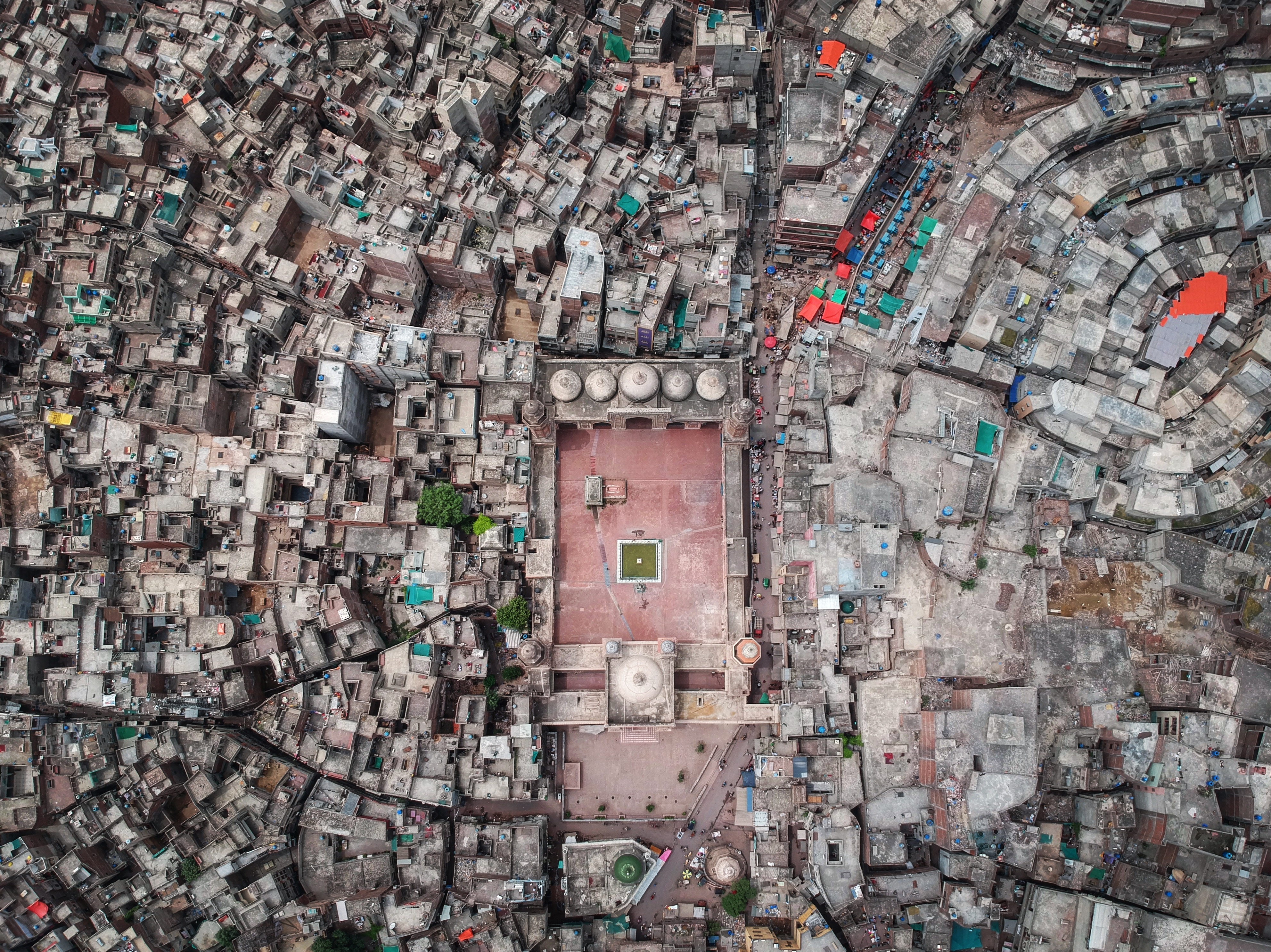
Wazir Khan Mosque
Step through the arched iwan of Wazir Khan Mosque and the noise of Lahore's Walled City drops away. What replaces it is color -- an almost overwhelming cascade of cobalt blue, turquoise, saffron, and green, rendered in glazed tiles so precisely cut and fitted that nearly four centuries of Punjab's punishing summers have not loosened them. This is kashi-kari, the Punjabi tradition of faience mosaic, and no building in the Mughal world displays it on this scale. The mosque sits along the Shahi Guzargah, the Royal Road that once carried emperors and nobles from the Delhi Gate to the Lahore Fort. Its commissioner was no emperor, though -- he was Wazir Khan, the governor of Punjab under Shah Jahan, and his ambition was not to glorify himself but to enshrine the tomb of a beloved Sufi saint named Miran Badshah.
A Governor's Grand Commission
Construction began in 1634, during the golden age of Mughal building when Shah Jahan was simultaneously raising the Taj Mahal in Agra. Wazir Khan drew artisans from his hometown of Chiniot, a city renowned across the Punjab for its woodcarvers and stonemasons. The chief architect's name has been lost to history -- none of the inscriptions adorning the mosque credit a designer, though several prominent builders were active in Lahore at the time, including Ali Mardan Khan and Ahmad Lahori. Seven years of labor produced a mosque measuring 279 by 159 feet, raised on an elevated plinth of brick laid in kankar lime. It immediately supplanted the older Maryam Zamani Mosque as Lahore's principal site for Friday congregational prayers. The complex was more than a place of worship. A row of shops flanking the entrance housed calligraphers and bookbinders -- the Calligrapher's Bazaar -- and merchants rented additional spaces along the northern and eastern facades. Revenue from these enterprises funded the mosque as a waqf, an endowment meant to sustain the building in perpetuity.
Tiles That Speak
What sets Wazir Khan apart from every other Mughal mosque is its surface treatment. Where the Shah Jahan Mosque in Sindh relies on geometric tile patterns, Wazir Khan layers kashi-kari tilework with elaborate buon frescoes across nearly every interior surface. The facade of the entry portal is covered with calligraphy -- Quranic verses, sayings of the Prophet Muhammad, and calligraphic insignias -- all rendered in glazed tile by master calligraphists. Above the iwan entrance, verses from the Quran's Surah al-Baqara appear in the hand of Haji Yousaf Kashmiri. Flanking panels contain Persian quatrains by the calligraphist Muhammad Ali, a disciple of the Sufi saint Mian Mir. Inside the prayer hall, the mosque's largest dome rests on a square pavilion in the Persian Char Taq form. Look up and the frescoes surprise: paired trees, pitchers of wine, platters of fruit -- visual allusions to the Islamic concept of Paradise. The arched entrance niche features one of Lahore's earliest muqarnas, the honeycomb vaulting found at the Alhambra in Spain and on imperial mosques in Iran, a reminder that Mughal artistry drew from an astonishingly wide geography.
Centuries of Neglect and Rediscovery
By the late 1880s, John Lockwood Kipling -- father of Rudyard -- was documenting the mosque's decorative splendor in the Journal of Indian Art, even as the building was beginning to deteriorate. British scholar Fred Henry Andrews noted in 1903 that it had fallen into serious disrepair. The twentieth century was not kind to the surrounding neighborhood either. Illegally constructed shops encroached on the mosque from every direction, shrinking the historic Wazir Khan Chowk and blocking sightlines to the facade. Tangled power lines draped across the minarets. By the time restoration began in earnest, the mosque had become almost invisible within the dense fabric of the Walled City. In 1993, UNESCO placed the mosque on its World Heritage Tentative List. Formal restoration began in 2004 under the Government of Punjab, and in 2007 the Aga Khan Trust for Culture joined the effort. The project extended well beyond the mosque itself. Illegally built shops were removed, the Wazir Khan Chowk was rehabilitated, and power lines were buried underground.
The Living Mosque
Today the mosque remains an active place of worship, not a museum relic. The courtyard, flanked by 32 khanas -- small study cloisters where religious scholars once worked -- still fills with worshippers for Friday prayers. The Calligrapher's Bazaar still operates along the entrance corridor, maintaining a tradition that predates the mosque's completion. In 2015, the Lahore University of Management Sciences partnered with USAID to create a full 3D mapping of the site, preserving its intricate surfaces digitally even as physical restoration continues. The tomb of Miran Badshah, the Sufi saint whose shrine prompted Wazir Khan to build the mosque in the first place, still occupies the courtyard. Pilgrims still visit. The tiles still catch the light. What Wazir Khan built as an act of devotion nearly four hundred years ago endures as perhaps the finest example of kashi-kari tilework in existence -- a building where every surface has something to say, if you stand still long enough to read it.
From the Air
Located at 31.58N, 74.32E in the heart of Lahore's Walled City, Punjab, Pakistan. From altitude the Walled City is visible as a dense urban cluster south of the Lahore Fort. The mosque's courtyard and domes are identifiable within the tight street grid. Nearest major airport is Allama Iqbal International Airport (OPLA), approximately 15 km to the southeast. Recommended viewing altitude 3,000-5,000 feet AGL for Walled City context.