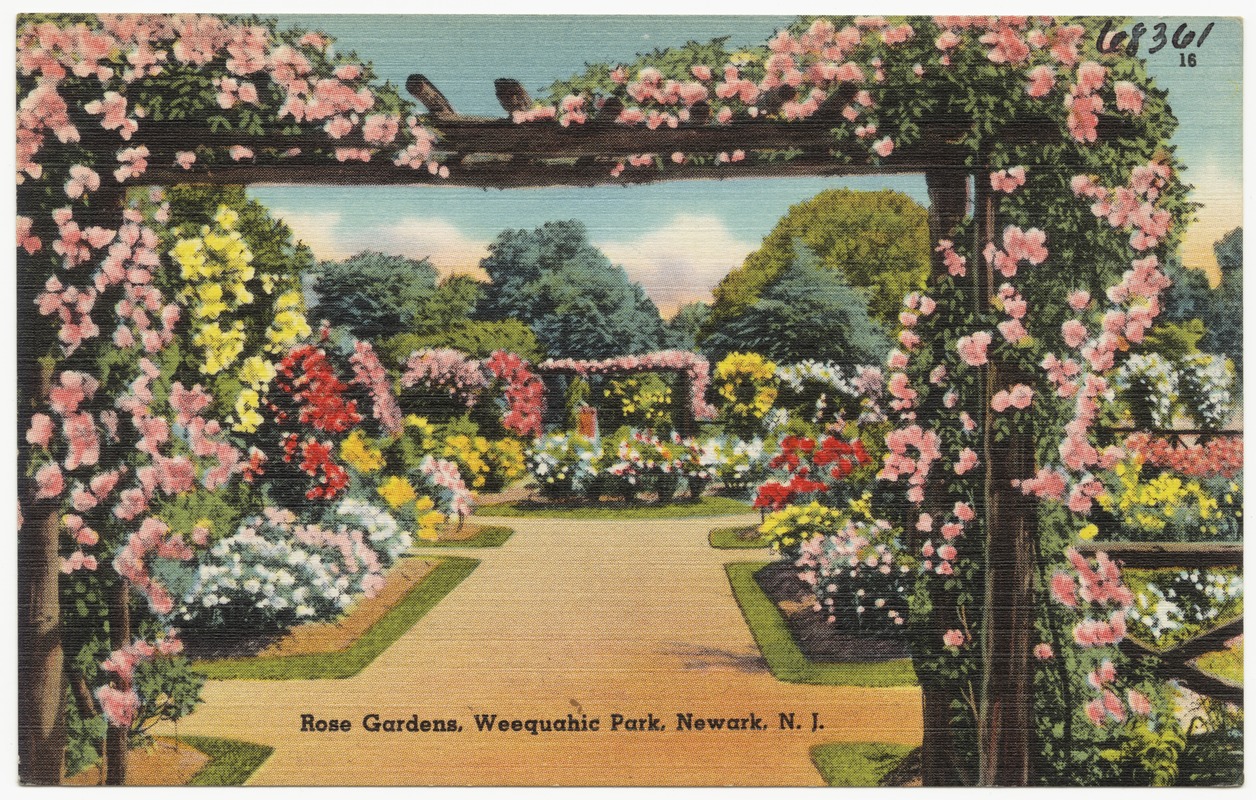
Weequahic Park
On May 20, 1668, the founders of Newark and Elizabeth climbed a hill overlooking a spring-fed cove and entered what they called "a religious covenant to protect their generation and 1,000 generations to come." That hill -- Divident Hill, named not from a typo but from an archaic word meaning "divided" -- still stands in Weequahic Park, crowned by a miniature Roman-style stone temple. The Lenape had recognized this spot long before any European arrived; it lay at the border between the Hackensack and Raritan bands. Three and a half centuries later, the hill's role as a boundary marker endures in stone and story.
From Fairground to Olmsted Masterpiece
The word Weequahic comes from the Lenni-Lenape language, meaning "head of the cove" -- a reference to the spring-fed lake that once served as a natural boundary between indigenous groups. Before the park existed, this land was the Waverly Fairgrounds, home to the New Jersey State Fair from 1867 to 1898 and a half-mile racing oval where President Ulysses S. Grant watched horse races in 1872. In 1896, the Essex County Park Commission began purchasing land in the area, starting with a 28-acre tract near James Jay Mapes's experimental farm. By 1899, 265 acres of saltwater wetland, farmland, and wooded slopes had been assembled into what was called Weequahic Reservation. The Olmsted Brothers firm -- the same landscape architects who designed Branch Brook Park in Newark -- shaped the grounds into a public park of 311 acres, anchored by an 80-acre lake.
A Lake Born from Engineering
The Olmsted Brothers originally planned to dredge the existing spring-fed wetlands to a depth of 12 feet, but the cost proved prohibitive. Instead, in 1903, a dam was built across the northern end of the lake to stop the flow of Bound Creek from Newark Bay, raising the water level and creating the lake that exists today. Two brooks and several springs still feed it. Fishing remains popular -- largemouth bass, channel catfish, yellow perch, bluegill, and even goldfish inhabit its waters. Encircling the lake is the Weequahic Lake Trail, a 2.2-mile loop surfaced with 100% post-consumer recycled rubber. At 2.2 miles, it is the longest resilient-surfaced track in the world, its red rubberized surface repurposed from a former bridle path that once served the park's equestrian visitors.
Philip Roth's Newark
For generations of Newark residents, Weequahic Park was the backyard of the Weequahic neighborhood, a middle-class community that Philip Roth immortalized in his fiction. In The Plot Against America, Roth set his alternate history in the streets and park of the neighborhood where he grew up, weaving the park's familiar geography into a story about democracy under threat. In 1923, this same park hosted the first American Track and Field championships for women -- a milestone in the history of women's athletics that predated Roth's birth by a decade but spoke to the same spirit of ambition that defined the neighborhood. The park appeared on the National Register of Historic Places on February 12, 2003, recognized for its significance in architecture, community planning, and landscape architecture.
Racing Ovals and Renewal
The old Waverly Racing Oval, built before the 1850s for equestrian competition, survived the transition from fairground to park. What was once a half-mile horse-racing track is now the Rev. Ronald B. Christian Recreation Complex -- a half-mile walking loop surrounding a football field, a 400-meter athletic track, and two softball fields. In the early 2020s, Weequahic Park began serving as the home field for Rutgers University's Scarlet Raiders baseball team. A new community center, the Feldman Middleton Jr. Community Center, opened in 2021, called the "crown jewel" of the South Ward by Governor Phil Murphy at its ribbon-cutting. The park's two conservancies -- the Weequahic Park Association, founded in 1992 by long-distance runners, and the Weequahic Park Sports Authority Conservancy, established in 2012 -- have driven the revival through volunteer labor, youth programs, and environmental stewardship. At the park's western edge, the Weequahic Golf Course claims the title of the oldest public golf course in New Jersey.
From the Air
Weequahic Park is located at approximately 40.702N, 74.203W in Newark's South Ward. From the air, the 80-acre lake dominates the park's center, with the oval-shaped recreation complex clearly visible to the south. The East Coast Greenway runs through the park. Newark Liberty International Airport (KEWR) is immediately east -- less than a mile from the park's boundary. Recommended viewing altitude: 2,000-4,000 feet AGL. The golf course is visible at the western edge.