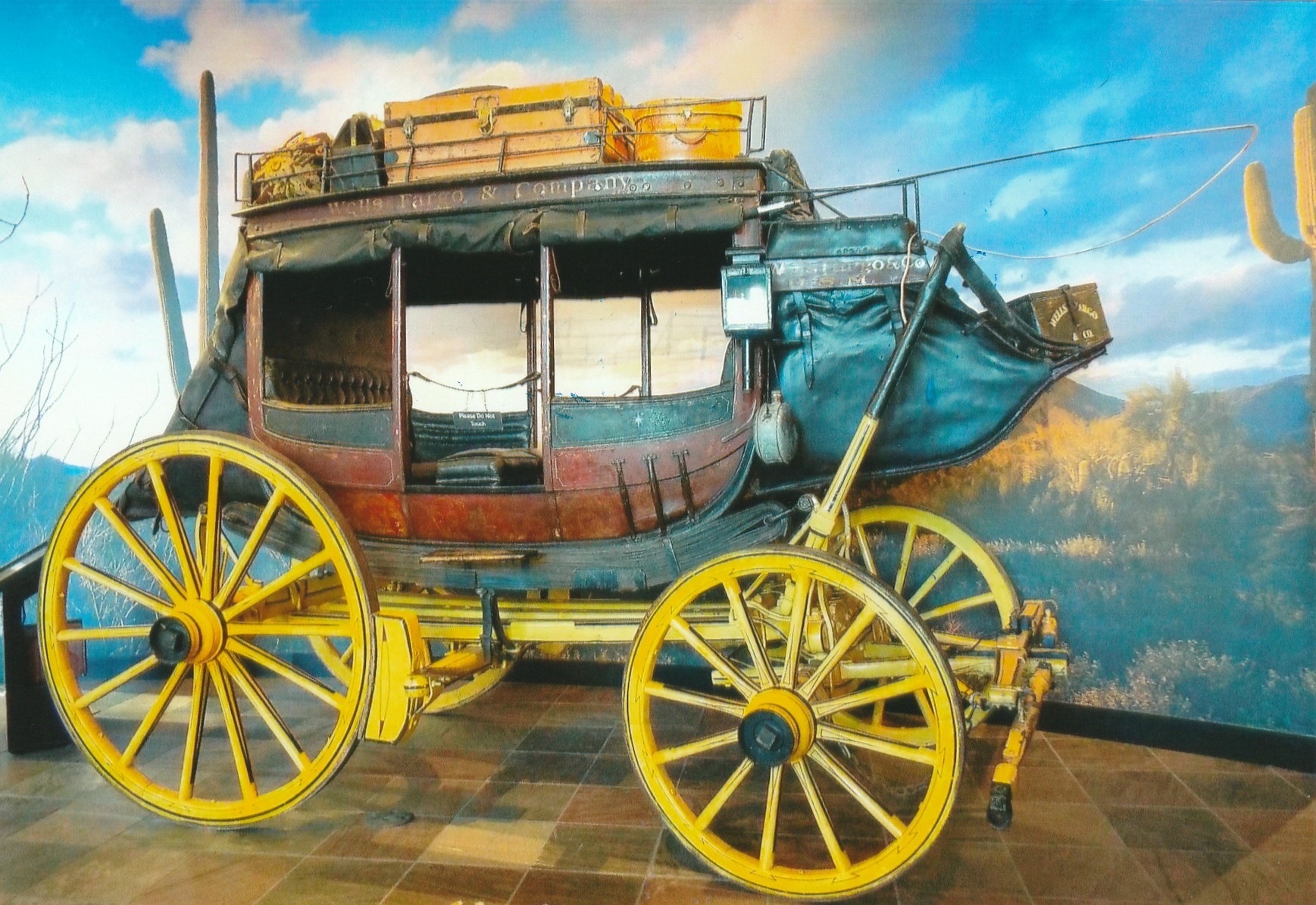
The Brick Vault of Chinese Camp
Most Gold Rush buildings burned. That was the defining fact of early California architecture -- wooden structures packed tight, lit by candles and lanterns, surrounded by dry grass in a Mediterranean climate. Fire moved through mining camps the way rumors did: fast, indiscriminate, and often. The Walkerly brothers understood this when they built their brick commercial building in Chinese Camp in 1849, fitting it with iron doors and iron window shutters that could seal the interior against the infernos consuming everything made of wood. Their pragmatism paid off. The Wells Fargo Express Company Building still stands at the corner of Main Street and Solinsky Alley, California Historical Landmark No. 140, a stubborn survivor in a landscape littered with the ashes of places that did not plan ahead.
Gold Under Iron Shutters
Wells Fargo chose the Walkerly brothers' building for a reason. In the chaos of the Gold Rush, express companies were the arteries of commerce, moving gold dust, letters, and currency between remote mining camps and the financial centers of Sacramento and San Francisco. A company trusted with other people's gold needed a vault, and in a town without banks, a fireproof brick building with iron shutters was the next best thing. The original express agents -- Sol Miller, C. W. H. Solinsky (whose name survives in the alley beside the building), and the Morris brothers -- managed the flow of wealth through Chinese Camp during the peak of the Southern Mines. When Wells Fargo eventually moved its operations elsewhere, the Morris brothers kept the building and converted it into a general store, maintaining their connection to the Adams Express Company as well. Commerce adapted; the brick walls endured.
The Camp That Got Its Name
Chinese Camp earned its name from the large community of Chinese miners who worked the placers along Woods Creek and its tributaries. During the Gold Rush, Chinese immigrants faced systemic discrimination -- the Foreign Miners' Tax of 1850 targeted them specifically, and violence was common. Yet Chinese miners persisted, often working claims that white miners had abandoned as unprofitable, extracting gold through patience and technique where brute force had failed. The settlement that grew around their diggings became one of the more significant communities in the Southern Mines of Tuolumne County. The town's peak population numbered in the thousands, with a main street lined with stores, saloons, and the essential express offices that connected isolated camps to the wider economy. Today, Chinese Camp is an unincorporated community of a few dozen residents, its Gold Rush population a distant memory preserved mainly in the name itself and the handful of structures -- like the Wells Fargo building -- that refused to fall.
The Last Stage Driver
A second marker stands beside the Wells Fargo building, placed by the fraternal order E Clampus Vitus on May 6, 1961. It honors Eddie Webb, born December 17, 1880, in Snelling, California -- one of the last stagecoach drivers in the Mother Lode. Between 1898 and 1902, Webb drove the stage route from Chinese Camp to Coulterville and Groveland, hauling mail, passengers, and freight along mountain roads that were barely more than graded dirt. He drove the first mail stage over the new Shawmut Road, a route that connected mining communities across the rugged terrain south of the Stanislaus River. By the time Webb retired from the reins, automobiles were already appearing on California roads, and the stage lines that had stitched the Gold Country together were unraveling. His marker at the Wells Fargo building connects two eras of transportation -- the express company that moved gold by horseback and the stage driver who carried the last mail before the internal combustion engine made his profession obsolete.
What Brick Remembers
The California Office of Historic Preservation designated the Wells Fargo Express Company Building as Historical Landmark No. 140 on June 6, 1934, recognizing it as one of the oldest surviving commercial structures in the southern Gold Country. The building is unremarkable in the way that survival often is -- no ornamental facade, no grand proportions, just solid brick and iron hardware doing the job they were designed to do for nearly two centuries. Chinese Camp itself sits along State Route 120, the main corridor to Yosemite National Park from the west, and most travelers pass through without stopping. Those who do pause find a ghost of the Gold Rush that is neither restored nor romanticized, just quietly present. The iron shutters still hang on their hinges. The brick still holds its mortar. In a state that has always preferred to tear down and rebuild, the Walkerly brothers' practical little fortress has outlasted nearly everything around it.
From the Air
The Wells Fargo Express Company Building is located at 37.871N, 120.432W in Chinese Camp, Tuolumne County, California. The tiny settlement sits along State Route 120 in the Sierra Nevada foothills at approximately 1,300 feet elevation. From the air, Chinese Camp appears as a small cluster of buildings at the junction of SR 120 and the road to Jacksonville, surrounded by golden grass and scattered oaks. The nearest airport is Columbia Airport (O22), roughly 10 nm to the northeast. Pine Mountain Lake Airport (E45) is approximately 15 nm east. The terrain is gently rolling foothill country with seasonal color changes -- green in spring, golden brown through summer and fall.