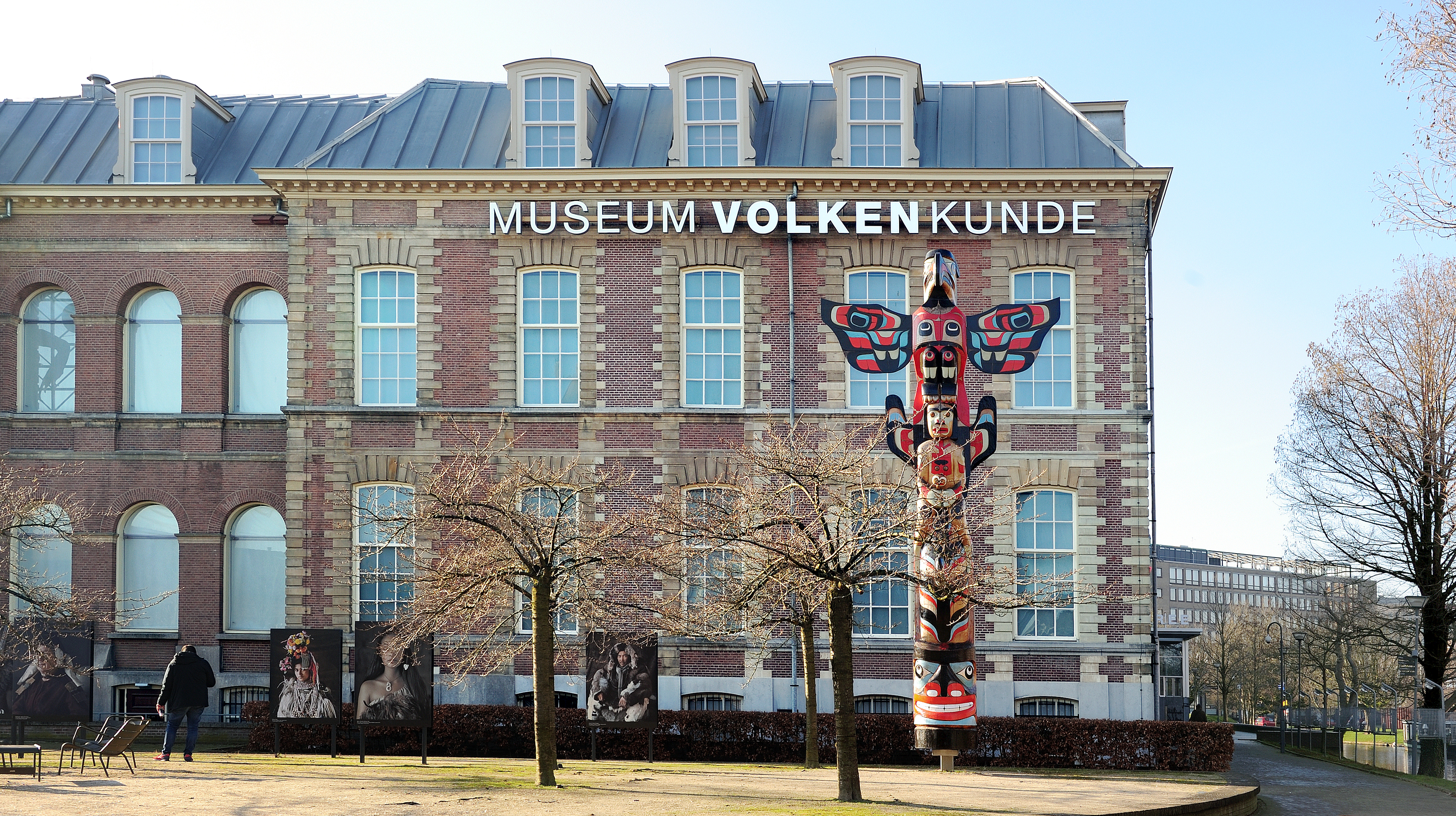
Wereldmuseum Leiden
Philipp Franz von Siebold spent six years on a fan-shaped artificial island in Nagasaki harbor, the only westerner officially permitted in Japan during its two centuries of sakoku isolation. He worked as a physician. He was paid in objects. Patients who could not afford his fees gave him household tools, woodblock prints, books, medical instruments, lacquerware, fishing gear, a kimono, a chest of drawers. By the time the Japanese authorities expelled him in 1829 on suspicion of espionage - he had been quietly mapping the country and collecting forbidden materials - Siebold had assembled more than five thousand objects of everyday Japanese life. He shipped them to Leiden. That collection, the largest and most systematic ethnographic gathering ever to leave Edo-period Japan, became the foundation of the first ethnographic museum in Europe.
The Island and the Doctor
Dejima was 120 meters long and 75 meters wide. It existed for the sole purpose of containing the Dutch East India Company traders that the Tokugawa shogunate permitted to visit Japan twice a year. Everything that passed between Japan and the West for two and a half centuries went through this gate. Siebold, a German physician hired by the Dutch in 1823, was something different from a merchant. He set up a clinic for Japanese patients, taught Dutch medical knowledge to Japanese students - some of whom would become the founders of modern Japanese medicine - and was paid in artifacts because his patients had no other currency to offer. He collected everything: plants for the Leiden Hortus Botanicus, animal specimens for the museum that would become Naturalis, books and maps for himself. The maps got him expelled. Maps of Japan were a state secret, and possessing them was a capital offense for the Japanese officials who had supplied them. Some of those officials were executed. Siebold was banished from Japan and returned to Europe with his collection more or less intact.
Founding the Museum
When Siebold reached the Netherlands in 1830, the Dutch king William I had already been building toward a museum of world cultures. The royal Koninklijk Kabinet van Zeldzaamheden in The Hague held Chinese artifacts from private collections and small Japanese collections purchased in 1826 from Jan Cock Blomhoff - the chief trader at Dejima who had famously and against the rules brought his wife Titia and their infant son to live with him on the island - and in 1832 from the clerk Johannes Gerhard Frederik van Overmeer Fischer. The Siebold gift consolidated all of it. In 1837, the king officially founded the Museum voor Volkenkunde - the Ethnographic Museum - in Leiden, with the four basic principles that defined the institution: collecting, scientific research, public presentation, and education. It was the first such museum in Europe. Siebold himself spent the next decade lobbying other European capitals to found similar institutions, which they did - though always, as he wrote in 1843, with the practical motive of helping their colonial enterprises run more profitably.
What's in the Collection
Two centuries on, the collection has expanded far beyond Japan. The museum holds objects from Africa, China, Indonesia, Korea, Latin America, North America, Oceania, and the broader Asian world. A Māori waka war canoe, kept seaworthy, is occasionally launched onto the canal beside the museum. Yakushi Nyorai, the Healing Buddha, sits in a hall with two other large bronzes brought home from a Tokugawa shogun's mausoleum at the Zōjōji temple in Edo. Pueblo Kachina dolls share gallery space with central African Nkisi nkondi power figures studded with iron nails. The Leiden Plate, a thumb-sized Maya jadeite belt plaque from sixth-century Guatemala covered in glyphs that helped decipher classic Maya writing, sits in its own case. Books of Wizards from the Batak Toba people of Sumatra hold spells written in a script most of their descendants can no longer read.
Sending Things Home
The museum's collection was built during the colonial age, and many objects came to Leiden through the asymmetries of that age. In recent years the institution has begun working to return them. In 2023 the museum began the process of repatriating some of its best-known Indonesian artworks. In 2025 it agreed to return 119 artefacts to Nigeria, including some of the Benin Bronzes - sculptures looted by British forces in the 1897 sack of Benin City and dispersed across European museums in the decades after. The Leiden Plate remains a candidate for return to Guatemala, where it is regarded as an object of national heritage. These returns are not simple. They involve the descendants of the people who made the objects, the descendants of the people who took them, the museums that held them in trust, and the slow uncomfortable work of figuring out what 'in trust' actually means after three or four generations have passed.
The New Name and the Old Question
In 2023 the museum changed its name. Volkenkunde - ethnology - is a nineteenth-century word for what nineteenth-century Europeans did when they studied non-European cultures, and the discipline carried baggage the institution wanted to set down. Wereldmuseum - World Museum - is the new umbrella, shared with the sister institutions in Amsterdam and Rotterdam under the National Museum of World Cultures. The change is more than cosmetic. It signals an attempt to present human cultures as a single field, rather than 'ours' and 'theirs.' Whether a museum founded in 1837 to serve, in its own founder's words, 'a lucrative trade,' can fully become that newer thing is the question the Wereldmuseum is now publicly trying to answer.
From the Air
Wereldmuseum Leiden sits at 52.163°N, 4.483°E, on the Steenstraat just north of the Singel canal that rings Leiden's historic core. The 19th-century classical museum building, with its symmetrical pale-stone facade, faces a small triangular plaza near the central rail station - a useful aviation landmark, as the station tracks run southwest-northeast through the city. Recommended viewing altitude is 1,500-3,000 ft AGL. Nearest airports: Rotterdam The Hague (EHRD) about 14 nm south, Schiphol (EHAM) about 16 nm northeast. Watch Schiphol TMA restrictions.