West Caribbean Airways Flight 708
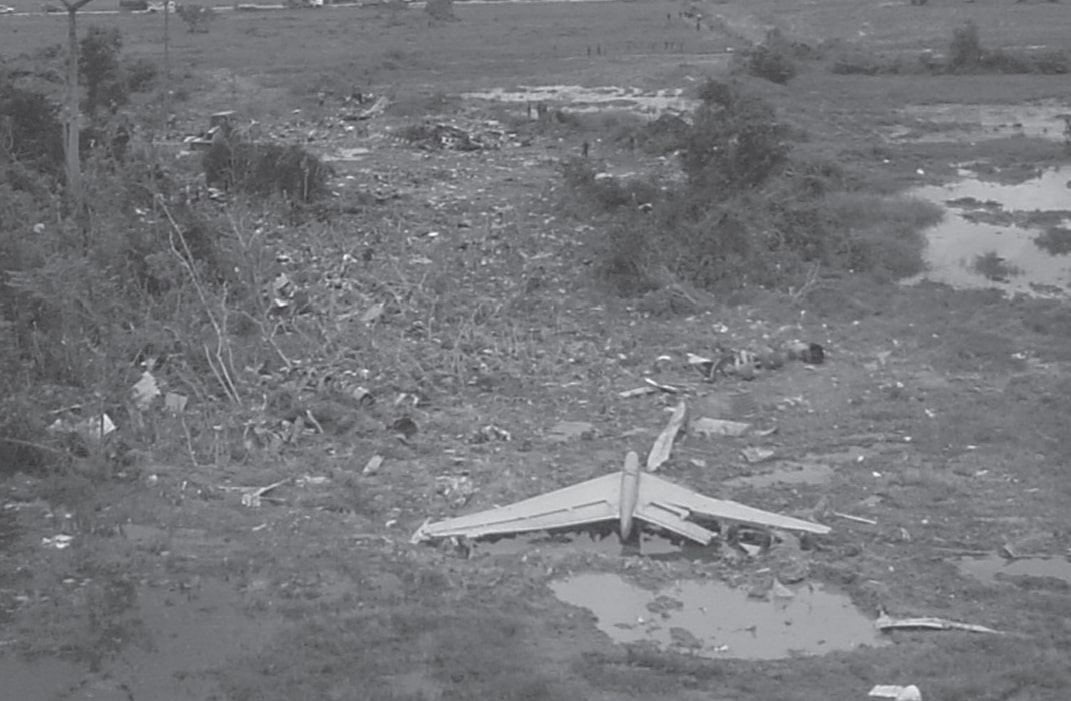
Most of the 152 passengers aboard had spent a week on vacation in Panama. They were tourists from Martinique, returning home through a travel agency called Globe Trotters de Riviere Salee, and their charter flight on a McDonnell Douglas MD-82 was supposed to carry them from Tocumen International Airport in Panama City to Martinique Aime Cesaire International Airport in Fort-de-France. Instead, in the early hours of August 16, 2005, West Caribbean Airways Flight 708 crashed into a cattle ranch near Machiques in western Venezuela, killing all 160 people on board. It was the deadliest aviation disaster of 2005 and the worst in Venezuelan history.
An Airline Unraveling
West Caribbean Airways had been based in Medellin, Colombia, since its founding as a charter service in 1998. The airline specialized in Caribbean routes, flying to San Andres island and points across Central America. But by 2005, the company was in serious trouble. A few months before the crash, Colombian authorities had fined the airline $46,000 for inadequate pilot training and failure to log required flight data. In March 2005, another West Caribbean flight had ended in a fatal accident. The airline had not paid its pilots for nearly six months. On the day of Flight 708's departure, the aircraft was nearly refused takeoff at its previous stop because West Caribbean had failed to pay its catering fees. The MD-82 itself, registration HK-4374X, had been manufactured in 1986 for Continental Airlines and spent three years in storage before West Caribbean acquired it in January 2005.
Nine Minutes of Confusion
Flight 708 departed Panama at 06:00 UTC. At the controls were Captain Omar Ospina, 40, with 5,942 hours of flight experience including 1,128 on the MD-82, and First Officer David Munoz, just 21 years old, with 1,341 hours total. Cruising at 33,000 feet, the aircraft's speed began to decrease. By 06:51, the crew reported trouble with one engine. Seven minutes later, they requested permission to descend from 31,000 feet. At 06:59 came a distress call: both engines malfunctioning, aircraft uncontrollable. At 07:00, the plane struck the ground near Machiques, about 30 kilometers from the Colombian border, in a nose-high attitude. From first sign of trouble to impact, barely nine minutes had passed.
Engines That Were Still Running
The investigation, led by Venezuela's Air Accident Investigation Committee (later renamed the Civil Aviation Accident Investigation Board), produced a finding that surprised many. Analysis of wreckage showed both engines were rotating at normal speed at the moment of impact. They had not flamed out. The French Bureau of Enquiry and Analysis examined the flight data recorder and cockpit voice recorder, which revealed that the crew had discussed icing conditions and repeatedly requested descents, the standard response to low airspeed. An initial theory about ice buildup in the engines' PT2 probes was eventually set aside. The aircraft had entered an aerodynamic stall, and the crew, likely believing they had suffered a double engine failure, never executed the correct recovery procedure. The stall deepened until the aircraft was unrecoverable.
Systemic Failures
The final report attributed the crash to pilot error, but the word "error" barely captured the scope of what went wrong. The investigators cited a lack of situational awareness and crew resource management, meaning the pilots failed to communicate effectively or correctly diagnose their situation. West Caribbean Airways had not provided its crews with a Boeing operations bulletin specifically addressing autopilot behavior in high-altitude stall scenarios. The airline had neglected crew resource management in its training programs. And the financial pressures on the crew, months without pay and the humiliation of nearly being grounded over unpaid catering bills, created a working environment in which clear-headed decision-making was compromised. The disaster was not a single mistake. It was the predictable outcome of an airline that was falling apart.
Grounded and Gone
One day after the crash, Colombian authorities grounded West Caribbean Airways. The airline, already deep in financial difficulty, declared bankruptcy in October 2005, two months later. In Martinique, where 152 of the dead had lived, the disaster left a wound that has not fully healed. A tribute song, "On n'oublie pas" (Don't Forget), was released in 2014 by artists including Jocelyne Beroard and Alpha Blondy to raise funds for the victims' families association. A short film, Crossing Away, produced for the tenth anniversary, was not released until 2017. The Discovery Channel series Mayday dedicated an episode to the crash, titled "The Plane That Flew Too High." The crash site itself, a field on a cattle ranch near Machiques in Zulia state, is unremarkable from the air. The story it holds is not.
From the Air
Coordinates: 10.07N, 72.55W, near Machiques in western Zulia state, Venezuela, approximately 30 km from the Colombian border. The crash site is in lowland terrain on a cattle ranch in the foothills near the Perija Mountains. Nearest airports include La Chinita International (SVMC/MAR) in Maracaibo, roughly 100 km east, and General Juan Vicente Gomez International Airport (SVSO) in San Antonio del Tachira. The flight's route from Panama to Martinique passed over this area at cruising altitude. Terrain in the region includes mountains to the west and south. Expect variable weather conditions.