West Coast Fossil Park
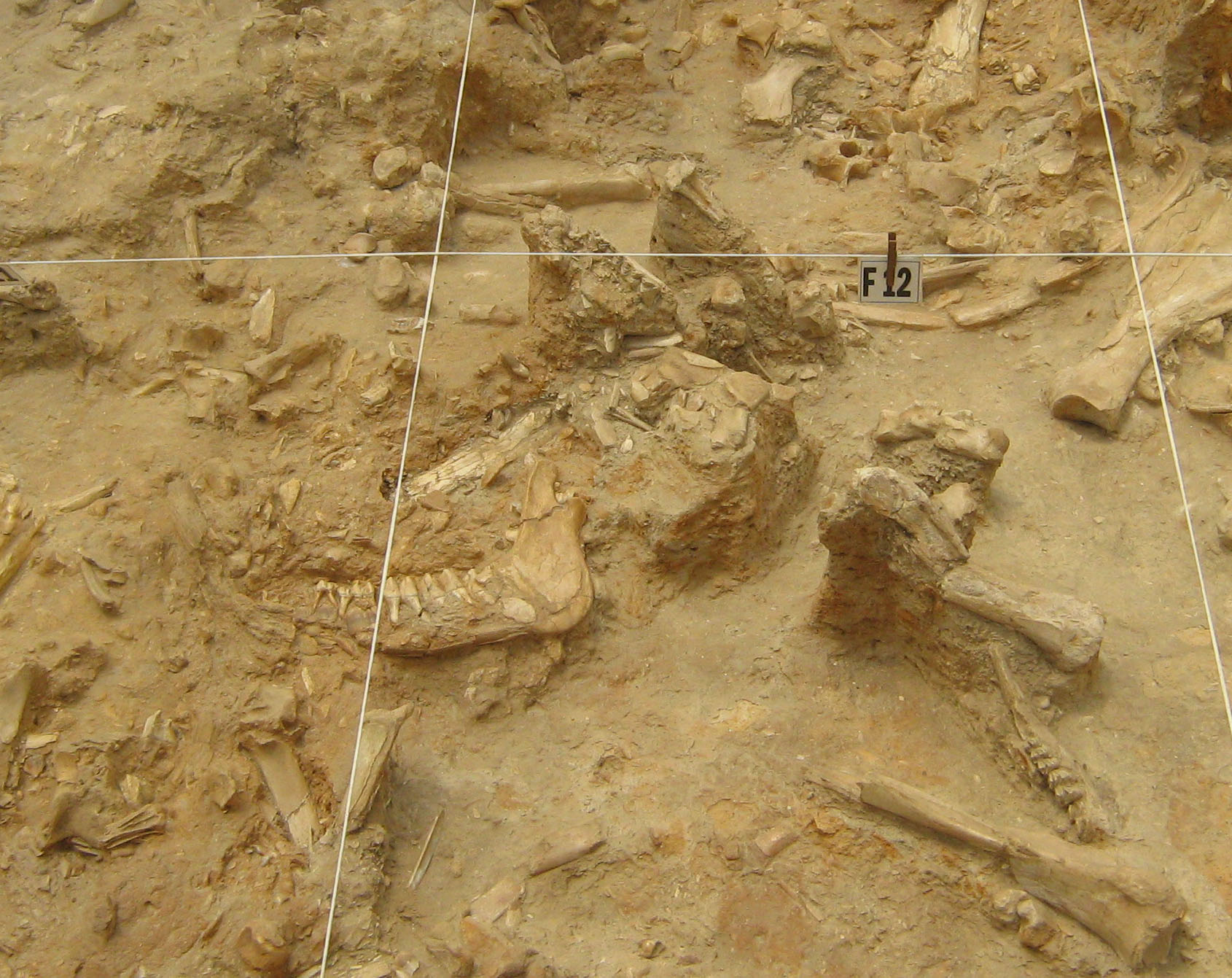
Phosphate miners at Langebaanweg never expected to dig up a lost world. When industrial-scale extraction began at this site roughly 150 kilometers north of Cape Town, the goal was fertilizer, not fossils. But the machinery kept turning up bones -- thousands of them, exquisitely preserved, dating back approximately 5.2 million years to the early Pliocene. By the time mining ceased in 1993, the quarry had revealed what may be the greatest diversity of five-million-year-old fossils found anywhere on Earth: remains of more than 300 animal species, from giant mustelids to ancestral bears, from ancient elephants to seabirds that no longer exist.
When the Sea Came Inland
Five million years ago, the landscape around Langebaanweg looked nothing like the scrubby West Coast terrain visible today. Sea levels were significantly higher, and the coastline pushed further inland. Riverine forests bordered meandering waterways, while wooded savanna stretched across the lowlands. Animals now associated with East Africa -- relatives of hyenas, sabre-toothed cats, and short-necked giraffes -- roamed these coastal woodlands. The fossils capture a transitional moment in southern Africa's ecological history, when the region's climate was shifting and species assemblages were reshuffling. Creatures that thrived here would soon vanish, replaced by the arid-adapted fauna that characterizes the modern Western Cape.
Bones Beneath the Business
The fossil deposits owe their preservation to a geological accident. Phosphate-rich sediments, the same material that made the site commercially valuable, also created ideal conditions for mineralization. Bones deposited in river channels and along the ancient shoreline were rapidly buried and chemically stabilized. Phosphate mining exposed layer after layer of this buried bestiary, but it also threatened to destroy the very deposits it revealed. The tension between extraction and preservation defined the site for decades. When mining operations finally ended, scientists and conservationists moved quickly to protect what remained. The West Coast Fossil Park was established on the former mining grounds, partnering with the Iziko South African Museum to manage the collection and continue research.
A Monument to Deep Time
Recognition came in stages. In 1996, the National Monuments Council declared Langebaanweg a national monument. The National Heritage Resources Act of 2000 reclassified it as a provincial heritage site, and in March 2012, Heritage Western Cape expanded the protected area significantly. These designations reflect a growing understanding of what the site represents: not just a collection of old bones, but a window into an entire ecosystem that predates human existence by millions of years. Researchers continue to describe new species from the deposits, including a previously unknown frog genus identified in a 2023 study. Each discovery adds another thread to the picture of a world that existed long before the first humans walked the Cape.
Walking Among Ghosts
Today the park invites visitors to explore the excavation sites and see fossils in their original geological context -- a rarity in paleontology, where specimens typically end up behind museum glass far from where they were found. The landscape itself tells the story: the exposed quarry walls reveal the sedimentary layers that trapped these ancient remains, each stratum a chapter in a five-million-year narrative. Standing at the edge of the excavation, with the dry West Coast wind carrying the scent of fynbos, it takes imagination to picture this place as a lush coastal forest teeming with creatures that have no modern equivalent. But the bones are right there in the ground, stubborn evidence of a world that vanished so completely only mining could bring it back.
From the Air
Located at 32.96S, 18.12E, approximately 150 km north of Cape Town along the West Coast. The park sits near the small town of Langebaanweg. Nearest airport is Langebaanweg Air Force Base (FALW). Cape Town International (FACT) is about 120 km to the south. The terrain is flat coastal lowland, easily visible from altitude. The nearby Saldanha Bay and Langebaan Lagoon serve as prominent navigation landmarks.