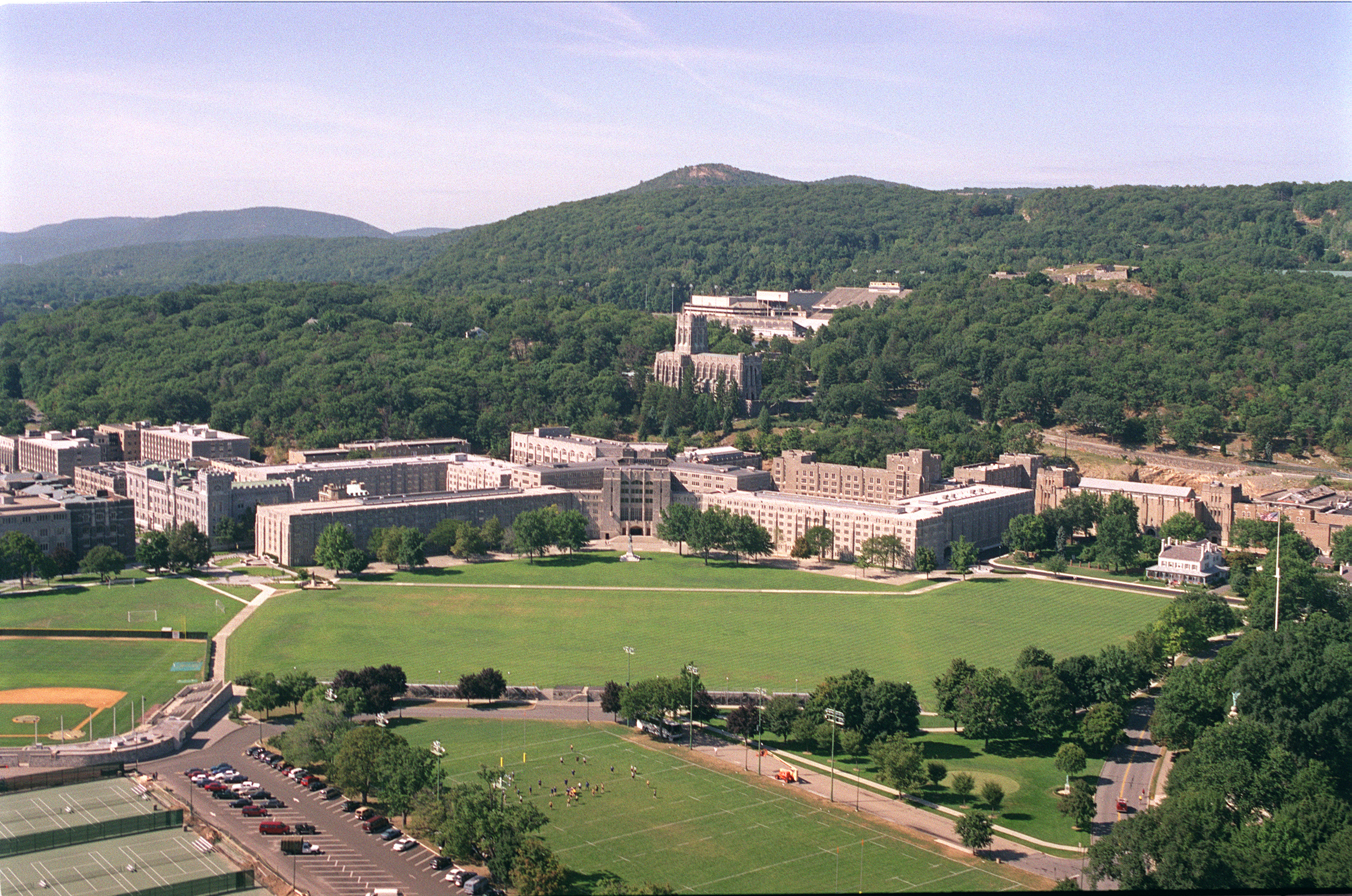
West Point: The Academy That Trained Both Sides
They learned together, then killed each other. The West Point classes of the 1840s produced generals who would lead both Union and Confederate armies: Grant and Lee, Sherman and Johnston, Longstreet and Sheridan. They had studied the same tactics, drilled on the same plain, taken the same oath. When war came, they used their shared education to slaughter the classmates they remembered. This is West Point's strange legacy - the premier military academy of a nation that once tore itself apart, training leaders for every American war from 1802 to the present, producing presidents and poets alongside generals and admirals, instilling values that transcend politics while serving every administration's politics without question.
The Fortress
The location was strategic before the academy existed. West Point commands a sharp bend in the Hudson River; the British couldn't sail past it during the Revolution, and a chain stretched across the water to block warships. General Benedict Arnold commanded West Point before his betrayal; his plot to surrender it to the British failed when his contact was captured with incriminating documents. After the Revolution, the fortress became training ground. Thomas Jefferson established the United States Military Academy in 1802, institutionalizing what had been ad hoc officer development. The gray stone buildings rose above the river, the plain where cadets parade became American iconography, and the academy settled into its role as the nation's military backbone.
The Education
West Point's curriculum evolved from engineering focus to broader military science, but the core remained: developing officers of character who could lead soldiers in combat. Cadets endure four years of academic rigor, physical training, and military indoctrination. The Honor Code - 'A cadet will not lie, cheat, steal, or tolerate those who do' - enforces integrity that haunts graduates for life. Hazing rituals, once brutal, have been reformed but never entirely eliminated. The result is an officer corps with shared experiences, shared vocabulary, shared assumptions about duty. Critics call it conformity; defenders call it reliability. The academy produces what it intends: leaders who follow orders until they give them.
The Graduates
The list intimidates: Ulysses S. Grant, Robert E. Lee, Douglas MacArthur, Dwight Eisenhower, Norman Schwarzkopf. Presidents and generals, winners and losers, heroes and a few disgraces. The academy claims more Medal of Honor recipients than any institution; it also trained officers who ordered massacres. Edgar Allan Poe attended briefly, was court-martialed, and left to become a writer. James McNeill Whistler failed chemistry ('Had silicon been a gas, I would have been a major general'). The failures sometimes outshine the successes, but the successes defined American military history. Every major war has been led substantially by West Pointers, for better or worse.
The Contradiction
West Point trains officers to serve civilian leadership without question, yet produces leaders of independent mind. It enforces conformity while celebrating innovation. It commemorates the Civil War without quite confronting what it means that the academy trained both sides. Statues of Lee and other Confederate generals stood on campus until 2023, when they were finally removed - a reckoning delayed for 160 years. The academy's relationship to its Confederate graduates remains awkward: they were traitors by definition, yet many were celebrated as exemplary officers. The contradiction is American, not merely institutional - the nation that fought to end slavery never fully confronted those who fought to preserve it.
Visiting West Point
The United States Military Academy is located on the Hudson River, 50 miles north of New York City. Public access requires passing through security; photo ID required, foreign nationals face additional screening. The Visitor Center provides orientation and tour information. Walking tours and bus tours explore the campus; reservations recommended. Cadet parades occur on specific dates during academic year - impressive displays of precision marching. The West Point Museum houses extensive military artifacts. Trophy Point offers views of the Hudson and the chain that blocked British ships. The Cadet Chapel's stained glass and the cemetery's graves of the famous and forgotten reward the journey. The experience is military in every particular - efficiency, discipline, and the weight of history in every stone.
From the Air
Located at 41.39°N, 73.96°W on the west bank of the Hudson River in New York State. From altitude, West Point occupies a dramatic promontory where the Hudson turns sharply, the strategic value immediately apparent. The gray stone buildings cluster on the plateau; the parade ground (The Plain) forms a flat rectangle where cadets have drilled for over two centuries. Michie Stadium's horseshoe sits to the west. The Hudson flows past, the same river that Washington's army defended. Bear Mountain and the Hudson Highlands rise around the valley. What appears from altitude as a compact campus on a riverside bluff is the institution that has trained American military leaders since Jefferson's presidency - the academy where future enemies learned together and future victors were forged.