West Siberian Glacial Lake
Beneath the West Siberian Plain, under the rivers and wetlands and permafrost, lies the memory of something enormous. Eighty thousand years ago, this flat expanse held one of the largest lakes in Earth's history — a periglacial sea more than twice the size of the present-day Caspian. It is gone now, drained into geology and sediment, but the West Siberian Glacial Lake left its mark on the continent's hydrology in ways that still echo today.
The Ice Sheet That Built a Sea
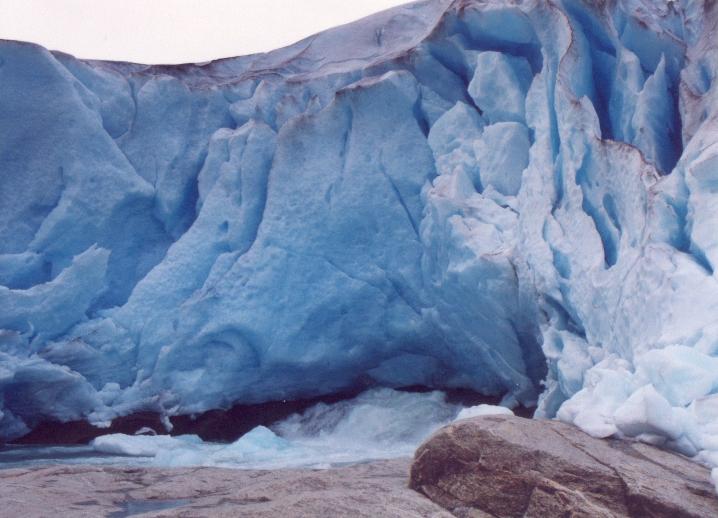
During the Weichselian Glaciation, approximately 80,000 years ago, the Barents-Kara Ice Sheet advanced southward and blocked the Arctic Ocean outlets of two of the world's great river systems: the Ob and the Yenisei. With nowhere to go, their waters backed up across the West Siberian Plain. The result was a lake — known also as Mansiyskoe Lake, or Mansi Lake — that spread across more than 750,000 square kilometers. To put that in perspective: the Caspian Sea, the largest landlocked body of water on Earth today, covers roughly 371,000 square kilometers. The West Siberian Glacial Lake was more than twice that size. It stretched from the base of the Ural Mountains eastward across a flat, low-lying plain that offered no natural barrier to its expansion.
A River That Ran to the Mediterranean
What happened to the water when the lake could hold no more is one of the more remarkable theories in Quaternary geology. Because drainage north to the Arctic was blocked by ice, the lake's overflow had to find another route. Scientists theorize that water spilled southward and westward through a chain of connected basins: the Aral Sea, the Caspian, and the Black Sea, and from there — eventually — into the Mediterranean. The theoretical drainage path would have stretched roughly 6,000 miles, considerably longer than any river course on Earth today. Water from the Selenga River, which drains Mongolia and feeds into Lake Baikal thousands of miles to the east, may have followed this extraordinary route all the way to the margins of the ancient Mediterranean world. Whether this actually happened, and to what degree, remains an area of active scientific inquiry.
What the Lake Left Behind
The West Siberian Plain today is one of the flattest and wettest places on Earth — a vast mosaic of bogs, rivers, and waterlogged terrain that covers an area roughly the size of Western Europe. Much of this character owes something to the glacial lake that once covered it. The lake's sediments created a legacy of fine-grained, poorly-drained soils. The region's great rivers, the Ob and Yenisei, still flow in roughly the same corridors they occupied before the ice arrived, though their scale and drainage patterns bear the imprint of millennia of glacial interference. Even the Baikal seal — a freshwater seal living in the landlocked Lake Baikal, far from any ocean — may owe its existence to the ancient connectivity between these water bodies during glacial periods, when ancestral Caspian seals could have moved between basins along routes that no longer exist.
Reading the Invisible
The West Siberian Glacial Lake is invisible now. Flying over Siberia at altitude, you see rivers threading through forest and tundra, vast wetlands shimmering in summer, ice patterns in winter. There is no shoreline, no obvious scar in the landscape to mark where a sea once stood. The evidence lives in sediment cores, in lake bed deposits, in the subtle grading of terrain that geologists read like text. The work of Jan Mangerud and colleagues, published in 2004, reconstructed the lake's extent and postulated drainage patterns from this kind of evidence — a detective story told in grain size and pollen and the chemistry of ancient mud. What they found was a body of water that briefly connected systems we now think of as entirely separate: the great rivers of Siberia, the landlocked seas of Central Asia, and the basins of Europe.
From the Air
The West Siberian Glacial Lake's approximate center is located near 66.3°N, 56.2°E, within the West Siberian Plain of Russia. At cruising altitude, the characteristic flatness and wetness of this terrain is visible — the Ob and Yenisei river systems are both traceable, and the vast boggy lowlands give the region a distinctive texture from the air. The nearest major airport is Surgut (USRR), roughly 400 km to the southeast. There are no physical landmarks from the lake itself; the entire plain is the landmark, a vast sedimentary record of the ice age inland sea that once covered it.