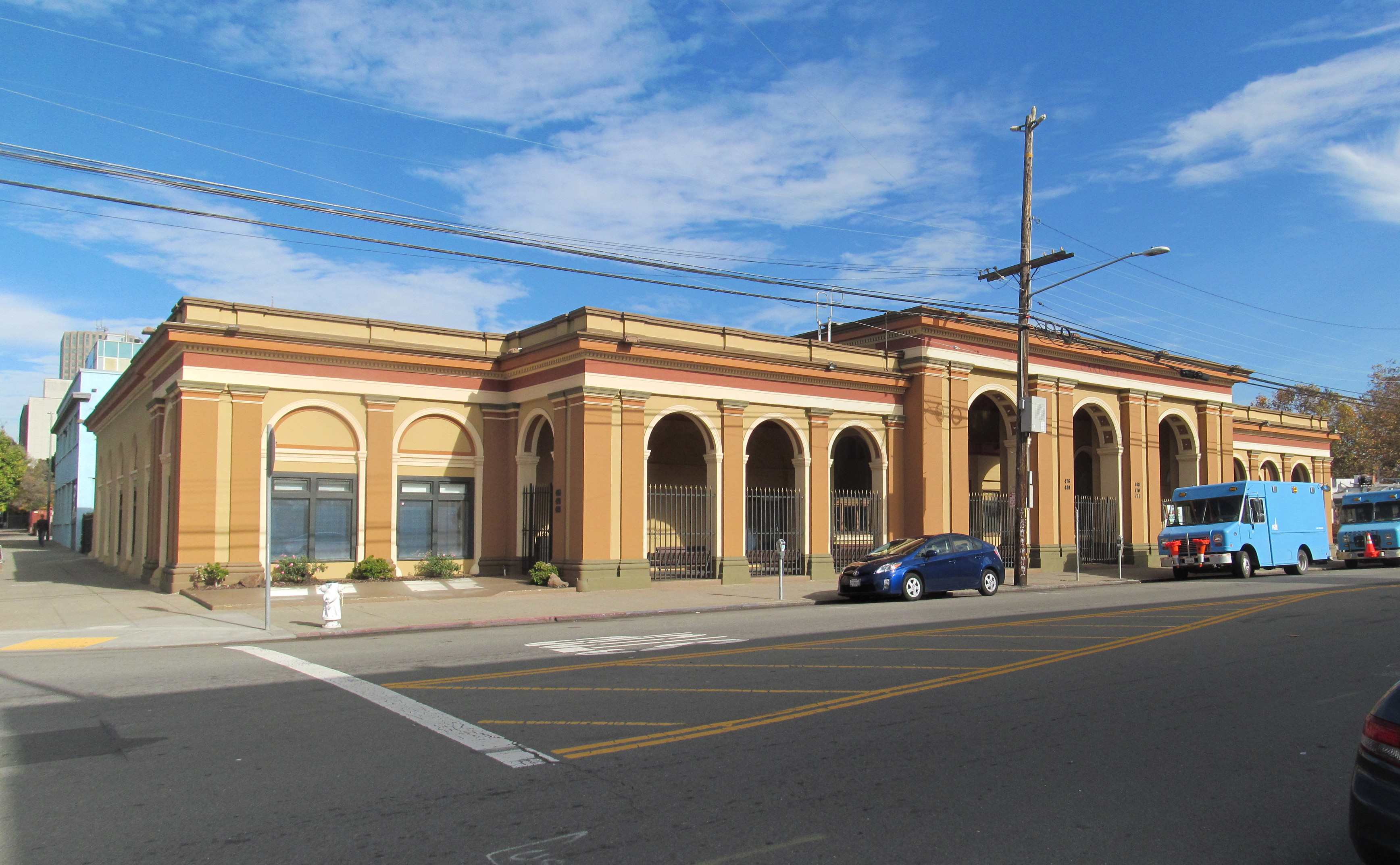
The Last Stop West
On March 22, 1970, three hundred passengers boarded the California Zephyr at Oakland's 3rd Street station for a sentimental journey. The train would carry them east one last time, ending two decades of the most scenic rail route in North America -- a run that crossed the Sierra Nevada, traversed the Colorado Rockies, and threaded the canyons of the Feather River before depositing travelers at this modest Mission Revival depot on the Oakland waterfront. When the last Zephyr pulled away from the platform, the Western Pacific Depot lost its reason for existing. But the building refused to disappear.
End of the Line, Beginning of a Dream
The Western Pacific Railroad completed the depot in 1910, planting its western terminus at 3rd and Washington Streets in Oakland. The railroad itself was an audacious newcomer -- the last transcontinental line built through the Sierra, finished in 1909 after years of financial struggle and construction through the Feather River Canyon. Where the older Central Pacific had conquered Donner Pass with brute engineering, the Western Pacific chose a gentler route along the Feather River, trading altitude for gradient. The 3rd Street depot was where that journey ended, its tracks running directly through the city streets in a style known as street running. Passengers stepping off the train found themselves on an ordinary Oakland block, tracks embedded in the pavement, the locomotive sharing the road with automobiles and pedestrians. It was an arrangement that felt quaint even in 1910 and would become unthinkable by the time the station closed.
The Zephyr's Silver Streak
The depot's glory years arrived in the late 1940s. In 1949, the Western Pacific partnered with the Denver and Rio Grande Western and the Burlington railroads to launch the California Zephyr, a streamlined stainless-steel train marketed not as transportation but as an experience. The route was designed for sightseeing -- the train passed through the Feather River Canyon and the Colorado Rockies during daylight hours, and its Vista Dome cars gave passengers panoramic views of some of the most dramatic landscapes on the continent. Before the Zephyr, the Exposition Flyer had run the same route beginning in 1939, offering a respectable but unglamorous alternative to the Southern Pacific and Santa Fe services. The Zephyr changed everything. Travel magazines called it the most beautiful train ride in the world. For two decades, Oakland's 3rd Street station was where that ride began and ended -- the western bookend of a journey that stretched 2,525 miles to Chicago.
When the Rails Went Silent
By the 1960s, the economics of passenger rail had turned brutal. Jet travel was faster, interstate highways were free, and the Western Pacific was hemorrhaging money on every eastbound departure. The railroad petitioned to discontinue the Zephyr, and after years of regulatory battles, the Interstate Commerce Commission finally granted permission. The last run departed Oakland on March 22, 1970. The mood was more wake than celebration -- three hundred ticketed passengers and a crowd of well-wishers gathered at 3rd Street for a train they knew would not return. After the service ended, the tracks leading into the station were pulled up. The rail corridor was redeveloped, the street-running alignment erased. Within a few years, there was no physical trace that trains had ever rolled down 3rd Street. The depot stood alone, a terminal without a railroad, its platforms serving nothing.
Landmark Number One
What saved the building was timing and sentiment. In 1974, Oakland established its landmark designation program, and the Western Pacific Depot became the very first structure to receive the honor -- Oakland Designated Landmark number one. The recognition reflected both the building's architectural merit and the city's growing awareness that its industrial heritage was vanishing. The depot's Mission Revival facade, with its broad eaves and stucco walls, was a modest example of a style that once defined California railroading. Without the landmark designation, the building would likely have met the same fate as the tracks: demolished and forgotten. Instead, new owners converted the depot into a restaurant, trading waiting rooms for dining rooms. The transformation was imperfect but effective. Successive tenants have occupied the space over the decades, each adapting the old terminal to commercial use while preserving its bones. The building still reads as a train station -- the proportions, the entrance, the sense of a structure built for arrival and departure -- even though no one has arrived by rail in more than fifty years.
From the Air
Located at 37.797°N, 122.277°W in Oakland's Jack London district, near the waterfront south of downtown. From the air, look for the area between the I-880 freeway and the Oakland Inner Harbor -- the depot sits at the intersection of 3rd and Washington Streets. The original rail corridor is now redeveloped, making the station difficult to spot individually, but the Jack London Square area and adjacent waterfront provide good orientation. Nearest airports: KOAK (Oakland International, 5 nm south), KSFO (San Francisco International, 17 nm southwest). Best viewed at 1,500-2,500 ft in clear conditions.