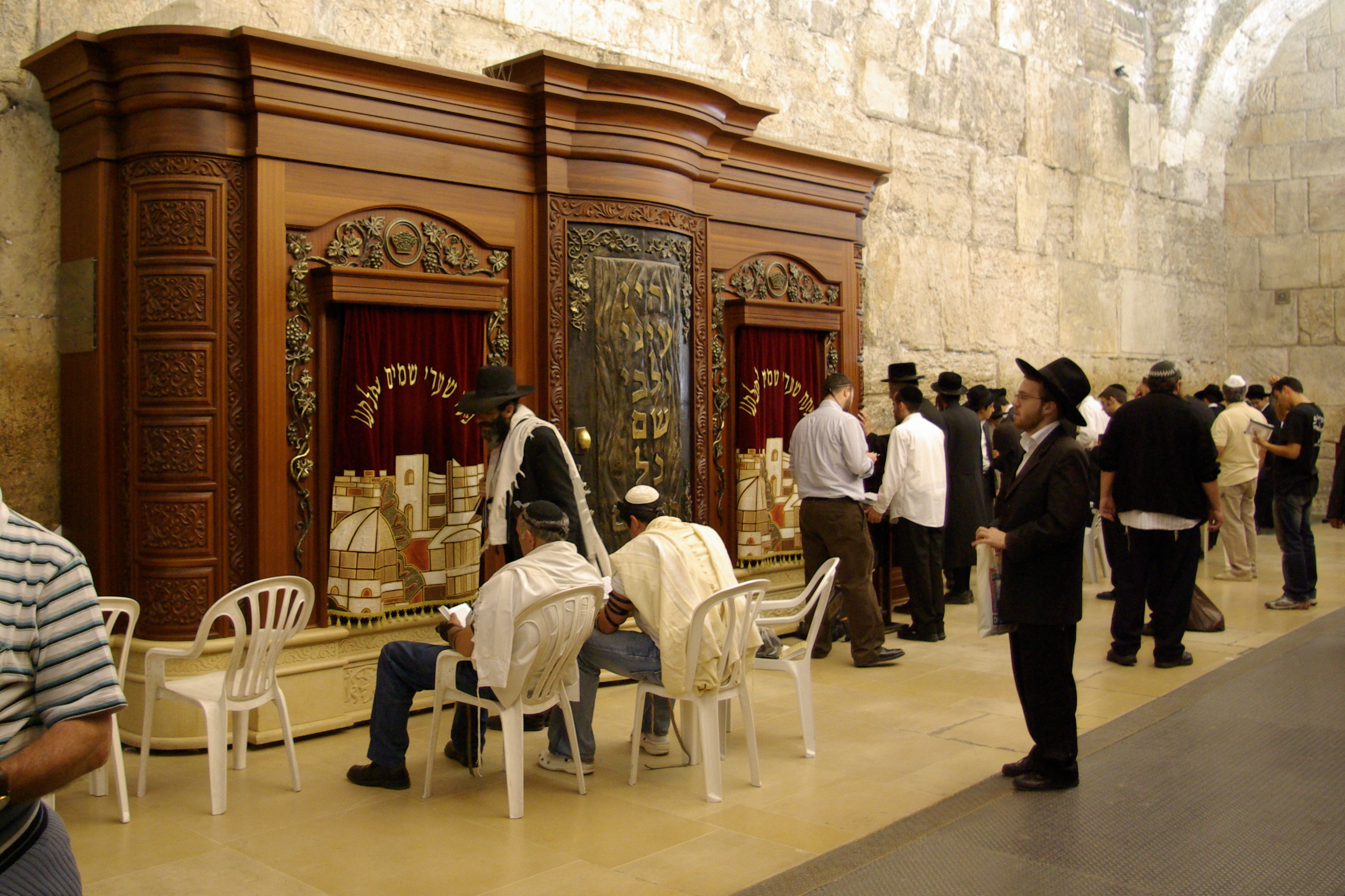
Western Wall
The stones do not belong to the Temple itself. This is the fact that surprises most visitors: the Western Wall is a retaining wall, part of the massive platform Herod the Great built around 19 BCE to double the size of the Temple Mount. The Temple that stood above it was destroyed by Roman legions in 70 CE. What survives is infrastructure, the bones of an engineering project so ambitious that Herod did not live to see it finished. Roman coins minted after his death were found in 2011 beneath the wall's foundation stones, confirming the historian Josephus's account that construction continued under Herod's great-grandson Agrippa II. And yet this retaining wall, never intended as a place of worship, has become the holiest site where Jews are permitted to pray.
The Wall Itself
The first seven above-ground courses are Herodian, built from enormous meleke limestone blocks quarried either at Zedekiah's Cave beneath the Muslim Quarter or at Ramat Shlomo, four kilometers northwest of the Old City. Most blocks weigh between two and eight tons, though one extraordinary stone north of Wilson's Arch measures 13.55 meters long, 3.3 meters high, and weighs hundreds of tons. Above the Herodian layers sit 16 to 17 courses of smaller stones added during the Mamluk period and later. The visible prayer section is only a fraction of the wall's full 488-meter length; much of it is buried underground or hidden behind buildings. The Western Wall Tunnels, excavated along the wall's northern extension, reveal the true scale of Herod's construction, a subterranean passage that runs alongside massive foundation stones laid directly on bedrock.
Centuries of Forbidden Return
After Rome crushed the Bar Kokhba revolt in 135 CE, Jews were banned from Jerusalem entirely. When Christianity became the empire's faith, they were granted one exception: on Tisha B'Av, the anniversary of the Temple's destruction, Jews could enter the city to weep at the ruins. The Bordeaux Pilgrim, writing in 333 CE, described them coming to "a pierced stone" to anoint it, mourn, and depart. Gregory of Nazianzus and Jerome recorded similar scenes later that century. By the 4th century, Christians notes that Jews "encountered great difficulty in buying the right to pray" near the wall. When Muslim rule came in 638 CE, Jewish access gradually improved, and by the 10th and 11th centuries, Jewish writers describe regular devotional visits. Benjamin of Tudela wrote in 1170 that Jews came "to pray before the Wall in the open court," though scholars debate whether he meant this wall or the eastern one.
The Narrow Alley
For centuries, the prayer space at the Western Wall was a cramped alleyway, barely four meters wide, squeezed between the wall and the houses of the Moroccan Quarter. Public access ran through a labyrinth of narrow passages. In 1840, a firman from Ibrahim Pasha forbade Jews from paving the walkway or "raising their voices and displaying their books there," though they could continue to visit. Tensions between worshippers wanting more space and residents complaining about noise persisted for decades. Baron Rothschild attempted to purchase and demolish the quarter in 1887, securing approval from both the Ottoman governor and the Mufti of Jerusalem, but the deal collapsed when authorities insisted that no construction could follow demolition. Other purchase attempts, including one by Rabbi Chaim Hirschensohn in 1895 that cost him his entire fortune, also failed. The alley remained until June 1967.
The Plaza
Three days after Israeli forces captured the Old City in the Six-Day War, over 200,000 Jews streamed to the Western Wall in what became the largest Jewish gathering at the site since the Roman destruction. Within days, the Moroccan Quarter's buildings adjacent to the wall were demolished to create the large plaza that exists today. Rabbi Yehuda Meir Getz was named the first rabbi of the Kotel, overseeing what had transformed from a narrow alley into an open-air synagogue. The site became a place of national ritual: 50,000 gathered in 1994 to pray for kidnapped soldier Nachshon Wachsman, and during the month of Tishrei 2009, a record 1.5 million people visited. More than a million prayer notes are placed in the wall's crevices each year, a practice traceable to at least 1743, when Chaim ibn Attar wrote an amulet and instructed a petitioner to tuck it into the stones.
What the Wall Means
For Jews, the Western Wall's sanctity derives from its proximity to the Foundation Stone, the spot within the former Holy of Holies believed to be the spiritual center of the world. Since most rabbinical authorities prohibit Jews from ascending the Temple Mount itself, the wall has become the closest accessible point to the holiest place in Judaism. A 7th-century Midrash declares that the western wall of the Temple "would never be destroyed," and an 11th-century text states that "the Divine Presence has never departed from the Western Wall." Muslims know it as al-Buraq Wall, the place where Muhammad tethered his winged mount during the Night Journey. The wall's significance is not fixed but layered, each generation adding meaning to what began as a retaining wall for an ambitious king's building project. A 2007 poll found that 96% of Israeli Jews opposed relinquishing the site, a near-unanimity that suggests the wall has transcended religion to become something closer to national identity.
From the Air
Located at 31.777N, 35.234E on the western side of the Temple Mount in Jerusalem's Old City. The Western Wall plaza is visible from the air as a large open space adjacent to the golden Dome of the Rock. Ben Gurion International Airport (LLBG) is approximately 50 km northwest. Best viewed from 5,000-8,000 ft AGL. The wall itself runs north-south, with the prayer plaza on its western face.