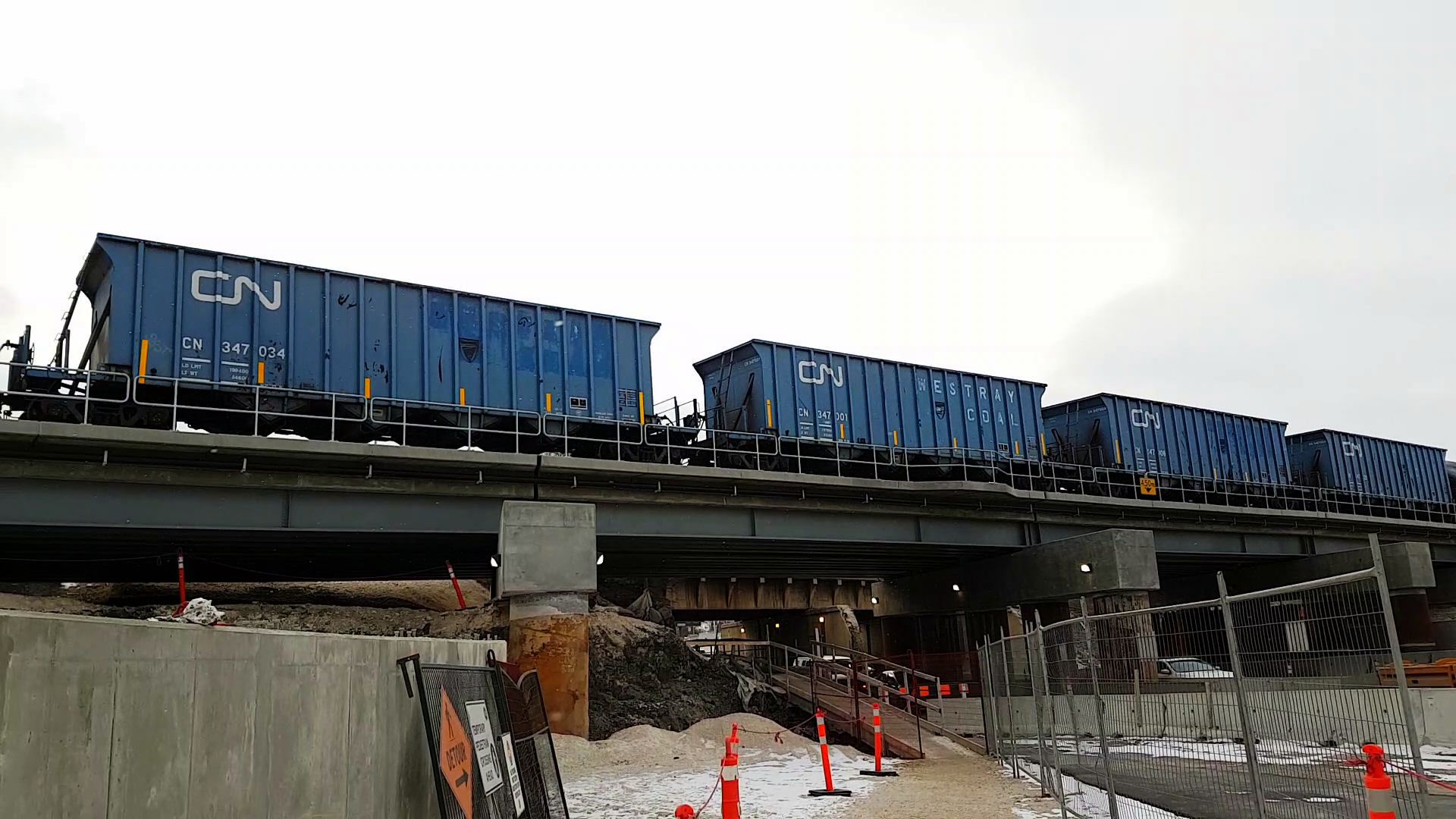
Westray Mine
Carl Guptill knew the mine was going to kill someone. In November 1991, barely two months after the Westray Mine opened in Plymouth, Nova Scotia, the coal miner filed safety complaints with provincial labor ministry inspectors about the dangerous buildup of coal dust underground. The inspectors did not investigate. In January 1992, Guptill was fired. Four months later, at 5:18 on the morning of May 9, 1992, methane and coal dust exploded in the tunnels beneath Pictou County, killing all twenty-six miners working the overnight shift. Everything Guptill had warned about had come true, and the country watched as rescue teams spent days trying to reach men everyone already knew were dead.
A Mine Built on Politics
Pictou County had not had a working coal mine since the 1970s, and the announcement of the Westray project in the late 1980s was greeted as an economic resurrection. The timing was deeply political. The federal riding of Central Nova had elected Brian Mulroney in a 1983 by-election, and Conservative heavyweight Elmer MacKay wielded considerable influence in the region. The provincial premier, Donald Cameron, was also a local Conservative. Curragh Resources Incorporated secured both federal and provincial money to open the mine and supply coal to the local power utility. When the mine opened on September 11, 1991, the fanfare was considerable. Within weeks, the roof began collapsing. Miners complained about deep coal dust accumulating in the tunnels. The warnings were ignored at every level.
5:18 in the Morning
The explosion tore through the southwest section of the mine before dawn on a Saturday. It was Canada's worst mining disaster since the 1958 Springhill bump that killed seventy-five miners. Over the following days, media reported continuously from a community centre across the road while rescue teams fought through hazardous conditions underground. Westray officials offered little cooperation, and information trickled out painfully slowly. Rescuers recovered fifteen bodies. Then conditions worsened. The decision was made to abandon further recovery efforts, leaving eleven miners entombed in the depths of the mine. Their bodies have never been recovered. For the families, the mine became both a grave and an open wound, a place they could not enter and could not walk away from.
Justice Denied, Then Rewritten
Six days after the explosion, the provincial government launched a public inquiry headed by Justice Kenneth Peter Richard. Lawyers for senior Westray employees immediately fought to delay it, and the inquiry was ruled unconstitutional before being reinstated on appeal. When hearings finally resumed in 1995, Curragh's founder and CEO Clifford Frame refused to testify. So did Marvin Pelley, the former president of Westray. Criminal charges of manslaughter and negligence against two mine managers went to trial but collapsed when the judge stayed charges over prosecutorial misconduct. An appeal ordered a new trial, upheld by the Supreme Court of Canada in 1997, but the Crown ultimately dropped the case in 1998. No one was ever convicted. The 117 miners who lost their jobs were paid twelve weeks' severance, six years after the closure, only after the government was publicly shamed into intervening.
The Westray Bill
The failure to hold anyone criminally responsible for twenty-six deaths drove a decade-long campaign to change Canadian law. The Canadian Labour Congress and its allies pushed repeatedly to amend the Criminal Code so that corporate managers and directors could be held liable when they failed to protect workers' lives. The effort took five attempts, each time dying when Parliament was prorogued, only to be reintroduced in the next session. In late 2003, the federal government finally enacted Bill C-45, known as the Westray Bill. It established a new framework for corporate criminal liability and gave courts the power not only to fine corporations but to place them on probation. Whether the law would have changed the outcome at Westray itself remains debated, but for the United Steelworkers who represented the miners and spearheaded the lobbying, it meant that the twenty-six deaths had not been entirely in vain.
Eleven Men Still Underground
The mine was dismantled and permanently sealed in November 1998. Today, a memorial stands in a park in nearby New Glasgow, positioned at the approximate surface location above where the eleven unrecovered miners remain. The Nova Scotia government protected the 250-acre memorial lands and permanently prohibited any further mineral exploration on the site. The 2001 National Film Board documentary Westray, directed by Paul Cowan, featured three widows, Harriet Munroe, Vicki Drolet, and Bernadette Feltmate, in dramatic reenactments alongside surviving miners. It won the Genie Award for best documentary. The Nova Scotia Museum of Industry in Stellarton maintains an exhibit on the disaster. The Richard inquiry's final report, published in late 1997, concluded with language that still resonates: the mine was mismanaged, safety was ignored, and regulatory oversight failed at every turn.
From the Air
Located at 45.55N, 62.65W near Plymouth in Pictou County, Nova Scotia. The sealed mine site and memorial are in the rolling terrain between New Glasgow and Stellarton. Best viewed at 2,000-3,000 feet. The Westray Miners Memorial Park in New Glasgow is the most visible ground feature. Nearest airports include Truro (CYID) approximately 55 km southwest.