Whidbey Island
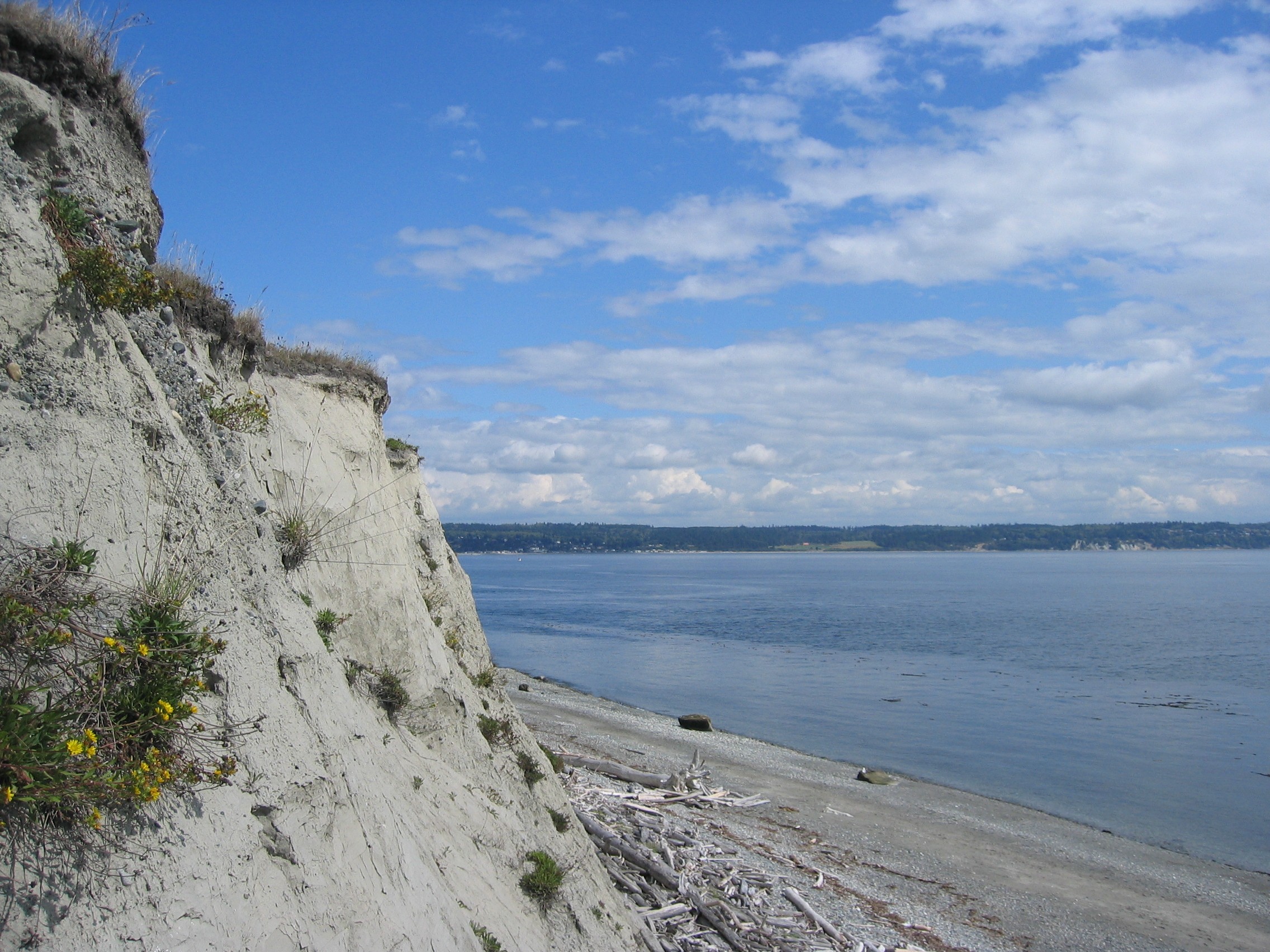
The ferry rounds the point and suddenly Whidbey Island fills the view - a long, green ridge rising from Puget Sound, its shoreline alternating between sandy beaches and weathered bluffs. At 55 miles long and rarely more than eight miles wide, Whidbey is the largest island in Puget Sound and one of the longest in the contiguous United States. It's a place of contrasts: historic prairie farmland that looks unchanged since the 1850s, a major Naval air station whose Growler jets rattle windows for miles, small towns that feel suspended in time, and artists' colonies that have discovered what isolation can offer. Connected to the mainland by bridge at the north and ferry at the south, Whidbey offers island life within an hour of Seattle's downtown towers.
Ebey's Landing National Historical Reserve
Isaac Ebey arrived on Whidbey in 1850, claiming a square mile of prairie that looked like the farmland he'd left behind in the Midwest. The land had been cleared by the Salish people through controlled burns, creating open grassland perfect for crops. Ebey became the first permanent white settler on the island; seven years later, Haida raiders killed and beheaded him in retaliation for an unrelated death. His landing became a historical reserve in 1978 - not a traditional park, but an inhabited cultural landscape where working farms, historic buildings, and natural areas are preserved together.
The reserve encompasses much of central Whidbey, including the town of Coupeville and miles of coastline along Admiralty Inlet. Walking trails cross prairies where farmers still grow crops using patterns established 170 years ago. Historic blockhouses recall the region's violent early history. The bluff trail above Ebey's Landing offers sweeping views of the Olympics and the Strait of Juan de Fuca. Nowhere else in the Pacific Northwest has the 19th-century agricultural landscape survived so intact.
Coupeville: The Heart of History
Coupeville claims to be Washington's second-oldest town, and its waterfront looks the part. Front Street's buildings date from the late 1800s, their false fronts and covered walkways straight from Western movies. The town wharf extends into Penn Cove, where shellfish farmers harvest the mussels that have made the cove famous. The Island County Historical Museum occupies a former bank; nearby, a sea captain's Victorian mansion has become a museum of island life.
Penn Cove itself is a natural shellfish nursery, its protected waters ideal for the Pacific mussels that restaurants across the country now prize. The Penn Cove Mussel Festival each March draws crowds to sample the harvest in every preparation imaginable. Coupeville maintains the working-waterfront character that most towns have lost - fishing boats and mussel rafts sharing the cove with sailboats and kayakers, commerce and recreation coexisting as they have for over a century.
The Navy's Island
Naval Air Station Whidbey Island is the largest employer on the island, and you'll know it when the Growlers fly. The EA-18G electronic warfare jets are loud - seriously, startlingly loud - their training missions sending them screaming over farms and beaches at altitudes that seem impossibly low. Residents have learned to live with the noise, pausing conversations mid-sentence as jets pass, accepting the trade-off that comes with hosting a military installation.
Oak Harbor, the island's largest town, exists largely because of the base. It's a military town in character - strip malls, chain restaurants, the practical commerce that serves a transient population. But the Navy presence also brings jobs, stability, and a different energy than the artists' colonies in the south. The contrast between Oak Harbor's pragmatic bustle and Langley's bohemian quiet captures something essential about Whidbey: it's an island large enough to contain multitudes.
Langley: Village by the Sea
Langley calls itself 'the Village by the Sea,' and the name fits. This small town of 1,200 perches above Saratoga Passage, its handful of streets lined with galleries, restaurants, and boutiques that draw day-trippers from Seattle. The waterfront overlooks Camano Island across the passage; on clear days, Mount Baker floats above the northern horizon. It's the kind of place where locals know each other by name and tourists feel welcome anyway.
The arts community has deep roots here. Galleries represent regional painters and sculptors. The Whidbey Island Center for the Arts brings theater and music to an intimate venue. Writers have found the isolation productive - far enough from Seattle to think clearly, close enough to reach the city when needed. Langley represents what Whidbey does best: small-town life enhanced by natural beauty, accessible but not overrun, preserving character while embracing those who come seeking exactly what it offers.
Two Ways On, Two Ways Off
Whidbey Island connects to the world via two very different routes. At the north end, the Deception Pass Bridge carries State Route 20 in a dramatic leap across the treacherous strait, offering views that stop first-time crossers in their tracks. At the south end, ferries shuttle between Clinton and Mukilteo, a 20-minute crossing that serves as a daily commute for thousands and a scenic introduction for visitors.
The third option - the Port Townsend ferry from Coupeville - links Whidbey to the Olympic Peninsula across Admiralty Inlet. This smaller ferry requires reservations and patience, but it offers the most dramatic arrival: the boat threading between Protection Island and the Keystone Spit, the town's historic waterfront appearing gradually as the ferry nears shore. Each route offers a different experience of the island - by bridge from wilderness, by ferry from city, by ferry from the wild Olympic coast.
From the Air
Located at 48.14°N, 122.58°W. Whidbey Island is the long, narrow island running NNW-SSE in the central Puget Sound. It's 55 miles long and quite narrow - easily identified from altitude. Look for the Deception Pass Bridge at the north end (dramatic double-span structure connecting to Fidalgo Island). Naval Air Station Whidbey Island is prominent in the central portion (runways visible). Penn Cove creates a notable indentation on the east side near Coupeville. The flat prairie areas of Ebey's Reserve contrast with forested sections. Clinton ferry terminal is at the south tip. Nearest airports: NAS Whidbey (KNUW), Paine Field (KPAE) 20nm southeast, Seattle-Tacoma (KSEA) 45nm south. Watch for military jet traffic from the naval air station.