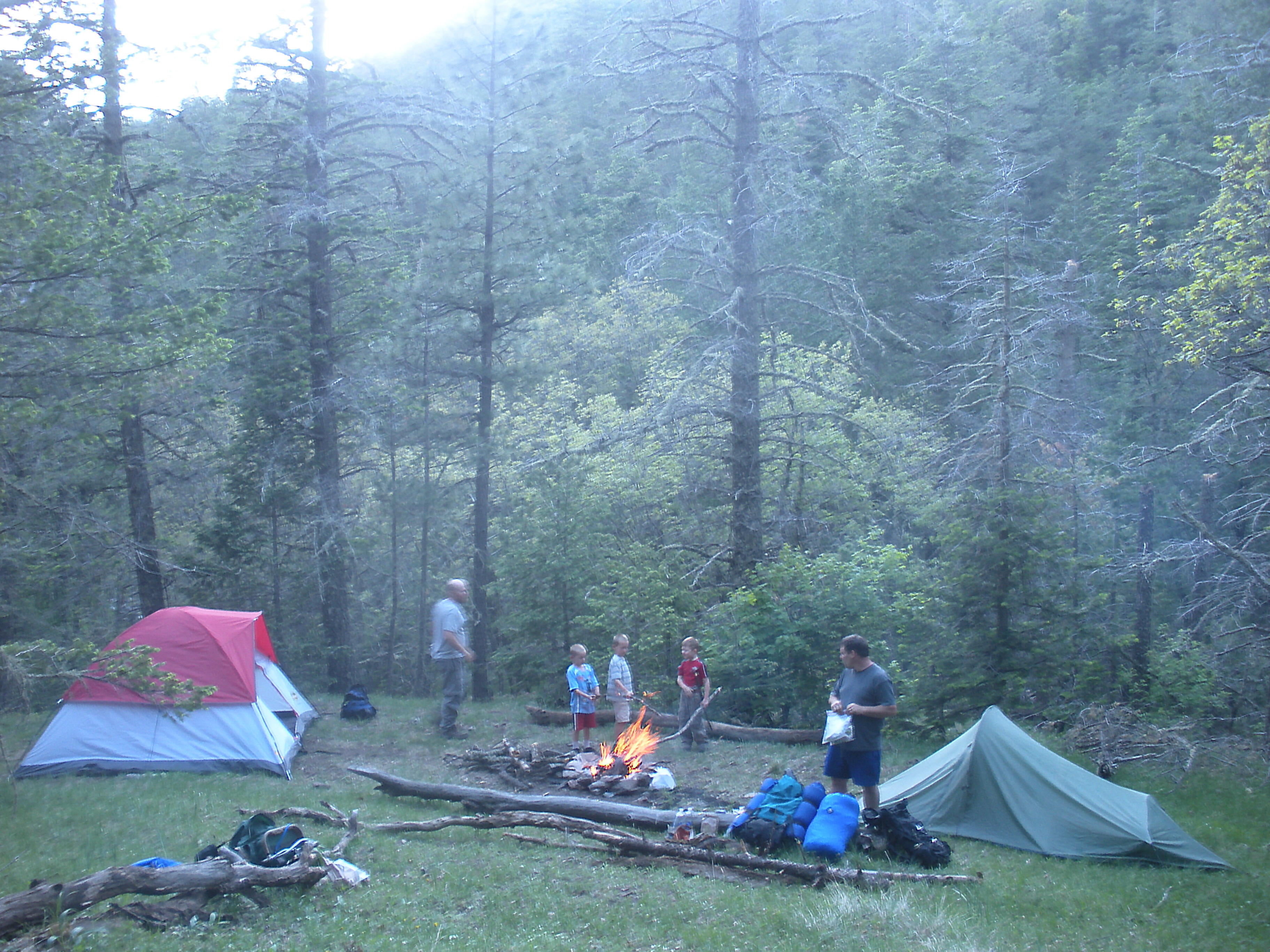
White Mountain Wilderness
The westward slope drops so steeply that hikers descending the Three Rivers Trail feel they are walking off the edge of a table. At 11,981 feet, Sierra Blanca looms just outside the wilderness boundary, the southernmost mountain in the Lower 48 to break through timberline into alpine tundra. Below it, the White Mountain Wilderness spreads across nearly 47,000 acres of the Lincoln National Forest, a vertical landscape where pinyon-juniper scrub gives way to ponderosa pine, then mixed conifer, then subalpine meadows, all within a few miles. Established as a primitive area in 1933 and redesignated under the Wilderness Act of 1964, this is one of New Mexico's wildest and most dramatic high-country sanctuaries.
A Ridge and Its Two Faces
The wilderness takes its shape from a single long ridge running roughly north-south. To the west, the terrain falls away in dramatic escarpments, avalanche chutes, and exposed rock faces. Hikers approaching from the Three Rivers Campground, at the base of the western slope near Tularosa, gain thousands of feet of elevation in a brutal climb that rewards them with views across the Tularosa Basin to White Sands. The eastern side tells a different story: gentler grades, forested canyons, and small streams that trickle through stands of Douglas fir and aspen. Most visitors enter from this direction, driving out from Ruidoso on state highways that connect to a network of forest roads and trailheads. The contrast between the two flanks defines the character of the wilderness, offering both punishing ascent and leisurely exploration.
Life Zones Stacked Like Pages
Few places in the Southwest compress so many ecological zones into so little horizontal distance. At the lower elevations, pinyon pine and juniper dominate, their aromatic wood scenting the dry air. Climb higher and ponderosa pine takes over, their orange-barked trunks rising from grass understories shaped by centuries of fire. Higher still, mixed conifer forests of white fir, Douglas fir, and blue spruce shelter elk, black bear, and wild turkey. Near the ridgeline, subalpine meadows open up, ringed by Engelmann spruce and corkbark fir. Just beyond the wilderness boundary, at the summit of Sierra Blanca, alpine tundra persists, a relic ecosystem more typical of mountains far to the north. This compression means that a single day's hike can pass through habitats separated by thousands of miles at lower latitudes.
The Mescalero Connection
Sierra Blanca itself lies on the adjacent Mescalero Apache Reservation, and the peak has long held spiritual significance for the Mescalero people. The mountain's name, Spanish for White Mountain, describes the snow that blankets its summit through much of the year. Access to the peak from the wilderness side requires a 1.25-mile hike from Lookout Mountain, near the southern edge of the protected area. The Mescalero also operate Ski Apache, a winter sports area just west of Ruidoso that sits at the boundary between tribal land and national forest. This blend of federal wilderness, tribal sovereignty, and recreation infrastructure makes the region a complex patchwork of jurisdictions, but for the hiker on the trail, the only authority is the mountain itself.
Trails That Earned Their Names
Nearly two dozen maintained trails thread through the wilderness, ranging from easy half-mile walks to the 20-mile Crest Trail that runs the length of the eastern ridgeline. The Big Bonito Trail climbs through a canyon lined with wildflowers in late summer. The Scenic Trail lives up to its name with views east toward the Capitan Mountains. The Three Rivers Trail, starting at the campground below the western escarpment, is among the most demanding hikes in the state, gaining over 4,000 feet in elevation as it ascends the sheer western face. All mechanized transport is prohibited, so access is by foot or horseback only. The forest service maintains trailheads with small parking areas at key entry points, but once inside the boundary, visitors are on their own.
The View From Above
From the air, the White Mountain Wilderness presents as a long forested ridge descending from the bulk of Sierra Blanca, which rises on the Mescalero Reservation to the south. The contrast between the steep western escarpment and the gentler eastern drainages is visible at cruising altitude. Look for the ski runs of Ski Apache as a reference point near the southern edge of the wilderness. The town of Ruidoso lies to the southeast, its development a sharp contrast to the roadless expanse above it. In winter, snow covers the upper elevations while the lower pinyon-juniper zone remains brown and dry. The ridgeline catches light differently depending on the season, but the dramatic relief is always apparent.
From the Air
The White Mountain Wilderness sits at 33.44N, 105.75W in the Sierra Blanca range of south-central New Mexico. The long forested ridge is visible descending north from Sierra Blanca Peak (11,981 feet MSL), which lies just outside the wilderness on the Mescalero Apache Reservation. Ski Apache's cleared runs provide a visual reference near the southern boundary. Ruidoso (6,900 feet MSL) lies southeast. Nearest airport is Sierra Blanca Regional (KSRR), approximately 10 nm south. Terrain rises sharply; maintain adequate altitude over the ridgeline. Best viewed from the east to appreciate the dramatic western escarpment dropping toward the Tularosa Basin.