White Sands V-2 Launching Site: Where America's Space Program Began with Nazi Rockets
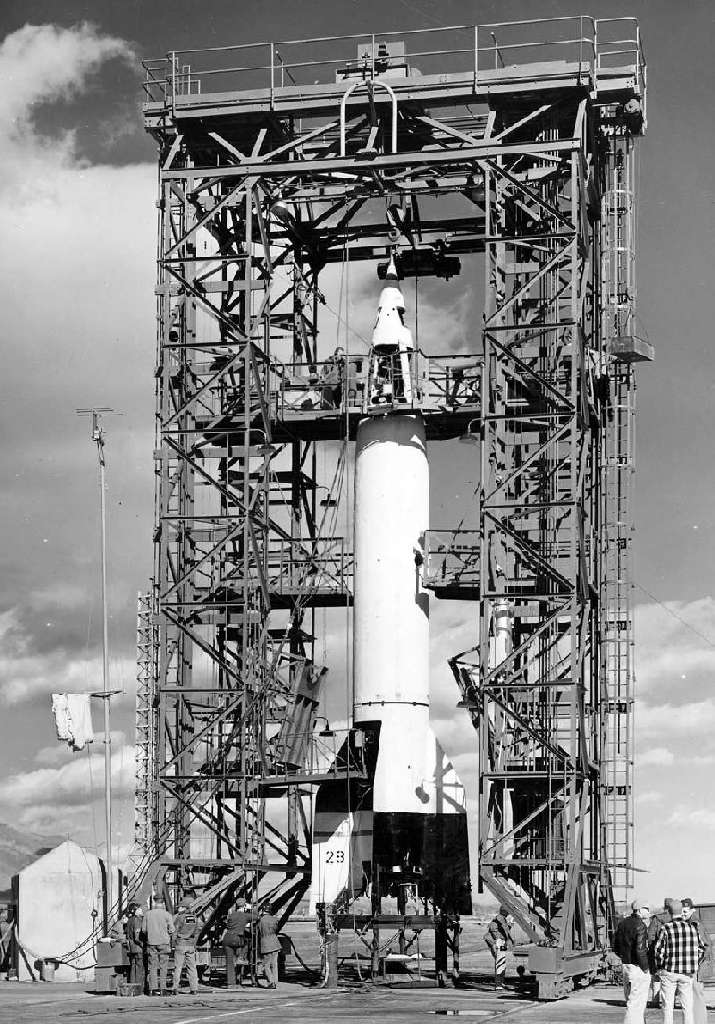
Every rocket that has ever carried an American into space traces its lineage to a steel gantry in the New Mexico desert. At White Sands Missile Range, Launch Complex 33 -- originally called Army Launch Area Number 1 -- is where the United States fired its first V-2 rockets: weapons of terror built by Nazi Germany, now repurposed for science. Between 1946 and 1951, the Army launched 67 V-2 sounding rockets from this site, training a generation of engineers who would go on to build the rockets that reached the Moon. The site was designated a National Historic Landmark in 1985, recognizing this barren desert launch pad as the birthplace of American rocketry.
Operation Paperclip
In the final months of World War II, the V-2 rocket was Nazi Germany's most advanced weapon. Thousands of them rained down on London and Antwerp, killing nearly 9,000 people. As Allied forces closed in on Germany, the United States launched Operation Paperclip -- a secret program to recruit German scientists and engineers before the Soviets could claim them. The prize catch was Wernher von Braun, the young engineer who had built the V-2 and dreamed of space travel even as his rockets fell on civilian cities. The Americans also seized approximately 100 intact V-2 rockets and shipped them to the newly established White Sands Proving Ground. The rockets arrived in pieces, and the German scientists helped reassemble them for launch.
Rockets in the Desert
White Sands was chosen for its emptiness. The Tularosa Basin offered miles of uninhabited desert where errant rockets could crash without killing anyone. Launch Complex 33 sits near the southern end of the range, east of Las Cruces. The launches began in 1946 and continued through 1951. Not all went well -- several V-2s veered off course, including one that crashed south of the border in Mexico. But each launch taught American engineers something new. They modified the rockets, added scientific instruments, sent the first animals into space, reached altitudes above 100 miles. The V-2s became sounding rockets, probing the upper atmosphere and returning data that no other instruments could gather. The scientists who cut their teeth on these launches would go on to build the Redstone, the Jupiter, and eventually the Saturn V that carried astronauts to the Moon.
What Remains
Two structures survive from the original launch complex. The steel gantry stands 60 feet tall and 20 feet wide, a framework of girders and platforms from which the V-2s and later rockets were raised into position. Four platforms at different heights could swing into place to accommodate rockets of various sizes. A network of block-and-tackle pulleys still hangs from the structure, the same equipment that hoisted warheads designed for London now pointed at the stars. Nearby stands the observation blockhouse, built to withstand catastrophic failure. Its concrete walls are 27 inches thick. The roof is a solid pyramid of concrete 36 inches deep. Specialized glass windows allowed observers to watch launches from only a few hundred feet away. Engineers sat in this bunker and watched history unfold through glass designed to stop shrapnel.
Legacy of Contradiction
Launch Complex 33 embodies one of the great moral contradictions of American history. The rockets that launched from this gantry were built by slave labor at the Mittelbau-Dora concentration camp, where more people died manufacturing V-2s than were killed by the weapons themselves. The scientists who made them work had served the Nazi regime willingly. Yet from their knowledge came America's space program, the satellites that orbit Earth, the probes that have left the solar system. The gantry stands in the desert sun, weathered but intact, marking the spot where weapons became tools, where terror became exploration, where the road to the Moon began with captured trophies from a defeated enemy. White Sands Range Museum, located nearby, tells part of this story. The full story is more complicated than any exhibit can contain.
From the Air
Located at 32.40N, 106.38W in southern New Mexico within White Sands Missile Range. The launch complex lies in restricted military airspace -- check NOTAMs and do not enter without authorization. From authorized altitudes outside the restricted zone, the site appears as a small industrial complex in the northern Tularosa Basin. The distinctive white gypsum dunes of White Sands National Park are visible to the northeast. The San Andres Mountains rise to the west. Las Cruces International Airport (KLRU) is the nearest civilian field, roughly 25 miles to the southwest. El Paso International Airport (KELP) lies about 50 miles to the south.