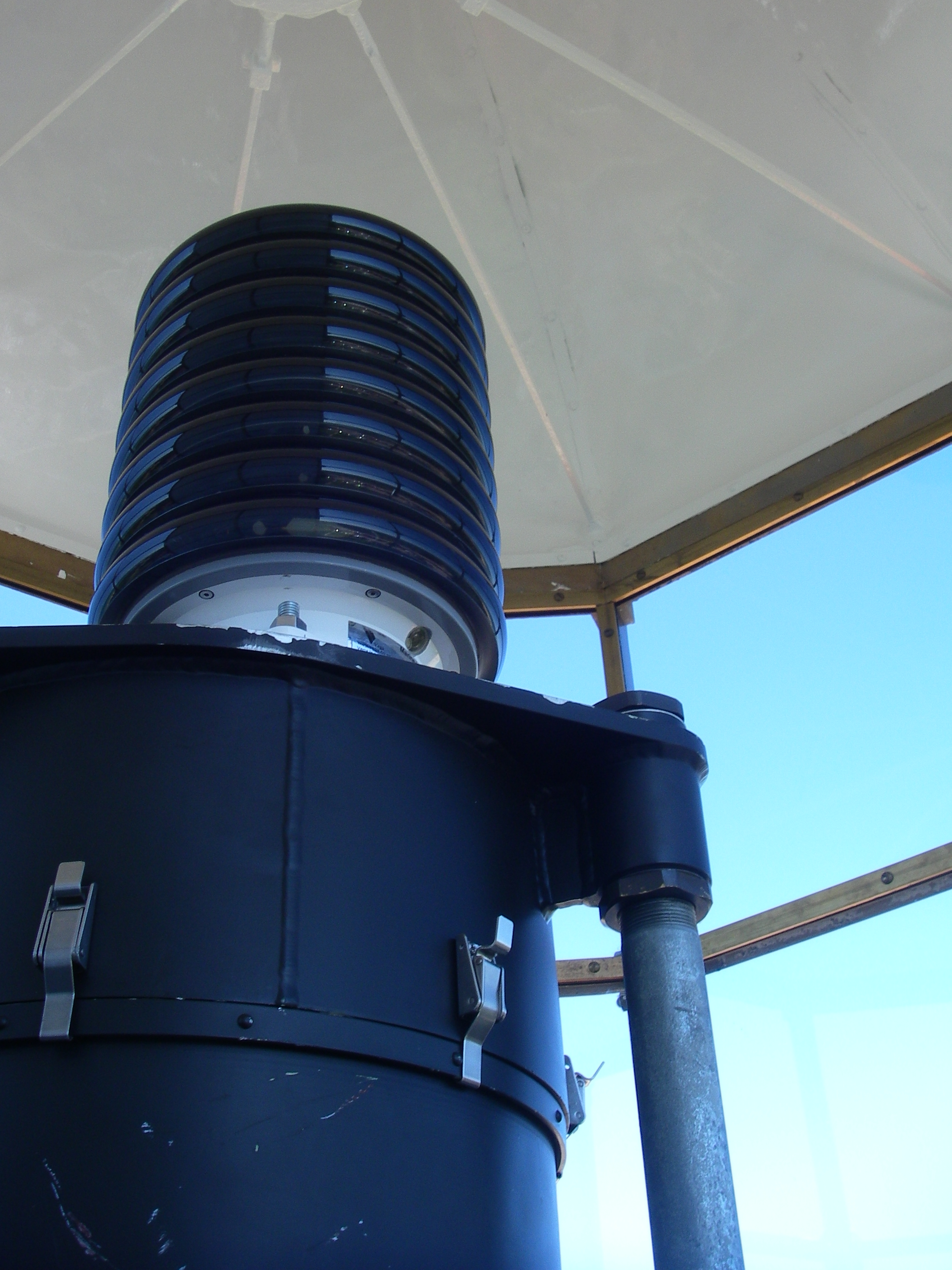
Whitefish Point Light
They call this stretch of Lake Superior the Graveyard of the Great Lakes, and the name is earned. More ships have gone down near Whitefish Point than anywhere else on Superior -- their hulls scattered across the sandy bottom, their stories preserved in the lighthouse museum that now occupies this lonely spit of land in Michigan's Upper Peninsula. The Whitefish Point Light, first lit in 1849, is the oldest operating lighthouse on the lake. Every vessel entering or leaving Superior must pass this point, threading the narrow corridor between open water and Whitefish Bay on the way to the Soo Locks. For nearly two centuries, the light has burned here -- a fixed star on a coast that has swallowed ships whole.
A Light Against the Dark
Construction began in 1847, making Whitefish Point one of the very first lighthouses on Lake Superior's shores. The original structure resembled the Old Presque Isle Light and was outfitted with Lewis lamps, later upgraded to a fourth-order Fresnel lens. But Superior's relentless winds demanded something tougher. In 1861, during the Civil War, the current tower went up -- an iron skeletal steel framework engineered specifically to let gale-force winds pass through rather than push the structure down. The design looks surprisingly modern, almost industrial, but it is over 160 years old. A third-order Fresnel lens was installed in the new tower, casting its beam far across the dark water. The station was automated in 1971, its light, fog signal, and radio beacon all controlled remotely from Sault Ste. Marie. In 2011, the old aerobeacon was swapped for an LED lantern, quieter and more efficient, though some say less romantic.
The Graveyard Beneath the Waves
The waters around Whitefish Point hold more shipwrecks than any other area on Lake Superior. The Comet, the Myron, the John B. Cowle, the Vienna -- the list goes on, each name a story of gales and miscalculation, of cargo holds filling with cold water. The sixty-foot trading vessel Invincible, the first major commercial ship built for Lake Superior, sank in a storm near here in 1816. But one wreck towers above the rest in the public imagination. On November 10, 1975, the SS Edmund Fitzgerald sank during a massive storm, taking all 29 crew members with her. The ship's bronze bell was recovered from the wreck in 1995 and now sits in the Great Lakes Shipwreck Museum at the base of the lighthouse -- a solemn memorial that draws visitors from across the continent. The Whitefish Point Underwater Preserve protects these wreck sites for future generations of divers who come to explore the cold, clear depths.
Keepers of the Flame
For over 120 years, lighthouse keepers lived at this isolated point, maintaining the light through brutal Lake Superior winters. James B. Van Rensselaer was the first, arriving in 1848 before the light was even operational. Charles Kimball served the longest stretch, tending the flame for twenty years from 1883 to 1903. Robert Carlson followed with a remarkable 28-year tenure ending in 1931. These men and their families endured months of isolation, the nearest settlement being Paradise -- a town whose name must have felt ironic during January gales. The Michigan Historical Marker erected in 1974 acknowledges this lineage, noting that the point was an early stopping place for Indigenous peoples, voyageurs, coureurs des bois, and Jesuit missionaries long before any lighthouse was imagined.
Wings Over the Point
Whitefish Point is not only a place of shipwrecks. It is a designated Important Bird Area and one of the premier birding destinations in North America. The peninsula's geography funnels migratory birds along Superior's coast, concentrating eagles, Northern goshawks, falcons, hawks, geese, and owls over the point each spring and fall. The Whitefish Point Bird Observatory, operated in affiliation with Michigan Audubon, conducts research and education at the site. It is widely regarded as the best place in North America to observe the saw-whet owl. The former 44-acre Coast Guard site is now divided among the bird observatory, the shipwreck museum, and the U.S. Fish and Wildlife Service, which administers 55 acres as part of the Seney National Wildlife Refuge. A wooden walkway lets visitors venture into the sanctuary, where the wild birds of the northern migration pass overhead in their thousands.
From the Air
Whitefish Point Light sits at 46.771N, 84.958W on the tip of a narrow peninsula extending into southeastern Lake Superior. From the air, the point is unmistakable -- a sandy finger of land jutting north into the lake, with the skeletal iron tower visible on clear days. Approach from the south along the Lake Superior shoreline for the best perspective. The nearest airport is Chippewa County International (KCIU) in Sault Ste. Marie, approximately 60 nm to the southeast. Fly at 2,000-3,000 feet AGL to appreciate the contrast between the dark Superior waters and the lighter shallows of Whitefish Bay. The wreck sites are not visible from altitude, but the museum complex and surrounding wildlife refuge are distinct on the landscape.