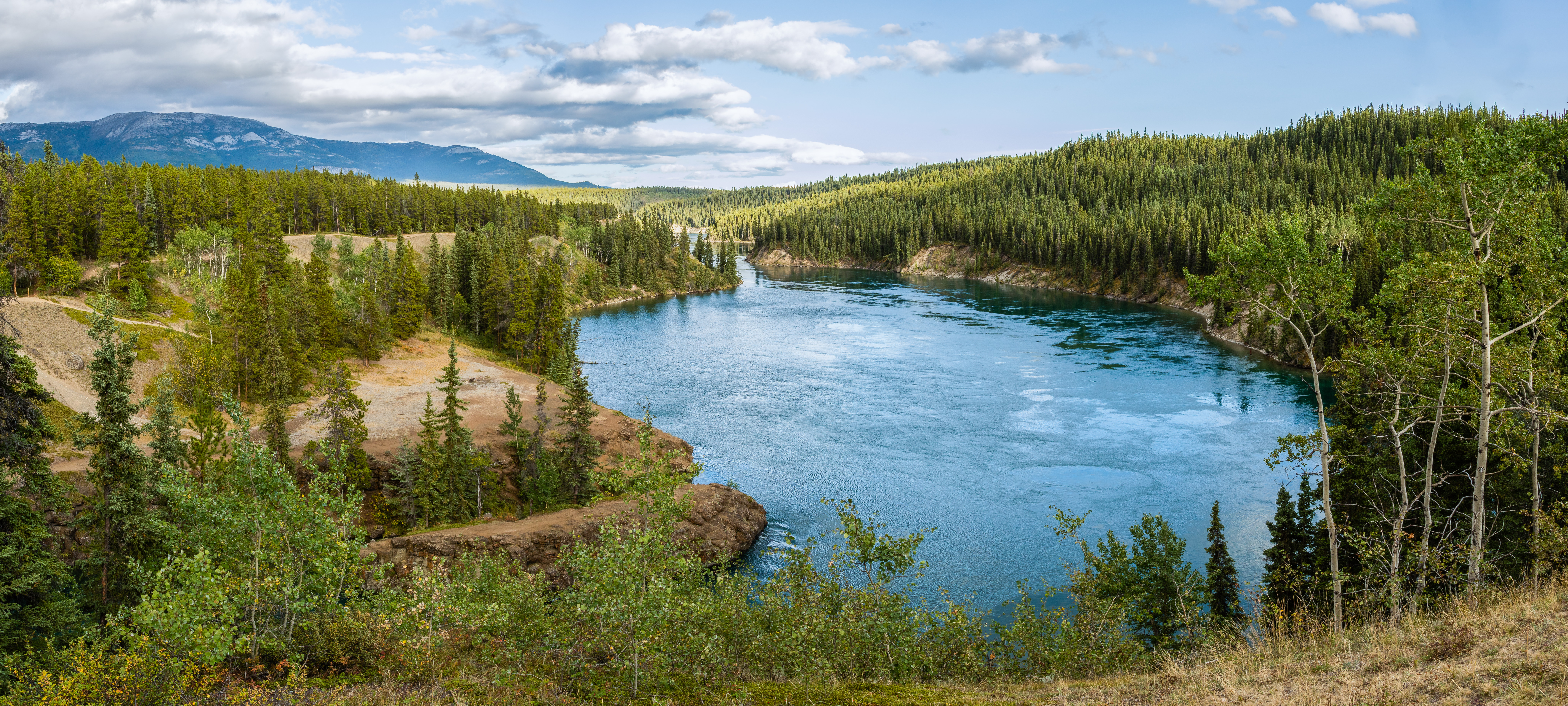
Miles Canyon: The Rapids That Killed the Klondike Dream
The Yukon River looked peaceful above Miles Canyon. Then it dropped into a slot carved through basalt, accelerated to terrifying speed, and smashed boats into walls while stampeders watched their supplies and partners drown. During the Klondike Gold Rush of 1897-98, thousands of hopefuls reached the canyon after crossing the Chilkoot or White Pass, only to face rapids that killed 150 people and destroyed countless boats in a single month. The North-West Mounted Police finally required all boats to be piloted through by experienced hands, creating an instant economy. Whitehorse - named for the rapids' resemblance to white horses' manes - grew from a tent camp to a town to the territorial capital. The rapids are dammed now, the terror forgotten, but the canyon remains.
The Obstacle
Miles Canyon forms where the Yukon River cuts through a basalt ridge, narrowing to a fraction of its upstream width. The water compresses, accelerates, and churns through the gap before hitting the rapids downstream - White Horse Rapids and Squaw Rapids (now called Rink Rapids), where standing waves could flip boats in seconds. Stampeders arrived at the canyon exhausted from the mountain passes, their supplies packed into hand-built boats. They saw the canyon and faced a choice: risk the rapids or portage everything around. Many chose to risk it.
The Deaths
In May and June 1898, as the main rush of stampeders reached Miles Canyon, the river ran high with snowmelt. The rapids were at their most dangerous. Boats overloaded with supplies capsized in the canyon; swimmers were swept into the rapids below. One estimate puts 150 dead in a single month. Bodies washed up downstream for weeks. The Mounties, watching the disaster unfold, finally intervened - Superintendent Sam Steele ordered that all women and children must walk around the rapids, and all boats must be piloted by someone who'd run the canyon before. The death toll dropped immediately.
The Business
Where the Mounties saw danger, entrepreneurs saw opportunity. Professional pilots offered to run boats through the canyon for a fee - a few dollars could save months of work and possibly your life. Jack London, later the famous author, made money piloting boats before continuing to the Klondike himself. A tramway was built to portage goods around the rapids. A tent city grew at the head of navigation below the rapids; that tent city became Whitehorse. The rapids that killed dreams created an economy that outlasted the gold rush.
The Dam
The Whitehorse Rapids are gone. A hydroelectric dam built in 1958 raised the water level, drowning the rapids that gave the city its name. Miles Canyon remains - now a scenic spot rather than a deadly obstacle, the basalt walls still visible, the water controlled and calm. The world's longest wooden fish ladder helps salmon bypass the dam. Old photographs show what stampeders faced; modern visitors see a picturesque gorge with hiking trails and suspension bridges. The terror has been engineered away, replaced by a pleasant afternoon walk.
Visiting Miles Canyon
Miles Canyon is located south of downtown Whitehorse, accessible via Miles Canyon Road. A suspension bridge crosses the canyon, offering views of the basalt walls and now-calm water. The canyon trail follows the rim with interpretive signs about gold rush history. The dam and fish ladder are visible from lookout points. Whitehorse itself has museums interpreting the gold rush, including the SS Klondike, a restored sternwheeler. The city has full services as the Yukon's capital. The canyon is accessible year-round; summer offers the most services and warmest weather. The contrast between the peaceful modern canyon and photographs of its deadly past tells the gold rush story better than words.
From the Air
Located at 60.66°N, 135.04°W just south of Whitehorse, Yukon. From altitude, Miles Canyon appears as a narrow gorge where the Yukon River cuts through dark basalt - the river narrows dramatically, then widens again below. The Whitehorse Dam is visible, the reservoir behind it calming what were once deadly rapids. Whitehorse spreads north of the canyon as the largest city in the Yukon. The Alaska Highway passes through the city. The mountains of the Coast Range rise to the west. This was the last major obstacle between the coastal passes and Dawson City's goldfields - hundreds of miles of river navigation, but this canyon was where dreams died.