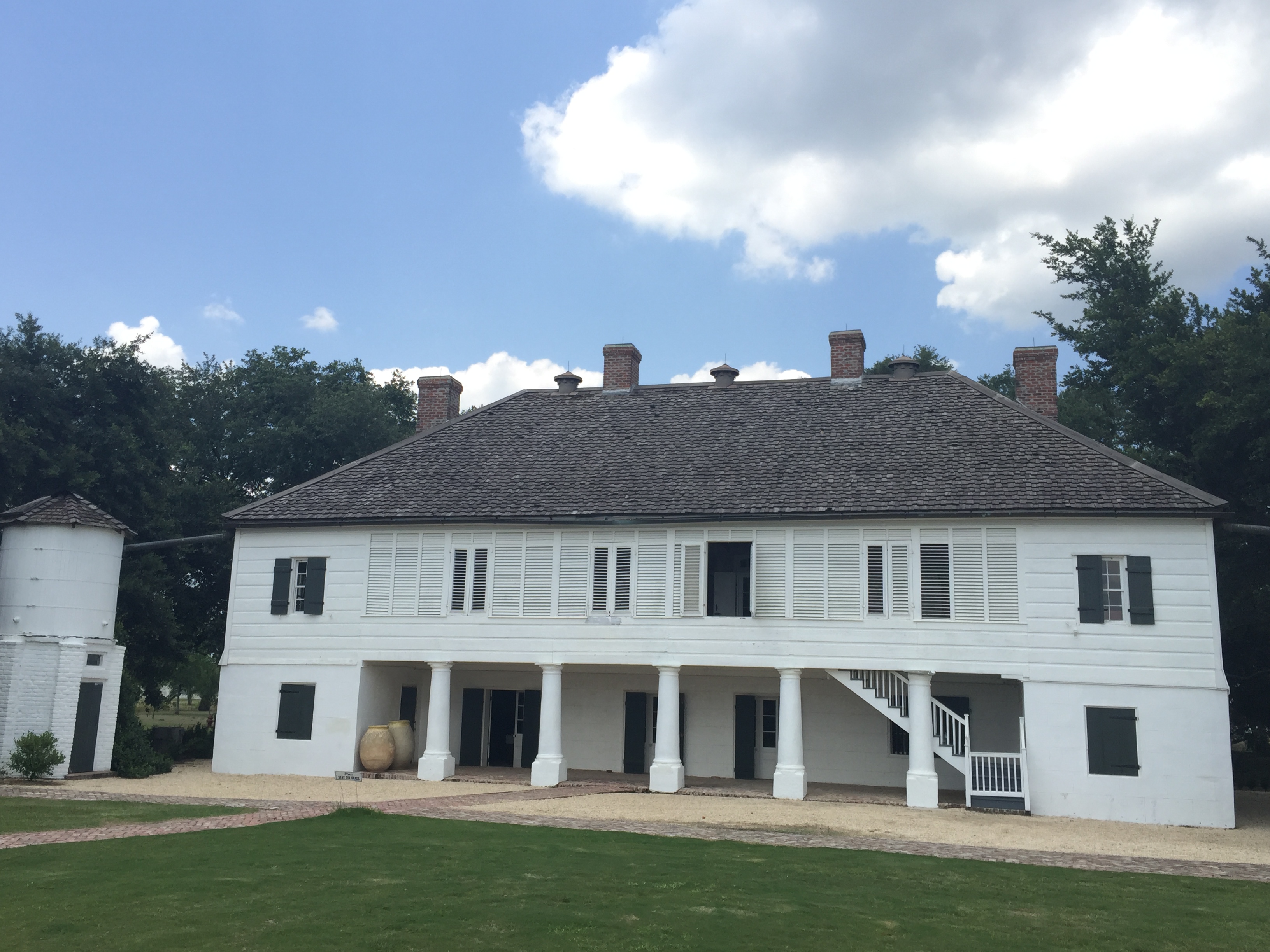
Whitney Plantation Historic District
Most plantation museums in the American South tell the story of the owners: their furniture, their architecture, their genteel way of life. Whitney Plantation, on the River Road in St. John the Baptist Parish, Louisiana, made a different choice. When it opened to the public on December 7, 2014, it became the first plantation museum in the United States dedicated exclusively to telling the story of the enslaved. No tours of lavish parlors or tales of gracious hosts. Instead, visitors walk among clay sculptures of enslaved children, read firsthand narratives collected by the Federal Writers' Project in the 1930s, and stand before a memorial to the rebels of the 1811 German Coast Uprising, the largest slave revolt in American history.
A German Family on French Soil
The story begins in 1752, when Ambroise Heidel, a German immigrant who had arrived in Louisiana around 1721 from the Rhineland, purchased land along the Mississippi and established a small indigo plantation. Like many German settlers in the river parishes, the Heidel family assimilated into French Creole culture. Their name shifted in spelling and pronunciation until they became the Haydels. Ambroise relied on approximately twenty enslaved Africans whose expertise in indigo cultivation made the operation viable. For over a century, the Haydel family owned and expanded the plantation, eventually transitioning from indigo to the far more labor-intensive sugar production after 1795. Sugar demanded more hands, and the enslaved population on the property grew dramatically. The Haydels prospered; by the mid-1800s, the plantation was a substantial operation with a French Creole raised-style main house and numerous outbuildings.
A Name Bought and Sold
The Haydel family's ownership ended in 1860. After the Civil War, in 1866, businessman Bradish Johnson purchased the property and renamed it Whitney Plantation in honor of his daughter, who had married into the Whitney family. The name stuck, even as the plantation changed hands and purposes over the following decades. The 1884 Mialaret House and its associated buildings were added to the complex in 1920, extending the working life of the plantation well into the twentieth century. Operations as a functioning plantation did not cease until 1975. Some of the land is still planted with sugarcane today. The Whitney Plantation historic district was listed on the U.S. National Register of Historic Places in 1992, recognizing its architectural significance and its role in Louisiana's agricultural and social history.
One Man's Obsession, Twenty Years in the Making
In 1999, John Cummings, a retired New Orleans trial lawyer and real estate developer, purchased the Whitney complex. He had no plans to create a typical plantation tour. Over the next fifteen years, Cummings spent more than eight million dollars of his own money restoring the property and transforming it into a museum focused on slavery. He enlisted Ibrahima Seck, a Senegalese historian and expert on the Atlantic slave trade, to serve as the museum's research director. Seck spent years combing through plantation records, slave narratives, and colonial archives. The result was a museum unlike any other in the South: one where the voices of enslaved people are central, drawn from actual testimony recorded in the 1930s Federal Writers' Project interviews. Cummings donated the entire museum and land to a nonprofit, the Whitney Plantation Museum, in 2019.
Monuments to the Unnamed
Walking the grounds of Whitney Plantation today, visitors encounter a series of memorials that give physical form to histories long suppressed. Ceramic sculptures of enslaved children stand in clusters, their eyes looking outward. A wall of honor lists the names of enslaved individuals documented in Louisiana parish records. A memorial to the 1811 German Coast Uprising depicts the rebels of the largest slave revolt in United States history, many of whom were executed and had their heads displayed along the river road as a warning. Quentin Tarantino filmed a scene for Django Unchained in the rebuilt blacksmith's shop on the property. But the real power of Whitney lies not in Hollywood connections. It lies in the quiet act of reading a name engraved in stone and recognizing a person who lived, worked, suffered, and resisted on this very ground.
From the Air
Whitney Plantation sits at 30.039N, 90.651W along the River Road in St. John the Baptist Parish, Louisiana, on the west bank of the Mississippi River near the community of Wallace. From the air, look for the cluster of historic buildings and mature trees set among sugarcane fields along LA-18 (River Road). The nearest major airport is Louis Armstrong New Orleans International (KMSY), about 24 miles to the southeast. Baton Rouge Metropolitan (KBTR) is approximately 46 miles to the northwest. Best viewed at 1,500-2,000 feet AGL. The Mississippi River bends prominently here, and the plantation is part of the broader River Road corridor of historic sites.