Wichita Mountains Wildlife Refuge
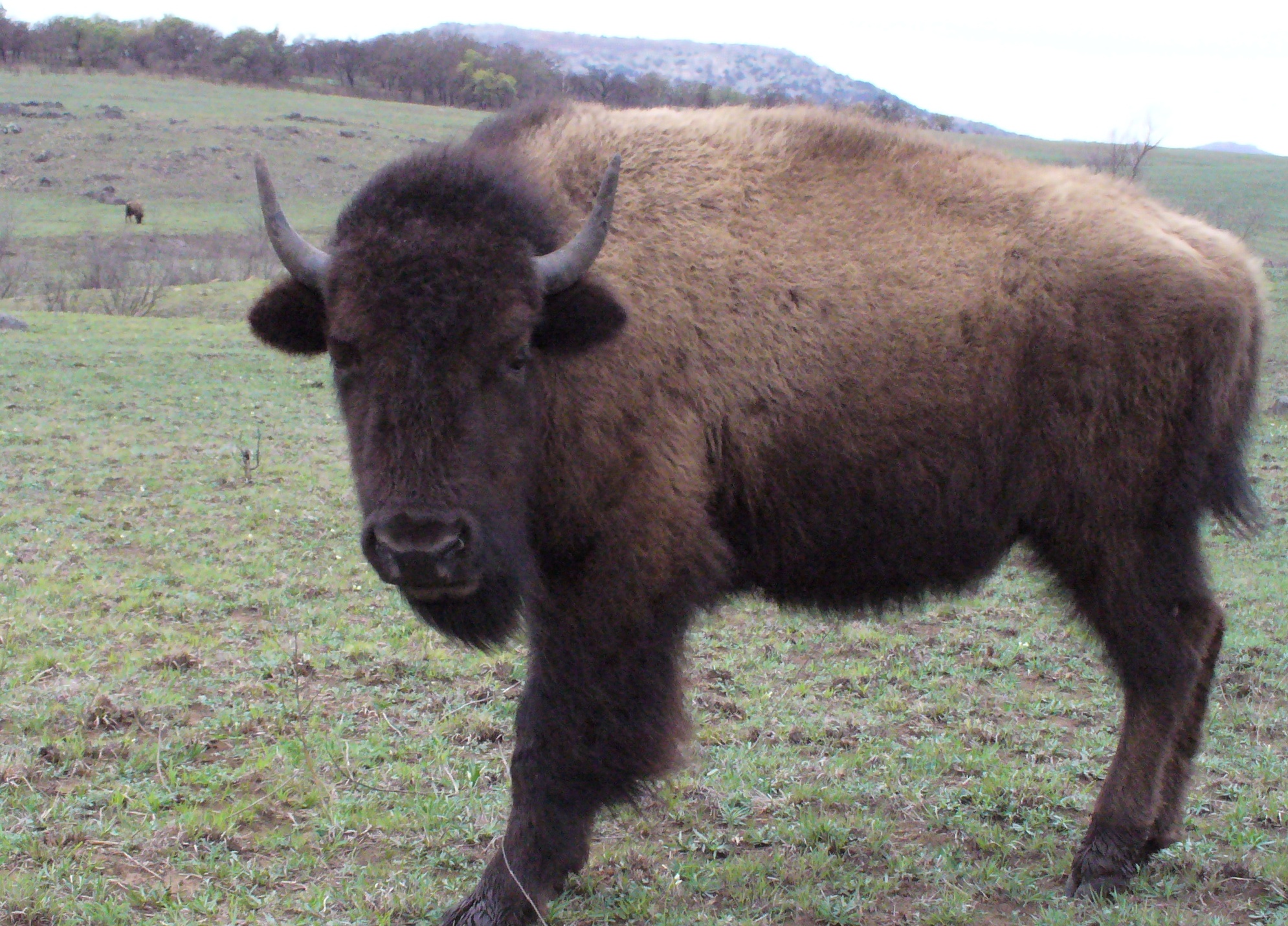
In 1907, a special train pulled into southwestern Oklahoma carrying fifteen bison -- six bulls and nine cows -- from the Bronx Zoo in New York City. Comanche leader Quanah Parker and a crowd of Native Americans and settlers turned out to welcome them. Bison had been extinct on the southern Great Plains for 30 years. The animals stepped off the railcar onto ancient ground: the Wichita Mountains are approximately 500 million years old, granite remnants of a range that once towered over an inland sea. The refuge that received those bison, established as the Wichita Forest Reserve on July 4, 1901, is the oldest managed wildlife facility in the U.S. Fish and Wildlife Service system.
Half a Billion Years of Granite
The Wichita Mountains were uplifted between 290 and 330 million years ago, but the granite itself is far older -- roughly 500 million years. These are not towering peaks. Mount Scott, the highest accessible summit within the refuge, stands at 2,464 feet, rising only 800 to 1,000 feet above the surrounding prairie. But what they lack in height they compensate for in drama: steep, rocky faces of weathered granite jutting abruptly from flat grassland, scattered with boulders that make exceptional habitat for chartreuse-green lichen called Pleopsidium flavum. A disjunct population of bigtooth maple clings to sheltered ravines here, hundreds of miles from its nearest natural population in West Texas. The mountains are named for the Wichita people who inhabited the area centuries ago.
From Forest Reserve to Conservation Landmark
The refuge's institutional history reflects the shifting priorities of American conservation. President McKinley established the Wichita Forest Reserve in 1901. In 1905, President Roosevelt redesignated it as a game preserve. It became Wichita National Forest in 1907, the same year those Bronx Zoo bison arrived. In 1936, the designation shifted again to the Wichita Mountains Wildlife Refuge under the Bureau of Biological Survey, a precursor to the Fish and Wildlife Service. Today the refuge spans roughly 59,020 acres, hosting 806 plant species, 240 species of birds, 50 species of mammals, 64 species of reptiles and amphibians, and 36 species of fish across its 13 small lakes.
The Herds That Came Back
The bison herd now numbers about 650. Alongside them graze Rocky Mountain elk -- imported from Jackson Hole, Wyoming, in 1911 to replace the extinct Merriam's elk that once roamed this region -- now the largest elk herd in Oklahoma at roughly 1,000 animals. Texas longhorn cattle are preserved here for their cultural and historic importance. White-tailed deer number about 450. Not every reintroduction succeeded: the refuge failed in its attempts to bring back the American pronghorn antelope, bighorn sheep, and prairie chicken. In 2020, the refuge joined the Department of the Interior's Bison Conservation Initiative, ending the practice of auctioning surplus animals and instead strengthening mechanisms for delivering bison to Native American tribes from federal herds.
A Climber's Mecca on the Southern Plains
Rock climbing arrived at the Wichita Mountains in the 1960s and 1970s, and the refuge has since become a regional mecca for the sport. Routes climb the granite faces of Mount Scott and formations like Echo Dome and Crab Eyes in the Charon's Garden Wilderness Area, which covers the rugged western portion of the refuge. Hikers share the trails with free-ranging bison, elk, longhorn, and prairie dogs. A narrow, winding road leads to Mount Scott's summit, offering a panoramic view that encompasses the entire refuge. Thirteen artificial lakes draw anglers for largemouth bass, sunfish, crappie, and channel catfish. Managed hunts cull excess elk and deer each fall, with hunters selected by lottery.
The Holy City in the Hills
Among the more unexpected features of a federal wildlife refuge is a 66-acre site listed on the National Register of Historic Places: the Holy City of the Wichitas. Built in the 1930s, it contains full-sized buildings designed to resemble biblical-era Israel, still used for the nation's longest-running annual Easter passion play. Nearby stands the Parallel Forest, a grove of large cedars planted in the early 1900s in rows exactly six feet apart, their geometric precision a strange contrast to the ancient, tumbled granite surrounding them. Man-made oddities aside, the refuge remains what it was meant to be: a place where the southern Great Plains can remember what they looked like before the herds vanished and the sod was broken.
From the Air
Located at 34.77N, 98.70W in Comanche County, southwestern Oklahoma, approximately 20 nm north of Lawton. The Wichita Mountains are clearly visible from altitude as granite outcrops rising from flat prairie. Mount Scott (2,464 ft) is the most prominent peak. Lawton-Fort Sill Regional Airport (KLAW) is approximately 15 nm south. The refuge encompasses 13 small lakes visible as scattered blue dots among the rocky terrain. Best viewed at 4,000-8,000 feet AGL. The granite peaks and surrounding grasslands create a distinctive visual break in the otherwise flat Oklahoma landscape.
Sources
- U.S. Fish & Wildlife Service - Wichita Mountains Wildlife Refuge
- Wikipedia - Wichita Mountains Wildlife Refuge
- Atlas Obscura - Wichita Mountains Buffalo Herd / Oklahoma History
- Oklahoma Historical Society - Wichita Mountains Elk Herd
- Oklahoma Historical Society / KGOU - Holy City of the Wichitas
- Friends of the Wichitas - Bison Conservation Initiative
- Wikipedia - Wichita Mountains (Geology)