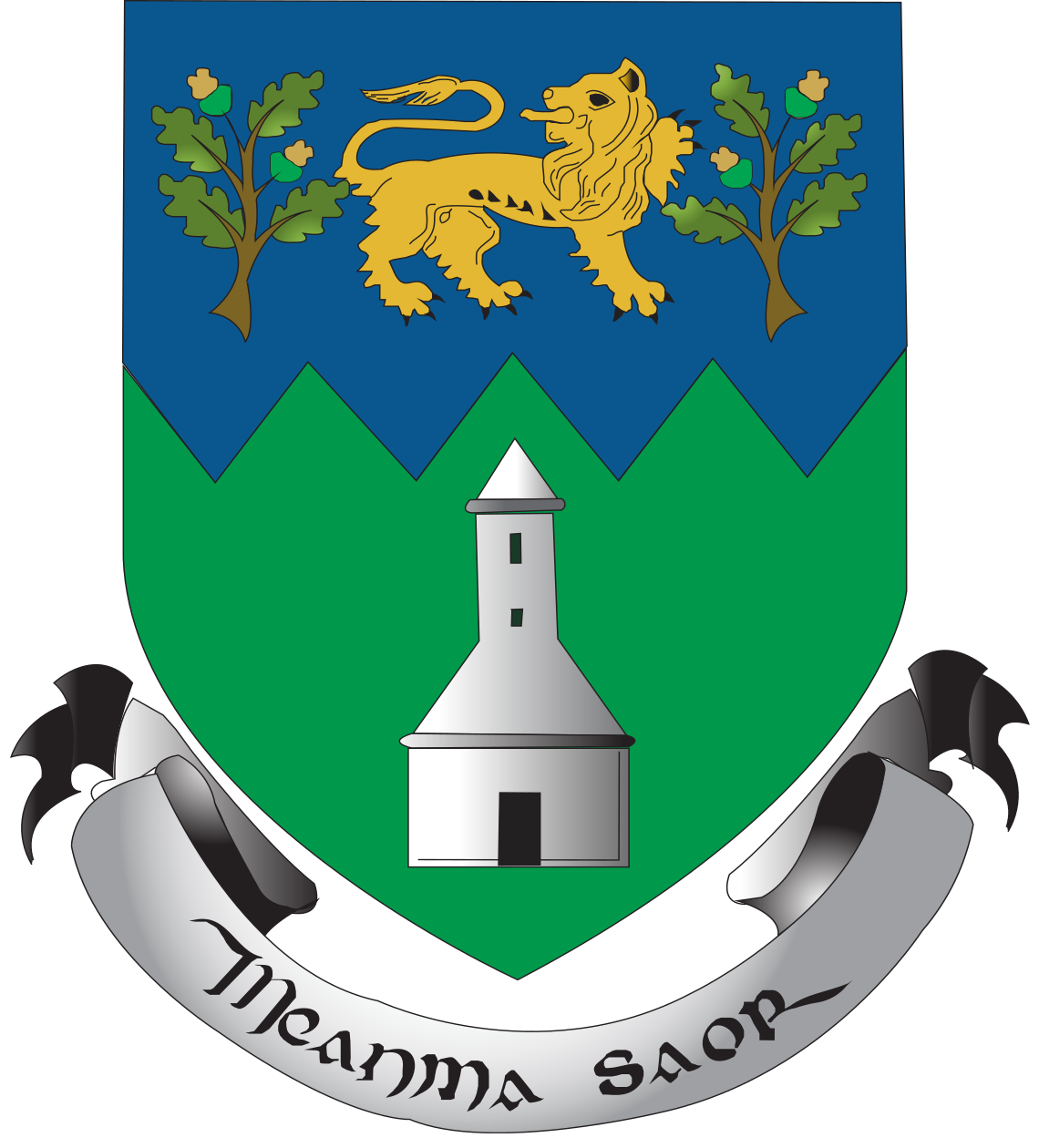
Wicklow Mountains National Park
Dubliners call it "the garden of Ireland," but that phrase undersells what the Wicklow Mountains actually are. Barely thirty kilometres south of O'Connell Street, the landscape drops its urban manners entirely. Blanket bog stretches across high ridges where the wind never quite stops. Oak woodlands crowd into glacial valleys so steep that sunlight reaches the valley floor for only a few hours each day. At 205 square kilometres, Wicklow Mountains National Park is not especially large by global standards, but its proximity to a capital city of over a million people makes it something rarer: genuine wilderness within commuting distance.
A Hermit's Valley
The park's most celebrated landscape is Glendalough, the glacial valley where St Kevin founded a monastery in the sixth century. Kevin was a man who chose solitude with conviction. According to tradition, he lived in a cave above the Upper Lake, a ledge so narrow and exposed that reaching it today requires a scramble most visitors wisely decline. Yet the community he drew to this remote valley thrived for six centuries, producing illuminated manuscripts, training scholars, and surviving repeated Viking raids. The round tower still standing in the valley was both bell tower and refuge, its entrance deliberately placed high above the ground so the door could be pulled up behind fleeing monks.
Bog, Heath, and the Military Road
Above the valleys, the Wicklow Mountains become a different world. Blanket bog covers the high ground in a spongy carpet of sphagnum moss, heather, and sedge. Walking here means trusting ground that gives underfoot, each step releasing a faint smell of peat and damp. The landscape looks empty, but peregrine falcons hunt these uplands, hen harriers quarter the heath in slow passes, and otters work the streams below. The R115 Military Road cuts through the heart of this terrain, built by British forces after the 1798 Rebellion to deny Irish insurgents the refuge that these mountains had always offered. The road remains one of the finest drives in Ireland, threading through the Wicklow Gap with views that open suddenly across miles of uninhabited bogland.
Under the Surface
The mountains hold older stories than the monks or the rebels. Lead and zinc ore ran through veins in the granite, and from 1825 the Glendalough Mining Company extracted galena from tunnels driven deep into Camaderry mountain. By 1859, miners had connected the Glendasan and Glendalough workings through a series of adits that bored straight through the mountain, allowing ore to be transported to processing works in the valley below. The rusted remains of ore crushers still stand at the Miner's Village near the Upper Lake, though the tramway and inclined rail system that once carried rock down the slopes are gone. Even earlier, the 1795 Wicklow Gold Rush had drawn prospectors into these hills, mapping geology that would shape mining operations for decades.
The Long Campaign for Protection
For a park so close to a major city, Wicklow Mountains was surprisingly slow to receive official protection. Proposals circulated for years before Taoiseach Charles Haughey announced the park's establishment at Glendalough in 1988. An interpretive centre was financed in 1990, and the park officially opened in 1991. Even then, its boundaries were modest. A 2009 expansion added 28 square kilometres, and the National Parks and Wildlife Service continues to manage conservation, research, and the delicate relationship between the park and surrounding farming communities. The variety of habitats within those boundaries is remarkable: deciduous woods where bluebells carpet the floor in spring, exposed scree slopes, upland grassland, and dense coniferous plantations.
Dublin's Escape Hatch
On any weekend with decent weather, the trails fill with Dubliners who need the mountains the way coastal people need the sea. Nine waymarked trails of varying difficulty thread through Glendalough alone, from easy lakeside strolls to the demanding Spinc ridge walk that climbs above the Upper Lake. Rock climbers have worked the south-facing granite cliffs above the Miner's Village since 1948, with routes reaching over 100 metres in length. But the park rewards those who go further. The 30-kilometre Saint Kevin's Way, a medieval pilgrimage route beginning in Hollywood village, follows ancient paths through the mountains to end where Kevin himself began, in the valley between two dark lakes.
From the Air
Located at 53.02N, 6.40W in the Wicklow Mountains south of Dublin. From the air, the park appears as a large tract of green and brown upland terrain contrasting sharply with Dublin's urban sprawl to the north. Glendalough's twin lakes are visible in the glacial valley. The Military Road (R115) is traceable as a thin line across the bog. Nearest airports: Dublin (EIDW) 35km north, Weston (EIWT) 25km northwest. Best viewed at 3,000-5,000 feet for valley detail.