Wideroe Flight 710
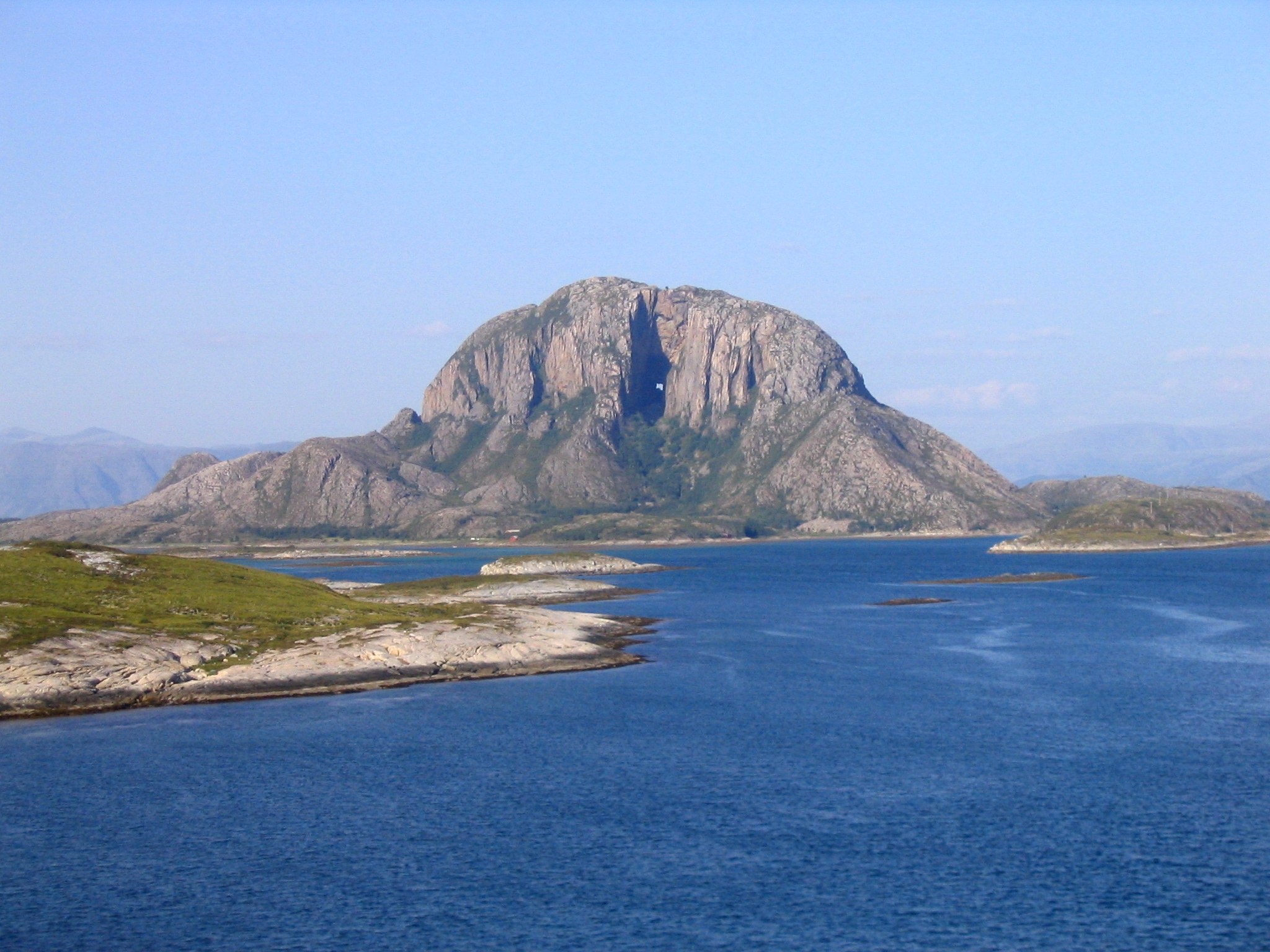
At 20:29 on 6 May 1988, the ground proximity warning system aboard Wideroe Flight 710 flashed 'minimum.' One second later, the de Havilland Canada Dash 7 struck the western face of Torghatten, a 271-meter mountain that rises abruptly from an otherwise flat coastal landscape southwest of Bronnoy sound Airport. All thirty-six people on board -- thirty-three passengers, two pilots, and a flight attendant -- were killed instantly. The crash remains the deadliest aviation accident in Northern Norway and the deadliest ever involving the Dash 7 aircraft type.
The Mountain in the Fog
Torghatten is one of Northern Norway's most distinctive landmarks, famous for the natural tunnel that pierces its center. On the evening of 6 May, however, the mountain was wrapped in fog. Flight 710, registered as LN-WFN, had departed with a full load and made a stopover at Namsos, where sixteen passengers disembarked. The remaining passengers continued toward Bronnoy sound. Captain Bjorn Hanssen, a 58-year-old veteran who had flown for Wideroe since 1960 with nearly 20,000 hours of experience, was pilot flying. First Officer Johannes Andal, just 31, had only 85 hours on the Dash 7 -- he had been checked out on the type barely three months earlier. A passenger with no airline connection sat in the cockpit jump seat, granted the privilege through an acquaintance in the company.
A Descent Started Too Soon
The investigation that followed painted a picture of compounding procedural failures. At 20:24, the captain briefed the first officer that they would descend to altitude at Torghatten, using a name that appeared nowhere on the official navigation charts. The aircraft was supposed to level out at 750 meters; instead, it leveled at 500. The next descent began too far from the airport, bringing the aircraft below the safe altitude for the terrain. Conversations between the captain and the jump seat passenger -- inaudible on the cockpit voice recorder -- interrupted the critical communication between the two pilots. The crew never established a method for double-checking their descent plan, and the approach continued without the mutual control procedures that might have caught the error.
Systemic Failures
The Accident Investigation Board Norway found no mechanical fault with the aircraft. The pilots had full control when they flew into Torghatten, making it a textbook case of controlled flight into terrain. But the commission's findings reached far beyond that single cockpit. Interviews with other Wideroe pilots revealed a culture of deviation from standard procedures, rooted in the airline's transition from operating only the smaller Twin Otter to the more demanding Dash 7 -- a transition the commission judged had been poorly managed. The airline lacked a Dash 7 simulator. Flight plans routinely made mutual control procedures impractical, so crews commonly skipped them. Five errors were found on Wideroe's own navigation charts for the approach area, including a closed marker beacon still depicted and height limitations communicated through text annotations rather than clear graphical presentations.
Grief, Press Ethics, and Safer Skies
Flight 710 was the second of four fatal Wideroe accidents between 1982 and 1993, each of which exposed similar operational shortcomings. The first, Flight 933, had already revealed a poor cockpit culture, but follow-up was derailed partly by a conspiracy theory about a fighter jet collision. Two more crashes followed: Flight 839 in 1990 and Flight 744 in 1993. The pattern forced a reckoning not only within the airline but across Norwegian aviation. The press coverage of the Torghatten disaster also changed Norway. Newspapers published close-up photographs of grieving families on their front pages, provoking complaints and an internal debate among journalists that led to a lasting self-imposed rule: private sorrow would no longer be treated as public spectacle. In 2007, Bronnoy sound Airport installed a satellite-based landing system. At the opening ceremony, an Avinor official stated directly that the technology would have prevented both Flight 710 and the 1993 Namsos crash. For the thirty-six people aboard LN-WFN, the fix came nineteen years too late.
From the Air
Located at 65.39N, 12.09E. Torghatten mountain (271 m / 889 ft) is unmistakable from the air -- look for the famous natural hole through its center, visible from certain angles. The crash site is on the western face. Bronnoy sound Airport (ENBN) lies approximately 5 nm to the northeast. Pilots should note this area's frequent low cloud and fog, the very conditions that contributed to the 1988 disaster. The Helgeland coast here is otherwise relatively flat, making Torghatten a prominent terrain feature. Recommended viewing altitude: 2,000-4,000 feet, weather permitting.