Widerøe Flight 839
Sixty-three seconds. That is how long Widerøe Flight 839 was in the air before it hit the water off Værøy, a small island at the southern edge of the Lofoten archipelago in northern Norway. On April 12, 1990, a de Havilland Canada DHC-6-300 Twin Otter took off into winds that had been clocked at 57 knots -- seven knots above the aircraft's ground-operation limit. The tail rudder and tailplane cracked under the strain, and the plane became uncontrollable. Eight seconds later, all five people on board were dead. No aircraft has taken off from Værøy Airport since.
An Airport the Wind Owned
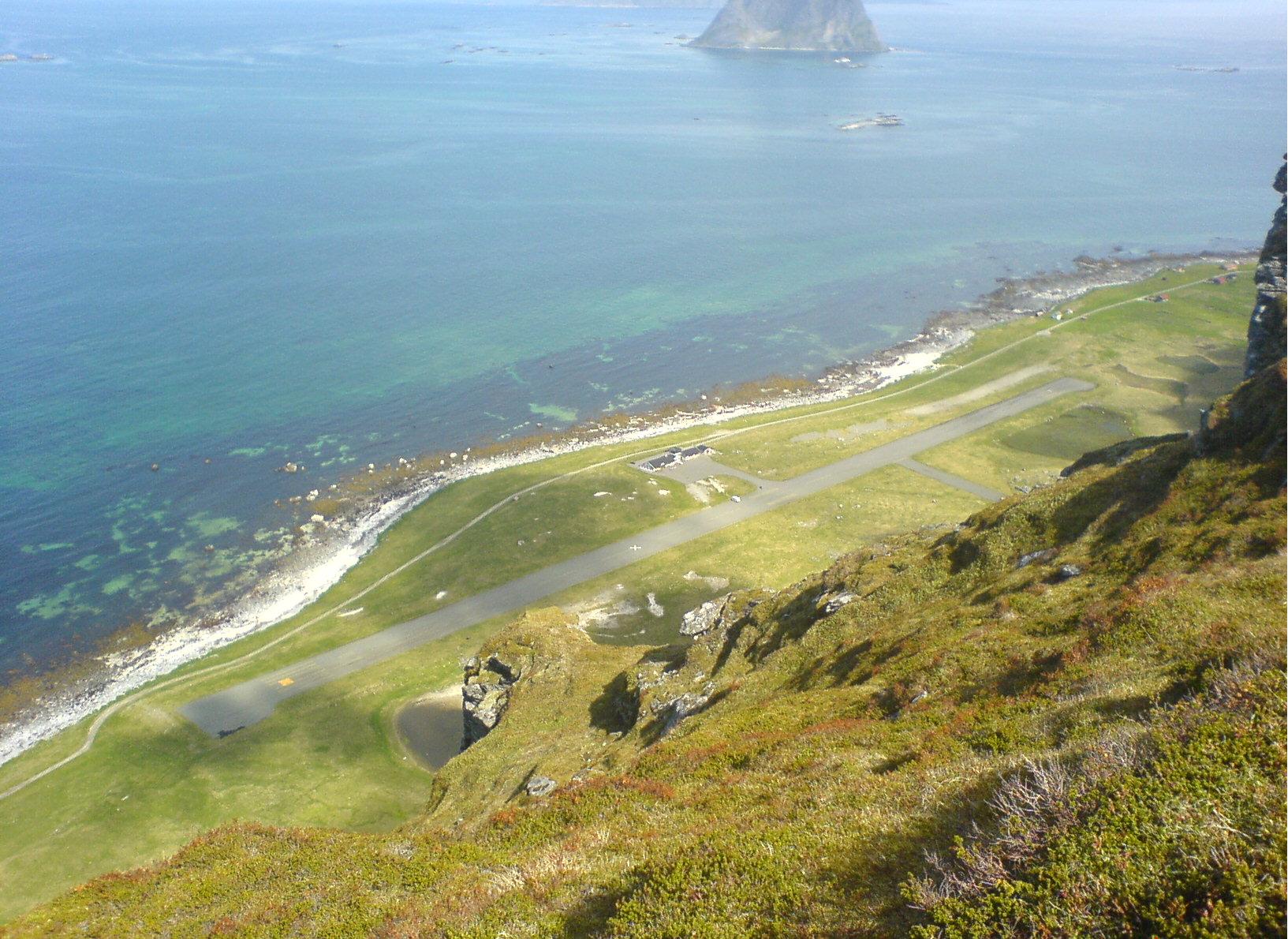
Værøy sits exposed in the Norwegian Sea, its 800-odd residents dependent on boats and planes for connection to the mainland. The airport, perched on the island's terrain, had always been a difficult proposition. Uneven and powerful winds gave it notoriously low regularity, forcing Widerøe to cancel up to half its scheduled departures. Pilots knew the strip well and feared it in bad weather. On that April afternoon, conditions were deteriorating. The wind reading of 57 knots exceeded the 50-knot limit for Twin Otter ground operations, yet the aircraft began its taxi and takeoff roll. Within a minute of leaving the ground, the structural forces tore the tail assembly apart. The wreckage was found three days later, roughly 2,300 meters from the airport, scattered across the seafloor at about ten meters' depth.
The Fallout
The crash did more than end five lives. It ended an airport. Widerøe announced within weeks that it would not resume service to Værøy and would decline its operating concession unless the island received a new facility. The chairman of the airline's pilots' union, Captain Helge Høvik, went further, questioning the safety of several other regional Norwegian airports -- places built at the bottoms of valleys, on hilltops, and wedged between mountains. In 1992, the Norwegian Ministry of Transport and Communications made the closure permanent. Three years later, Værøy Heliport opened on the island's southern end, with Helikopter Service awarded the public service obligation to fly the route. The abandoned runway sits quiet now, used occasionally as a helicopter reserve landing site in foul weather.
A Question of Metal
The Norwegian Accident Investigation Board published its conclusions in 1991, attributing the crash to the extreme wind conditions. The case seemed closed. Then, in May 1994, English aviation engineer Hugh Tyrer told the Narvik newspaper Fremover that he believed the real cause was metal fatigue in the elevator transfer mechanism's end piece -- a component so degraded it would have failed eventually regardless of wind. Widerøe had quietly grounded all its Twin Otters after the crash to inspect this very part, and de Havilland Canada had issued a global alert to operators of the 800 Twin Otters then flying worldwide. Eighty-six end pieces were replaced, though none showed fatigue comparable to that of LN-BNS. The revelation prompted demands from a member of parliament and the president of the Norwegian Airline Pilots Association for a new inquiry. Critics argued that de Havilland Canada had exerted too much influence over the original investigation.
Vindication and Legacy
The Accident Investigation Board commissioned the National Aerospace Laboratory in the Netherlands to test the disputed components independently. Their report, published on March 23, 1995, upheld the original conclusion: the wind, not the fatigue, was the primary cause. The Widerøe pilots' union, initially skeptical, accepted the finding by July. Det Norske Veritas withdrew its earlier objections. Journalist Oddvar Kristoffersen of Fremover won the prestigious SKUP Award for 1994 for his dogged reporting on the controversy -- a recognition that even when the official answer holds, the questions mattered. The crash was later featured in the Canadian documentary series Mayday as the episode titled "Norwegian Nightmare." For the people of Værøy, the legacy is tangible every day: the helicopter that arrives where an airplane once did, a reminder of what the North Atlantic wind can do to a machine built for calmer skies.
From the Air
Located at 67.68°N, 12.67°E on the island of Værøy in southern Lofoten. The former Værøy Airport runway is visible from the air, now disused. Nearest active airports include Leknes Airport (ENLK) and Svolvær Airport (ENSH). The area is known for severe and unpredictable wind conditions, especially in autumn and winter. Recommended viewing altitude: 3,000-5,000 ft for the island and former runway. Værøy Heliport (ENVR) is the island's current air connection.