Willow Run
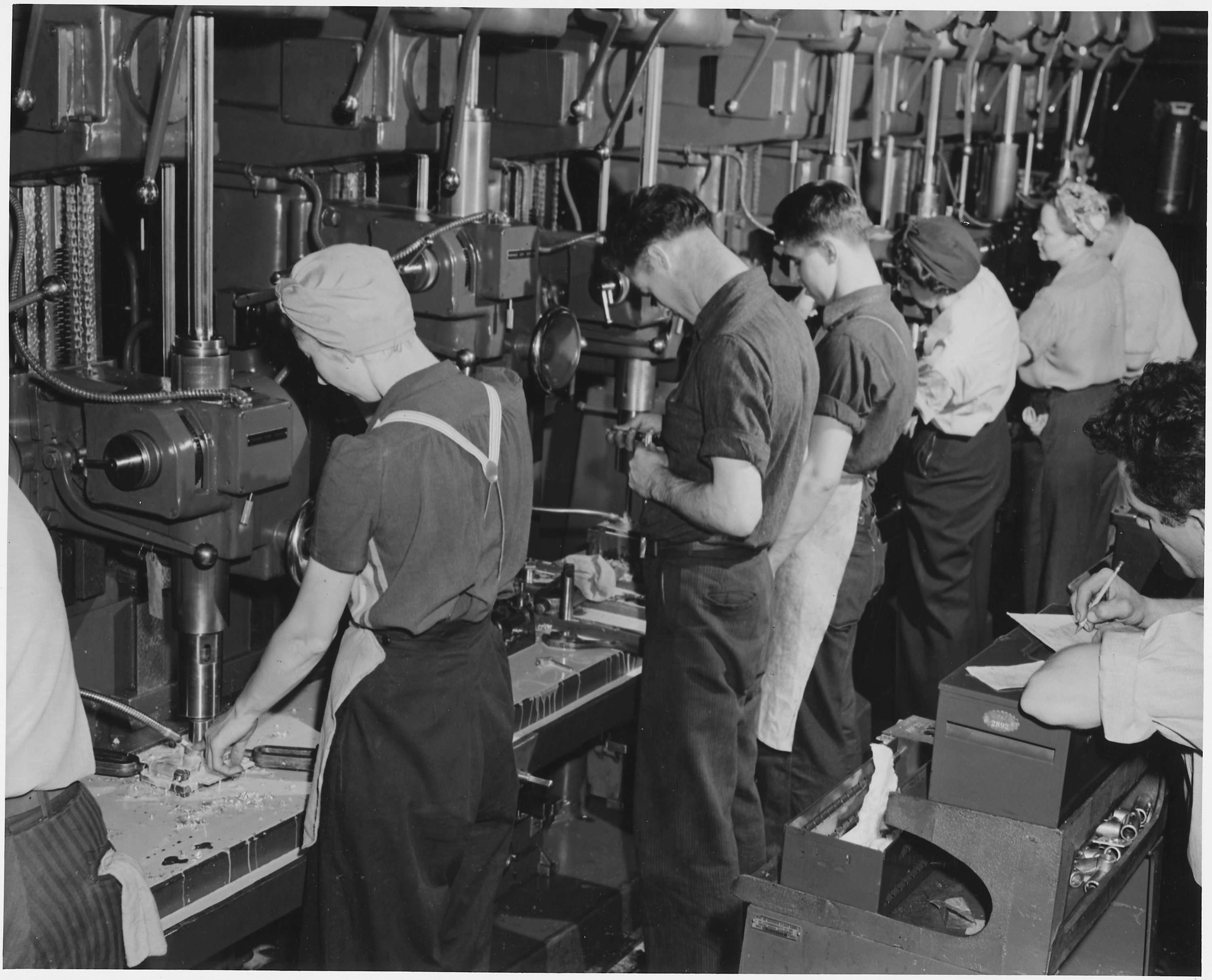
By 1944, a finished B-24 Liberator heavy bomber rolled off the assembly line at Willow Run every 63 minutes, twenty-four hours a day, seven days a week. The 3.5-million-square-foot factory -- thought to be the largest building under one roof anywhere in the world -- had an aircraft assembly line stretching over a mile. It was designed by the great industrial architect Albert Kahn and built by Ford Motor Company on former farmland between Ypsilanti Township and Belleville, Michigan. The story of Willow Run is a story of American industrial might turned to desperate purpose: an automobile company that had to learn, painfully and publicly, how to build airplanes, and a workforce of 42,500 people who remade themselves into the arsenal of democracy.
From Boys' Camp to Bomber Plant
The name Willow Run comes from a small tributary of the Huron River that once meandered through pastureland along the Wayne-Washtenaw county line. Henry Ford bought the land in 1931 from a family called Quirk Farms and turned it into a social experiment: Camp Willow Run, where inner-city boys aged 17 to 19 -- mostly sons of dead or disabled World War I veterans -- learned farming, nature, and what Ford considered the virtues of country living. The boys planted crops, collected maple syrup, and sold their produce at a farm market. Ford built a small chapel on the grounds, one of seven Chapels of Martha and Mary he dedicated as a tribute to his and his wife Clara's mothers. That chapel still stands, serving the Belleville Presbyterian Church, which bought it for one dollar in 1978 after it passed through the hands of Kaiser-Frazer and General Motors.
Learning to Build Bombers
When construction began in April 1941, Ford had not built an airplane since the Trimotor of the 1920s. The company was initially assigned to produce B-24 components, with Consolidated Aircraft and Douglas Aircraft handling final assembly. Remote assembly proved a disaster, and by October 1941 Ford received permission to build complete Liberators on its own. The transition was brutal. A 1943 congressional committee issued a scathing report: Ford had created a production line that too closely resembled an automobile assembly line "despite the warning of many experienced aircraftmen." Quality was uneven, labor turnover was staggering -- in one month, Ford hired 2,900 workers and lost 3,100. The factory sat nearly an hour from Detroit, and wartime gasoline and tire rationing made commuting miserable. Each month, 8,200 workers were drafted into military service. The Aircraft Apprentice School pushed 8,000 students per week through training just to keep the line staffed.
One Bomber Every Hour
The bugs were eventually worked out. At its peak in April 1944, Willow Run produced 428 B-24s in a single month, with the record run of 100 completed bombers flying away between April 24 and 26. By 1945, Ford was building 70 percent of all B-24s in two nine-hour shifts. When the Liberator assembly line finally shut down in May 1945, Ford had built 6,972 of the 18,482 total B-24s produced during the war and supplied knockdown kits for 1,893 more assembled at Consolidated in Fort Worth and Douglas in Tulsa. The B-24 Liberator remains the most-produced heavy bomber in history. At Willow Run, parts flowed in from nearly 1,000 Ford factories and independent suppliers. Finished bombers were handed to the 1st Concentration Command, which assigned crews, installed theater-specific modifications, and dispatched aircraft to combat zones worldwide.
The Housing Crisis That Built a Community
A factory of 42,500 workers in the rural Michigan countryside created an instant housing emergency. Workers drove 100 miles or rented every spare room between Ann Arbor and Grosse Pointe. The Federal Public Housing Administration stepped in, building Willow Run Lodge -- fifteen dormitory buildings with 1,900 rooms for 3,000 single people -- and Willow Run Village, temporary flat-top buildings housing 2,500 families. West Court added 1,000 apartments, some with no bedrooms at all. African-American architect Hilyard Robinson designed an 80-unit community that remained in use as public housing until 2016, when it was demolished and rebuilt. The Michigan State Historic Preservation Office recognized Parkridge Homes in 2017 with historic markers. A 1952 University of Michigan sociological study documented the crisis, noting that industrial culture offered no framework for deciding when a manufacturer should provide worker housing versus relying on outside resources.
Reinvention After Reinvention
Ford declined to buy the plant after the war. Kaiser-Frazer moved in, producing 739,000 automobiles between 1947 and 1953, along with 88 C-119 Flying Boxcar cargo planes during the Korean War. When a 1953 fire destroyed GM's transmission factory in Livonia, the salvaged machinery was relocated to Willow Run and back in production within nine weeks. GM expanded the complex into a powertrain factory and assembly plant, building Corvairs and Novas and, during the Vietnam War, M16A1 rifles and M39A1 autocannons. By GM's 2009 bankruptcy, operations had dwindled to nothing. The Powertrain plant closed in December 2010. Most of the historic bomber plant was demolished in 2013-2014, but the Yankee Air Museum -- now the Michigan Flight Museum -- saved 144,900 square feet, preserving a fragment of the mile-long assembly line where the arsenal of democracy once thundered to life. Willow Run Airport remains active for cargo and general aviation.
From the Air
Located at 42.24N, 83.55W between Ypsilanti and Belleville, Michigan, approximately 20nm west of Detroit. Willow Run Airport (KYIP) remains an active cargo and general aviation airfield on the site of the original bomber plant airfield built during WWII. The airport has two runways (5L/23R at 7,526ft and 5R/23L at 7,294ft). Look for the distinctive long factory footprint adjacent to the airport -- though most of the original building has been demolished, the Yankee Air Museum / Michigan Flight Museum occupies a preserved section on the airport grounds. Detroit Metropolitan Airport (KDTW) is approximately 5nm to the southeast. Ann Arbor Municipal Airport (KARB) is approximately 10nm to the northwest. Flat terrain, typically good visibility except in Great Lakes weather systems.