Wind Cave National Park
The cave breathes. When storm clouds gather over the Black Hills, air rushes out of a small opening in the earth with enough force to knock hats from heads. When fair weather returns, the earth inhales, drawing air back underground through that same basketball-sized hole. The Lakota noticed this centuries ago and understood it as the breath of their sacred place of emergence. Today, this phenomenon gives Wind Cave its name and hints at the vast labyrinth below: more than 150 miles of surveyed passages and counting, making it one of the longest caves on Earth.
The Breath of the Earth
What makes Wind Cave truly remarkable is the physics of its breathing. The cave system contains so much air volume that changes in barometric pressure create a measurable rush of wind through its few small openings. Low pressure pulls air out; high pressure pushes air in. The effect is so reliable that early settlers used the cave as a weather predictor: outflowing wind meant rain was coming. This breathing also prevented the Lakota from entering; they considered the cave sacred, the site where humanity first emerged into the world. The first recorded entry came in 1881, when American settlers followed the mysterious wind to its source.
Honeycomb of Stone
Beneath the prairie lies a geological oddity. Unlike most caves, Wind Cave was not carved by flowing water. Instead, it formed when hydrogen sulfide-rich water dissolved the limestone from within, creating a dry, intricate maze. The result is a cave dominated by boxwork, a delicate honeycomb pattern of calcite fins that projects from walls and ceilings like crystalline lattice. Wind Cave contains approximately 95% of the world's known boxwork, with nearby Jewel Cave holding most of the rest. The formations developed over 300 million years, when calcite filled cracks in the original limestone. As the softer rock dissolved, the harder calcite veins remained, creating patterns that look like nothing else underground. Scientists suspect Wind Cave connects to other Black Hills caves through these boxwork passages, potentially forming the longest cave network on Earth.
Above the Darkness
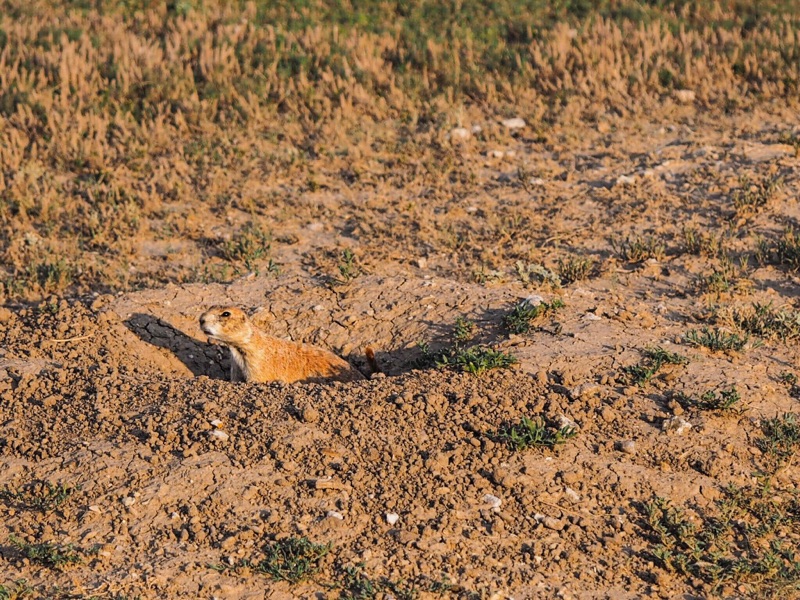
The national park protects more than underground wonders. Above Wind Cave spreads one of the last intact prairies in America, a rolling expanse of mixed-grass that has never felt a plow. Bison wander these hills, one of only four genetically pure and free-roaming herds remaining on the continent. They share the land with prairie dog towns and one of the last wild populations of the critically endangered black-footed ferret. The landscape offers a glimpse of what the Great Plains looked like before European settlement transformed them into farmland. Theodore Roosevelt established Wind Cave as the sixth national park in 1903, protecting both the cave and this remarkable surface ecosystem.
The Constant World Below
Visitors enter through an elevator built by the Civilian Conservation Corps, descending into a realm of constant 53 degrees Fahrenheit. The cave offers no stalactites or stalagmites, those familiar formations created by dripping water. Instead, cave popcorn and flowstone accent the dominant boxwork. Tours range from paved walkways lit by modern lighting to wild caving expeditions through tight passages. Bats cluster near the natural entrance in winter but rarely venture deeper. In the cave's most remote pools, bacteria thrive that exist nowhere else on Earth, isolated in their dark niches for millions of years. The cave continues to reveal new passages with each survey, its full extent still unknown after more than a century of exploration.
From the Air
Located at 43.576N, -103.439W in the southern Black Hills of South Dakota. The park sits 6 miles north of Hot Springs. The nearest commercial airport is Rapid City Regional Airport (KRAP), approximately 50 miles north. Best viewed from 3,000-5,000 feet AGL. The rolling prairie landscape is visible from altitude, though the cave entrances are not discernible from the air. Look for the park's visitor center and roads against the green mixed-grass prairie. Nearby landmarks include the distinctive ridgelines of the Black Hills to the north and Badlands National Park to the east.