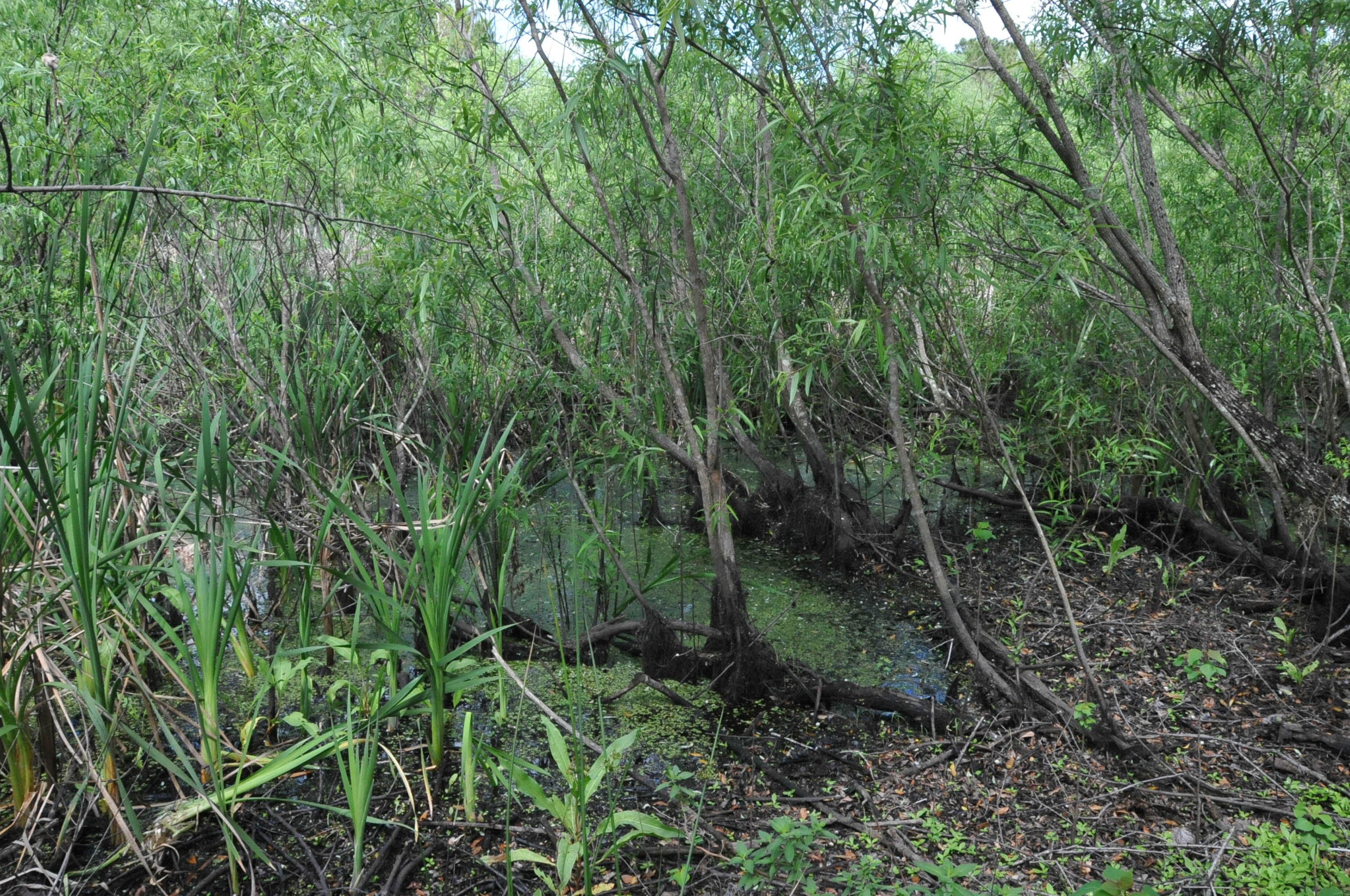
Windover Archeological Site
The backhoe operator noticed skulls in his bucket. It was 1982, and a crew was building a road through a shallow pond in a new housing development near Titusville, Florida. The sheriff came, then the medical examiner, then a forensic expert who initially mistook the remains for modern Caucasian bones. They were wrong by about seven thousand years. Beneath the dark peat of Windover Pond lay one of the most extraordinary archaeological finds on the continent: 168 human skeletons, many with intact brain tissue, buried in a ritual cemetery that predates the Egyptian pyramids by three millennia.
Skulls in the Bucket
What happened next at Windover Farms defied the usual script of development versus preservation. The property developers, Jack Eckerd and Jim Swann, did not call their lawyers. They halted construction, called in archaeologists, and paid for radiocarbon dating out of their own pockets. The results came back: 7,210 and 7,320 years Before Present. The developers changed their entire housing plan to preserve the pond and donated $60,000 worth of pumping equipment. Researchers sank 160 wells around the site to lower the water table, then dug by hand through waterlogged peat that one archaeologist compared to excavating chocolate mousse underwater. Only half the pond was excavated, with the rest left undisturbed for future investigation with better technology.
The Boy Who Was Carried
Among the 168 individuals recovered were men, women, and children ranging from infants to elders of about 60 years. One skeleton told a story that still resonates. A boy of about 15 had severe spina bifida, a condition that almost certainly left him paralyzed below the waist. One of his feet was missing, the stump long healed. Every bone in his body was fragile. Yet this hunter-gatherer community had carried him, fed him, and kept him alive for 15 years in a world without wheels, permanent shelter, or surplus food. Children were buried with more grave goods than adults, a clear signal of how deeply this community valued its young. Some adults bore healed wounds and embedded spear points, evidence of conflict survived and tended.
Minds Preserved in Peat
In late 1984, researchers opened several skulls and found lumps of greasy, brownish material inside. X-rays, CAT scans, and MRIs confirmed what seemed impossible: recognizable brain structures had survived for seven thousand years, preserved by the acidic peat. At least 91 skulls contained intact brain tissue with visible cell structures under microscopy. The preservation was so complete that scientists could determine the bodies had been buried within 24 to 48 hours of death. DNA sequenced from these ancient brains revealed genetic markers linking the Windover people to populations from Asia, though their DNA does not match any Native American group alive today. One family used this burial site for over a century, returning generation after generation to inter their dead in the dark water.
Weavers Before the Pharaohs
The artifacts buried alongside the dead revealed a surprisingly sophisticated material culture. Archaeologists recovered 86 pieces of fabric from 37 graves, woven in seven distinct textile patterns used for clothing, bags, matting, and possibly blankets. These people hunted white-tailed deer, raccoon, and opossum, fished the coastal waters, and gathered plants. They stored food in bottle gourds, the earliest evidence of vegetable container storage found anywhere in North America. The burials themselves followed careful ritual: most bodies were positioned on their left sides, heads facing west, wrapped in woven fabric and pinned beneath the water by sharpened stakes. Many Native American traditions hold that water blocks the passage of spirits, and Florida's Archaic people may have shared this belief thousands of years ago.
What the Water Keeps
Windover is not alone. Florida's limestone landscape holds a network of ancient underwater burial sites: Little Salt Spring, Bay West, Republic Grove, and the Manasota Key Offshore site, discovered in 2016 beneath the Gulf of Mexico. All share the same tradition of peat burials and sharpened stakes. Archaeologist Jerald T. Milanich called Windover one of the most significant archaeological sites ever excavated, and the federal government designated it a National Historic Landmark in 1987. The unexcavated half of the pond still waits, its secrets sealed in peat. Whatever instruments and methods future archaeologists bring to Windover, the pond has proven itself a patient keeper of the dead.
From the Air
Windover Archeological Site is located at 28.54N, 80.84W, near Titusville, Florida, within a residential area. From the air, the pond is a small dark feature amid suburban development. The Kennedy Space Center and its Vehicle Assembly Building are visible to the east. Best viewed below 3,000 feet. Nearest airports: Space Coast Regional Airport (KTIX) 3nm east, NASA Shuttle Landing Facility (KTTS) 8nm east, Orlando Melbourne International (KMLB) 25nm south.