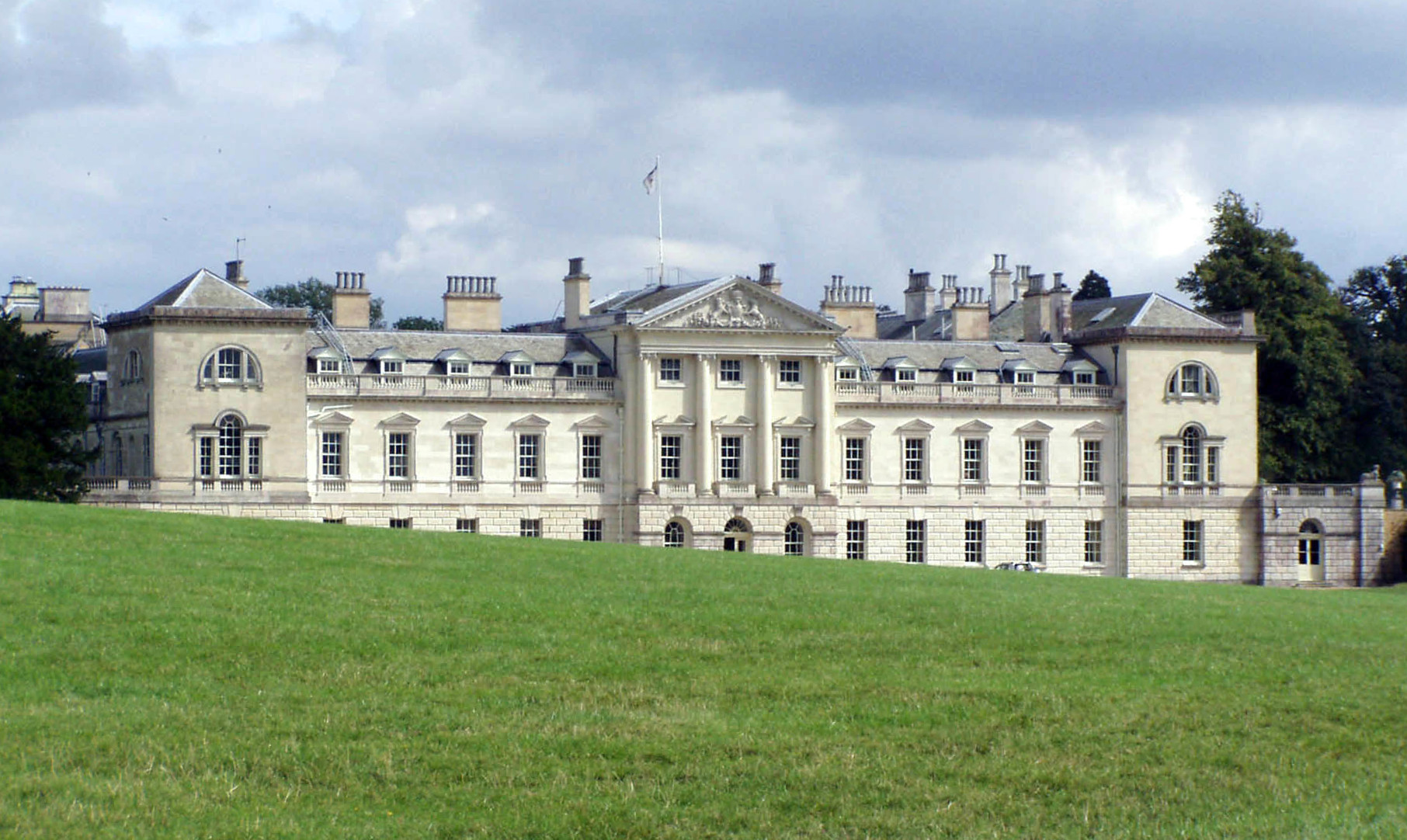
Woburn Abbey
When the 13th Duke of Bedford inherited Woburn Abbey in 1953, he inherited a catastrophe. Half the building had been demolished after dry rot was discovered following the war. Death duties of 14 million dollars were outstanding. The estate that had been in the Russell family since Henry VIII dissolved the monasteries in 1538 was, in the duke's own assessment, a half-demolished, half-derelict house attached to an unpayable debt. Most aristocrats in his position handed their estates to the National Trust and walked away. The 13th Duke did something different. He opened the doors and charged admission.
From Monks to Marquesses
Woburn Abbey was founded as a Cistercian monastery in 1145, a community of white-robed monks living by the austere Cistercian rule in the Bedfordshire countryside. The monastery survived nearly four centuries before Henry VIII's dissolution brought it to an end in 1538. The land passed to the Russell family, and around 1630, Francis Russell, 4th Earl of Bedford, demolished the monastic buildings and erected a manor house on the site, keeping the name Abbey as a badge of respectable antiquity. The second major rebuilding, between 1747 and 1761, was designed by architects Henry Flitcroft and John Sanderson, transforming the house into the Palladian country seat that visitors see today. During World War II, Woburn served a very different purpose: it became the headquarters of the Political Warfare Executive, the secretive propaganda operation that broadcast disinformation to occupied Europe from the Bedfordshire countryside.
A Duke's Gamble
The 13th Duke's decision to open Woburn to the public in 1955 was considered vulgar by his aristocratic peers. Stately homes were private; charging visitors to walk through your drawing rooms was simply not done. But the duke had little choice and considerable showmanship. He threw himself into the role of host and promoter, turning Woburn into one of Britain's earliest tourist attractions. In its first decade, ticket sales generated 11 million dollars, enough to make serious progress on the death duties. The gamble worked so well that it helped establish a model other financially pressed aristocrats would follow. Woburn Safari Park, added later, brought African wildlife to the Bedfordshire deer park that Humphry Repton had landscaped in the 18th century. The combination of stately home, safari park, and shrewd commercial management kept the Russell family in possession of an estate that taxation had nearly destroyed.
Twenty-Four Canalettos
The art collection assembled by successive Dukes of Bedford is one of the finest in private hands. It encompasses roughly 250 paintings, including 24 works by Canaletto -- among them View of the Entrance to the Venetian Arsenal, considered one of the artist's greatest paintings. Two Rembrandts hang here, including a 1640 self-portrait. Ten paintings by Anthony van Dyck, works by Rubens, Velazquez, Gainsborough, and Joshua Reynolds, and one of the most important English portraits in existence -- the Armada Portrait of Elizabeth I, attributed to George Gower -- fill the state rooms. The collection extends beyond paintings to include fine French and English furniture, porcelain, and silverware, much of it acquired during the 18th and 19th centuries when the Dukes of Bedford were among the wealthiest landowners in England.
A Family in Residence
Woburn has passed through generations of Russells with varying degrees of drama. The 13th Duke moved to Monte Carlo in 1974, leaving his son Robin, Marquess of Tavistock, to manage the estate. In the early 1990s, the Marquess and the Tussauds Group nearly turned Woburn into a theme park, a plan abandoned only when Tussauds purchased Alton Towers instead. From 1999 to 2002, the Marquess and his wife starred in a BBC reality series called Country House, documenting the daily business of running the estate across 29 episodes. The 14th Duke held the title for just seven months before his death in 2003. His son Andrew, the 15th Duke, now manages Woburn, continuing the enterprise his grandfather began half a century ago when he opened the gates to a crumbling house and bet that the British public would pay to see how the other half once lived. They did.
From the Air
Located at 51.983N, 0.597W in Bedfordshire, approximately 40nm north-northwest of central London. The Abbey and its grounds are visible from altitude as a large estate with formal gardens, parkland, and the adjacent Woburn Safari Park. Nearest airports: EGGW (Luton, 10nm SE), EGSC (Cambridge, 30nm NE). Best viewed at 2,000-4,000 ft AGL.