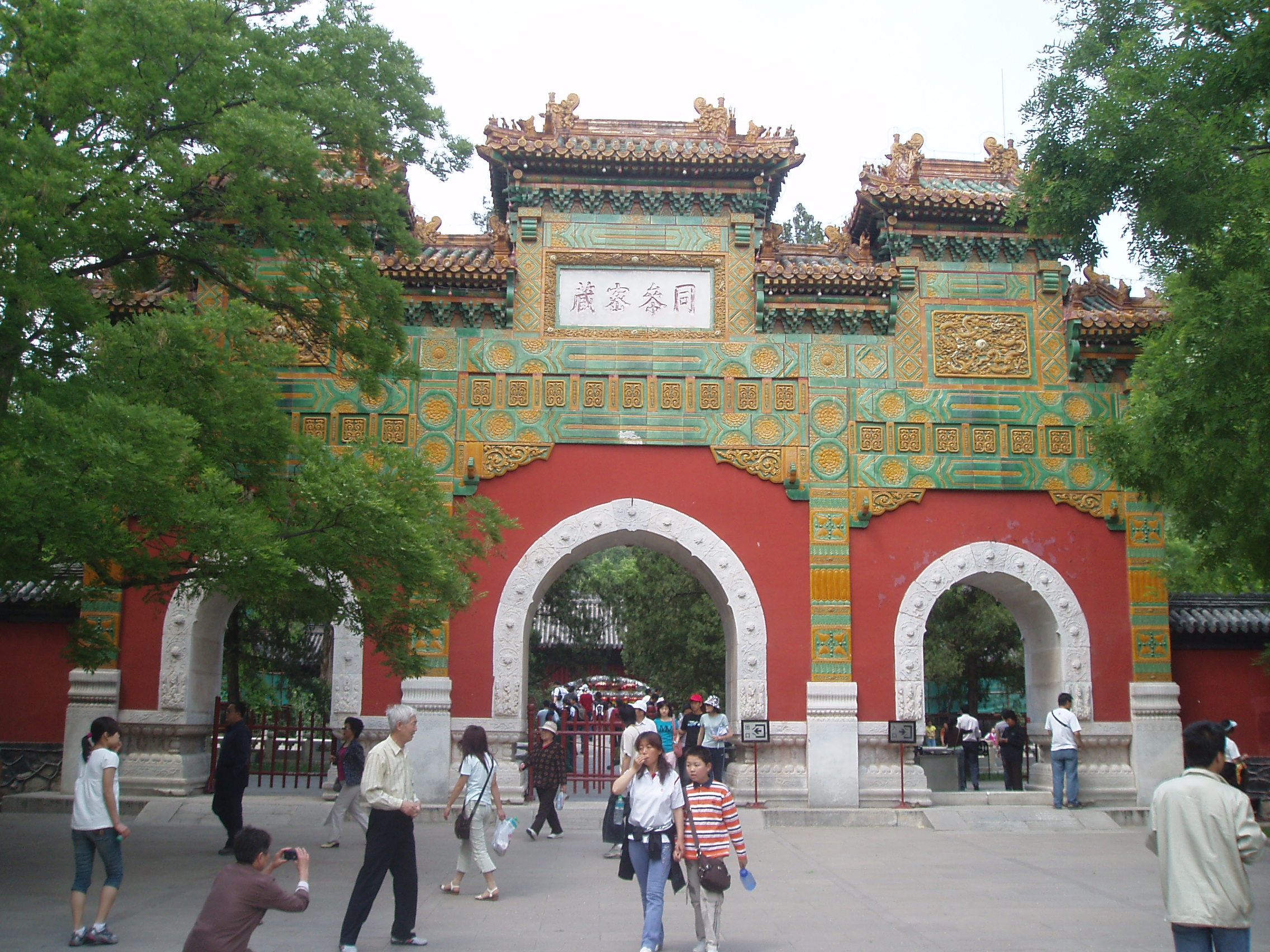
Wofo Temple
The Buddha is lying down. Stretched across 5.2 meters and weighing approximately 54 tons, the bronze figure reclines in the posture of final nirvana -- the moment of the historical Buddha's death and release from the cycle of rebirth. Cast in 1321 during the Yuan dynasty, this statue has outlasted every other feature of the temple that houses it. Wofo Temple, originally built in the 7th century and known then as Doulu Temple, has been destroyed and rebuilt so many times that its current incarnation dates only to 1734. But the reclining Buddha has endured, its bronze surface darkened by seven centuries of incense smoke and the touch of pilgrims' hands.
Thirteen Centuries of Reinvention
When Wofo Temple was first constructed in the 7th century, during the Tang dynasty era, its builders could not have imagined how many times their work would need to be redone. The temple endured successive destructions and reconstructions across the centuries, changing names as frequently as it changed walls. Before the bronze figure arrived, the temple's reclining Buddha was carved from sandstone -- a softer material that could not survive what bronze could. The 1321 replacement, commissioned during the Yuan dynasty when the Mongols ruled China, proved more durable than anything around it. When the present temple was built in 1734 under the Qing dynasty, the builders were essentially constructing a new house for a very old occupant.
Three Halls on a Single Axis
Wofo Temple follows the traditional north-south axis of Chinese Buddhist architecture. Visitors pass through an entrance gate and proceed through three halls arranged in sequence: the Tianwang Hall, honoring the Four Heavenly Kings; the Sanshi Buddha Hall, dedicated to the Buddhas of the three time periods; and finally the Recumbent Buddha Hall, where the bronze figure rests. Flanking the central axis, smaller buildings served as lodging for resident monks and accommodation for guests. The layout is simple compared to Beijing's larger temples, but the simplicity concentrates attention on the procession toward the reclining Buddha -- each hall building anticipation for the next, until the visitor arrives before the massive bronze form that has anchored this site for seven hundred years.
A Garden and Its Guardian
Wofo Temple sits near the Beijing Botanical Garden, about 20 kilometers from the center of the city, in the foothills of the Western Hills. The surrounding landscape of cultivated gardens and forested slopes gives the temple a sense of remove from urban Beijing that most of the city's temples have long since lost. This proximity to nature is deliberate -- Buddhist temples in China were traditionally sited in mountainous or garden settings that encouraged contemplation. The botanical garden, established in the 20th century, has become the temple's modern neighbor and complement, drawing visitors who move between the curated beauty of the gardens and the ancient stillness of the recumbent Buddha. The bronze figure itself seems at peace with both its antiquity and its setting, lying in the same position it has held since the year Dante was finishing the Divine Comedy.
From the Air
Coordinates: 40.005N, 116.201E. Located in the foothills of the Western Hills, about 20 km northwest of central Beijing, near the Beijing Botanical Garden and Fragrant Hills Park. The surrounding terrain is hilly and forested, contrasting with the flat urban plain to the east. Nearest major airport is Beijing Capital International (ZBAA/PEK), about 40 km to the northeast.