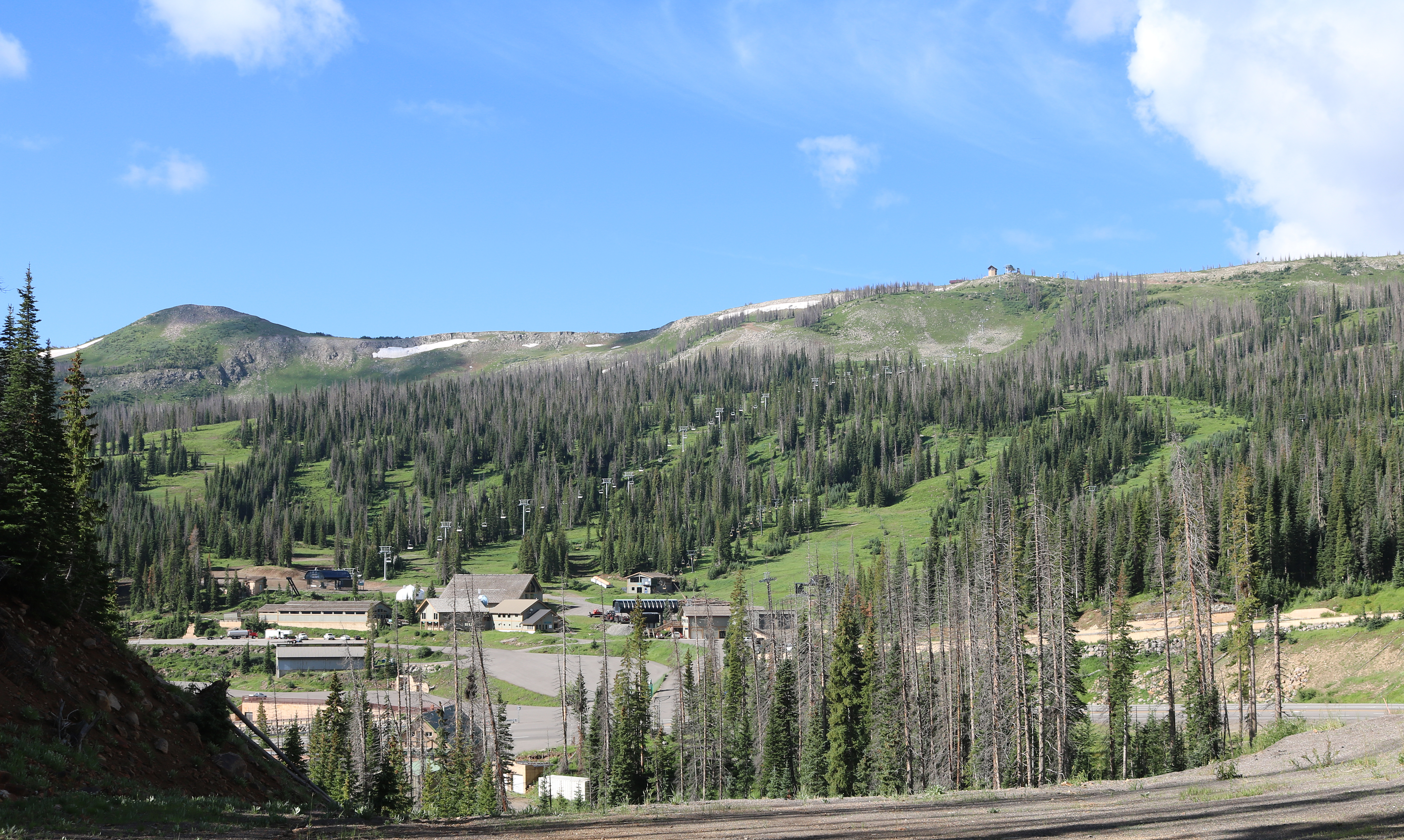
Wolf Creek Ski Area
Kelly Boyce was a farmer, not a ski resort mogul. But in 1938, the year the new Highway 160 finally punched through Wolf Creek Pass to connect the San Luis Valley to Pagosa Springs, Boyce and a handful of fellow skiers from the valley strapped a rope tow to an old Chevy truck near the summit and started selling tickets for a dollar a day. That improvised lift on the north side of the pass launched what would become Colorado's snowiest ski area, a place where 430 inches of annual snowfall is just an average year and where the record stands at a staggering 807 inches, set during the winter of 1978-79.
Homemade Boards and Mountain Soldiers
The roots of Wolf Creek go deeper than that first rope tow. Charles Elliott, a San Luis Valley local, taught himself to ski on homemade boards at age 21, hiking up Wolf Creek Pass in 1934. By 1936, Elliott and Boyce had organized a ski patrol and built the area's first rope tow with the help of four separate ski clubs from both sides of the pass. The following year, those clubs merged into the Wolf Creek Ski Club, and over the next five years Elliott led construction of shelter cabins and additional tows. When World War II erupted, at least three of Wolf Creek's builders served in the famed 10th Mountain Division, the Army's elite ski troops. Elliott was inducted into the Colorado Ski Hall of Fame in 2011, decades after he first carved turns on those hand-hewn boards.
A French Lift and a $25 Share
By the mid-1950s, the original 150-yard rope tow on Thunder Mountain no longer satisfied Wolf Creek's growing community of skiers. In 1954, Edward Sharp and Ronald Major hatched a plan at a rodeo dinner in Monte Vista: purchase a French-made Poma lift for about $10,000 and relocate the ski area to a larger site on the east side of the Continental Divide. Sharp and his fellow organizers formed a nonprofit corporation, selling 1,000 shares at $25 apiece to raise the $25,000 they needed. They pitched their vision to chambers of commerce across the valley, from Alamosa to Pagosa Springs, and won broad support. The new site offered longer tow lines and room to grow. Sharp later served as president of the corporation for twelve years and was posthumously inducted into the Colorado Ski Hall of Fame in 1996, just 33 days after his death at age 85.
Dallas Cowboys on the Slopes
After a decade of volunteer management, the ski club's board decided it was time to sell. In 1972, a group of Dallas investors purchased Wolf Creek for $275,000. Among the backers were three Dallas Cowboys players: Charlie Waters, Dave Edwards, and Mike Ditka, the future coaching legend of the Chicago Bears and New Orleans Saints. The new owners installed Wolf Creek's first chairlift in 1974, manufactured by Borvig, an East Coast lift company. Despite the outside investment, Wolf Creek remained a local's mountain at heart, free of the condo developments and village complexes that transformed other Colorado resorts. Today the area operates nine lifts across 77 trails, with terrain split roughly 20 percent beginner, 35 percent intermediate, and 45 percent advanced.
The Snow That Won't Stop
Wolf Creek's extraordinary snowfall stems from its position straddling the Continental Divide at the southern end of the San Juan Mountains. Moisture-laden storms sweeping up from the Gulf of Mexico and the Pacific collide with the high terrain, dumping snow in quantities that dwarf nearly every other Colorado resort. The record 807 inches during the 1978-79 season equates to more than 67 feet of accumulated snowfall. The following season brought 730.5 inches, and rumors persist of an even bigger winter in the early 1940s. For skiers, this means consistently deep powder and one of the longest seasons in the state.
A Contested Future
Wolf Creek's identity as an unpretentious local's mountain faces its biggest challenge from a proposed mega-development. Texas billionaire Red McCombs has spent decades pursuing his vision for the Village at Wolf Creek, a year-round resort community for 8,000 people on private land adjacent to the ski area. The project has sparked protracted legal battles over Forest Service highway access, environmental impact assessments, and freedom of information requests. Opponents argue the development would sever a critical wildlife corridor between the Weminuche and South San Juan Wilderness areas, threaten rare fen wetlands, stress Rio Grande watershed water supplies, and undercut businesses in Pagosa Springs and South Fork. For now, the developers have agreed not to break ground until the courts reach a final decision.
From the Air
Wolf Creek Ski Area sits on Wolf Creek Pass along the Continental Divide at approximately 37.47N, 106.79W, with a base elevation around 10,300 feet and summit near 11,900 feet. The ski area is visible as cleared runs on the east side of the divide along US Highway 160. Pagosa Springs lies to the west and South Fork to the east. Nearest airports: Stevens Field (KPSO) approximately 25nm west, Alamosa San Luis Valley Regional (KALS) approximately 60nm east. Mountain weather can change rapidly; expect turbulence near the pass and potential icing conditions in winter.