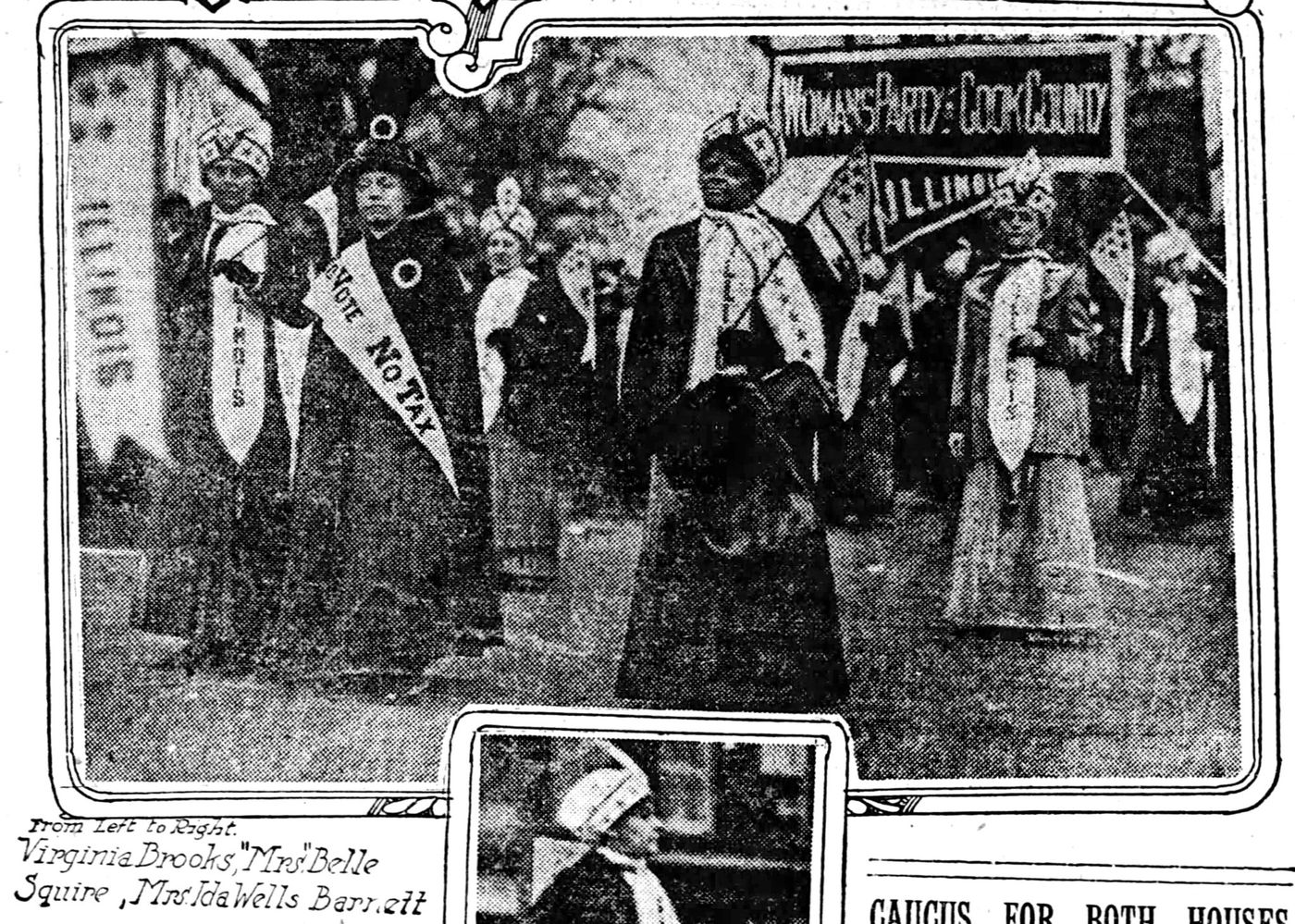
Woman Suffrage Procession
When President-elect Woodrow Wilson arrived in Washington on March 3, 1913, he found the train station eerily empty. "Where are the people?" he asked. They were all on Pennsylvania Avenue, half a million strong, watching between 5,000 and 10,000 women march for the right to vote. Organized by the fearless Alice Paul and Lucy Burns, the Woman Suffrage Procession was not merely the first suffragist parade in the nation's capital. It was the first large, organized political march on Washington, period. Only one previous demonstration of its kind had occurred: Coxey's Army, a group of five hundred unemployed men who protested in 1894. Paul's procession dwarfed that effort and changed the trajectory of American democracy.
A Radical New Strategy
Alice Paul arrived in Washington in December 1912 with a vision that alarmed the cautious establishment of the National American Woman Suffrage Association. Where the NAWSA had pursued a grinding state-by-state approach, Paul believed it was time for women to stop asking and start demanding. She had studied the militant tactics of British suffragettes, and while her methods remained nonviolent, she understood the power of spectacle. Paul recruited dramatist Hazel MacKaye to design professional floats and allegorical tableaux. She enlisted labor lawyer Inez Milholland, dubbed "the most beautiful suffragette," to ride at the head of the procession on a white horse wearing a pale-blue cape and carrying a banner reading "Forward into Light." By the time the Congressional Committee held its first meeting on January 2, 1913, more than 130 women had shown up to begin work. Even Belva Lockwood, who had run for president in 1884, attended.
A Rainbow on Pennsylvania Avenue
Paul dictated a color scheme for each group of marchers, creating a living rainbow meant to represent women emerging from darkness into light. The first section featured marchers from countries where women already voted: Norway, Finland, Australia, and New Zealand. Then came nurses, homemakers, and professional women in carefully orchestrated order, beginning with traditional roles before building to lawyers, artists, and businesswomen. Grand Marshal Jane Walker Burleson led on horseback alongside a model of the Liberty Bell brought from Philadelphia. Behind her, a wagon declared: "We Demand An Amendment To The Constitution Of The United States Enfranchising The Women Of This Country." At the Treasury Building, a pageant unfolded on its steps. The actress Hedwiga Reicher, costumed as Columbia, stepped forward to "The Star-Spangled Banner" and summoned Liberty, Charity, Justice, Hope, and Peace. The spectacle outshone even the presidential inauguration the following day.
Chaos and Courage on the Avenue
The police had never wanted the march on Pennsylvania Avenue. District superintendent Major Richard Sylvester had offered a permit for residential Sixteenth Street instead, but Paul fought for the most visible route. His officers proved either unwilling or unable to manage the crowd. Spectators surged past sagging ropes into the street, blocking the marchers. Hostile men heckled and shoved. More than two hundred people were treated for injuries at local hospitals. Boy Scouts with batons tried to push back the crowd. Soldiers linked arms to form barriers. Students from the Maryland Agricultural College created a human chain to protect the women. The cavalry was eventually called in. Through it all, the marchers pressed forward. Among them walked Ida B. Wells-Barnett, who refused orders to move to a segregated section and instead rejoined her Illinois delegation as the procession advanced down the avenue.
The Aftermath That Changed Everything
Paul turned the chaos to her advantage with devastating political skill. She collected affidavits from marchers about the abuse they endured and used them to demand a congressional inquiry into police misconduct. The resulting publicity made woman's suffrage one of the most discussed subjects in America and brought in enough donations to cover the event's $13,750 cost. Several suffragists made a piercing argument in the press: a government that could not protect its female citizens could not properly represent them. Within weeks, the Susan B. Anthony amendment was reintroduced in both houses of Congress and debated on the floor for the first time in decades. Paul continued her campaign, eventually founding the National Woman's Party in 1916. It took until 1918 for Wilson to reverse his stance, but the Nineteenth Amendment passed Congress in 1919 and was ratified in 1920. The march on Pennsylvania Avenue had started it all.
An Unfinished Reckoning
The procession also exposed painful fault lines within the suffrage movement. As planning advanced, some Southern delegations threatened to withdraw if Black women participated. Paul attempted to keep news of Black marchers out of the press, and on the day of the parade, the chair of the state delegation section asked Ida B. Wells-Barnett to march in a segregated group at the rear. Wells-Barnett refused. Women from Howard University marched in caps and gowns, and Black women joined state delegations from New York, Michigan, and other states. Mary Church Terrell, Dr. Amanda V. Gray, and other prominent Black women took their places in the line. The tension reflected the broader compromise the NAWSA had made in 1903, when it adopted a states' rights platform to court Southern support. The march was a triumph for women's political power, and a reminder that the fight for equality has always been layered, contested, and unfinished.
From the Air
Located at 38.895N, 77.028W along Pennsylvania Avenue NW, between the Peace Monument at the foot of Capitol Hill and the Treasury Building. The route is clearly visible from the air running northwest from the U.S. Capitol to the White House. Nearest airports: KDCA (Ronald Reagan Washington National, 3 nm south), KIAD (Dulles International, 24 nm west). Recommended altitude: 2,000-3,000 ft AGL for a clear view of the National Mall and Pennsylvania Avenue corridor.