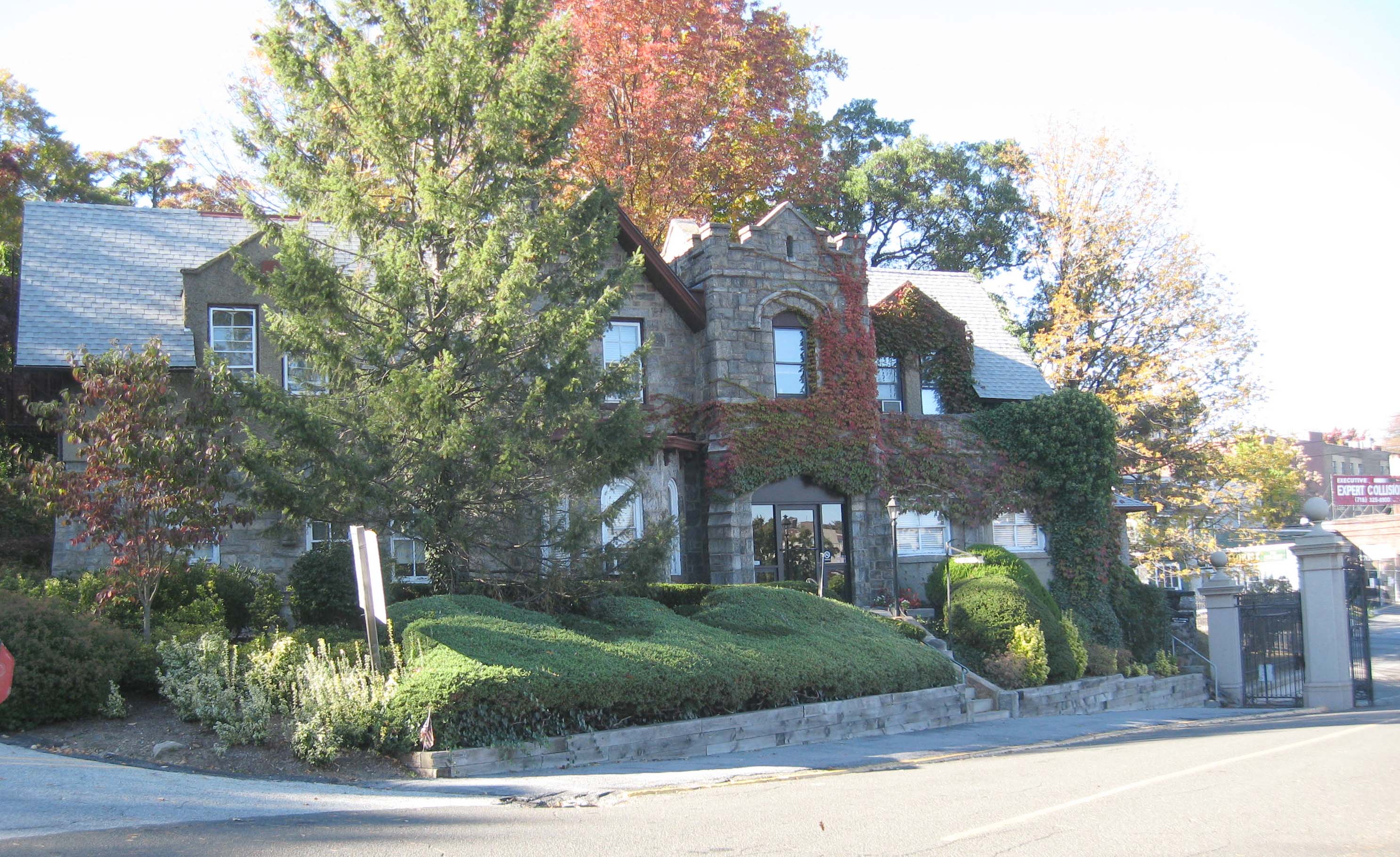
Woodlawn Cemetery (Bronx, New York)
Herman Melville is buried here. So is Miles Davis. And Duke Ellington. And Bat Masterson, the frontier lawman who died not in a gunfight but at his desk at the New York Morning Telegraph, writing a sports column. Woodlawn Cemetery opened in 1863 during the Civil War, in what was then Yonkers, and over the following century and a half it has assembled a roster of the dead so improbable, so varied in accomplishment and temperament, that the place functions less as a cemetery than as an unintentional museum of American ambition. At more than 400 acres, it is one of the largest cemeteries in New York City and a designated National Historic Landmark.
The Rural Idea
Woodlawn was founded in the tradition of the rural cemetery movement, which sought to move burials out of overcrowded churchyards and into parklike settings on the edges of cities. When it opened, the area was still countryside -- the Bronx would not be annexed to New York City until 1874. The cemetery was designed to feel like a landscape rather than a graveyard, with rolling terrain, mature trees, and winding paths among the monuments. In 2011, Woodlawn was designated a National Historic Landmark specifically because it illustrates the transition from the informal, picturesque rural cemetery style to the more orderly twentieth-century approach. Walk through the grounds and you can read that transition in stone: the older sections are romantic and irregular, with grand mausoleums set among ancient oaks, while newer areas tend toward the uniform rows of a more modern sensibility.
A Roll Call of Restless Spirits
The list of notable burials at Woodlawn reads like a game of who-doesn't-belong. Chief Justice Charles Evans Hughes lies not far from gangster Bumpy Johnson. Nellie Bly, who circled the globe in 72 days, rests here alongside these luminaries. Aviation pioneer Harriet Quimby, the first American woman to earn a pilot's license, was originally interred at Woodlawn before her remains were relocated to Kensico Cemetery in Valhalla the following year. George M. Cohan, who gave Broadway "Give My Regards to Broadway," rests near Irving Berlin, who gave it everything else. W.C. Handy, the "Father of the Blues," and King Oliver, who mentored Louis Armstrong, are neighbors of Max Roach and Celia Cruz. Along "Brewer's Row," the scions of New York's nineteenth-century beer empires -- the Haffens and a dozen other brewing families -- sleep in a row, testament to a vanished industry. Rowland Hussey Macy, who founded the department store, and F.W. Woolworth, who built the variety-store empire, ended up in the same cemetery, their retail rivalry dissolved into the same Bronx soil.
Gathered from All Corners
Woodlawn also became a final destination for the displaced dead of a growing city. As New York expanded, cemeteries in more densely populated areas were dismantled and their occupants relocated here. Graves from the Rutgers Street Church were moved in 1866. The West Farms Dutch Reformed Church sent its dead in 1867. Bensonia Cemetery, originally a Native American burial ground also known as Morrisania Cemetery, was cleared in 1871. The Dyckman-Nagle Burying Ground on West 212th Street, established in 1677, had its remains transferred to Woodlawn by 1927 -- its site is now the 207th Street subway train yard. These relocations gave Woodlawn layers of history reaching back centuries before its own founding. Hollywood found the place compelling too: in Sergio Leone's film Once Upon a Time in America, a Woodlawn location stood in as a fictional Brooklyn cemetery renamed "Riverdale Cemetery."
Preservation and Memory
As of 2007, plot prices at Woodlawn were reported at $200 per square foot, with gravesites for two running $4,800 and land for a family mausoleum reaching $1.5 million. The Woodlawn Conservancy, a nonprofit that began as the Friends of Woodlawn in 1999, works to maintain the cemetery's monuments and grounds. In 2021, a joint effort between the Conservancy, the Friends of the Rye African-American Cemetery, the World Monuments Fund, and the Jay Heritage Center conserved more than 40 gravestones, timed to coincide with the new federal Juneteenth holiday. It was a fitting gesture for a place that already held Madam C.J. Walker, America's first self-made female millionaire, and Florence Mills, the Harlem Renaissance singer whose 1927 funeral procession drew 150,000 mourners to the streets of Harlem. Woodlawn keeps gathering the city's stories, one burial at a time.
From the Air
Located at 40.889°N, 73.873°W in the northern Bronx, south of Woodlawn Heights. From the air, the cemetery's 400-plus acres are unmistakable -- a vast green expanse of trees and monuments bordered by dense residential neighborhoods. The Jerome Avenue gate marks the eastern entrance. Van Cortlandt Park lies to the northwest, and the Bronx River Parkway runs to the east. Nearest airport: LaGuardia (KLGA), approximately 8 nm south-southeast. Best viewed at 2,000-3,500 ft AGL. The cemetery's winding internal paths and scattered mausoleums are visible even from moderate altitude.