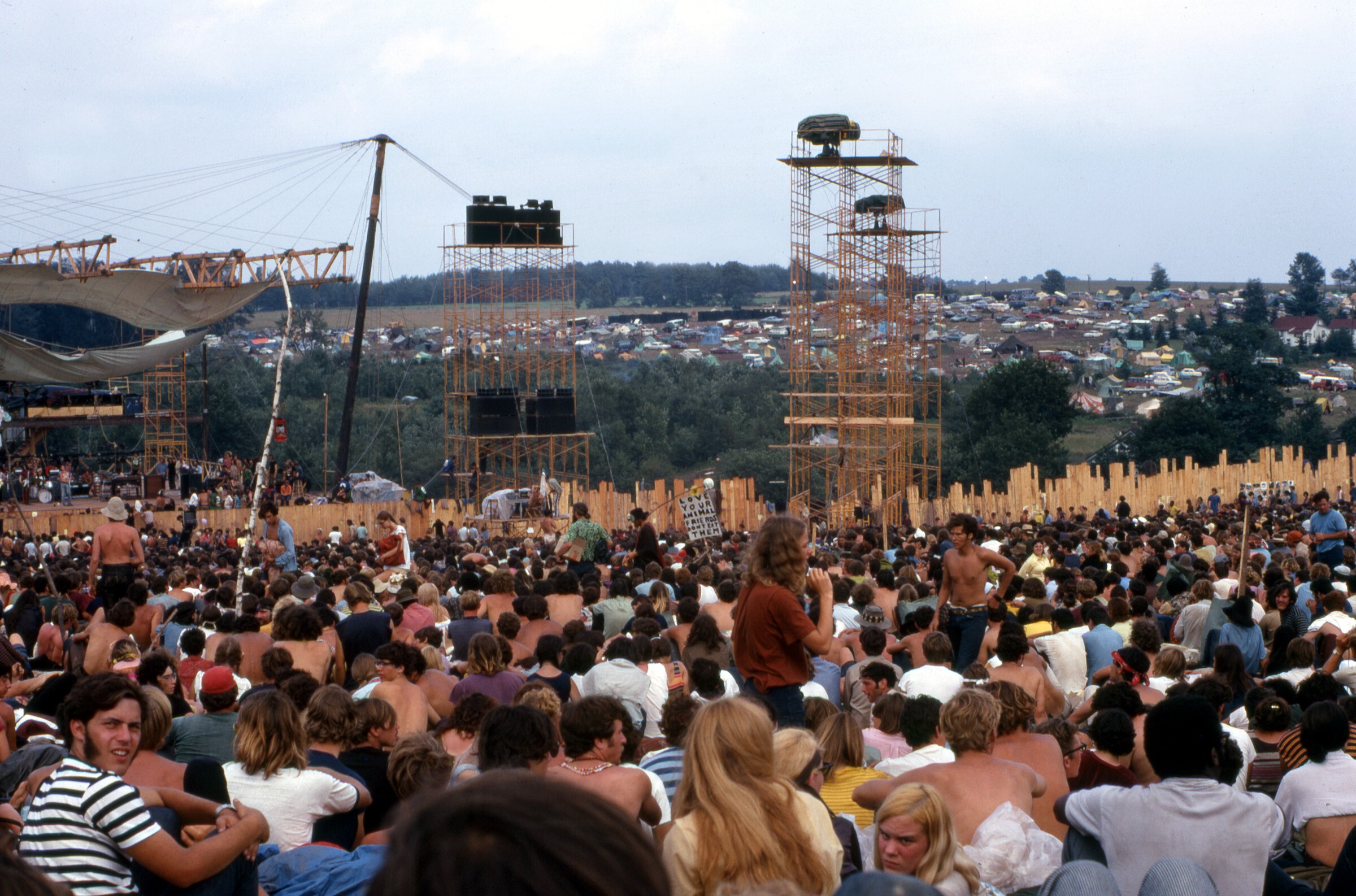
Woodstock: Three Days That Became a Generation
Tommy James got the call in Hawaii. His secretary said some pig farmer in upstate New York wanted him to play in a field. He passed. Led Zeppelin's manager Peter Grant said no because 'we'd have just been another band on the bill.' The Doors, the Rolling Stones, the Byrds, Jethro Tull, Simon and Garfunkel -- all declined. Iron Butterfly got stuck at LaGuardia Airport and sent an imperious telegram demanding helicopters; the production coordinator's reply was an acrostic that spelled out a two-word rejection. The bands that said no to Woodstock could have filled a festival of their own. But 32 acts said yes, and on August 15, 1969, more than 460,000 people showed up at Max Yasgur's dairy farm in Bethel, New York, for what became the defining musical event of a generation.
Four Men, One Impossible Idea
Woodstock began as a recording studio pitch. In early 1969, Michael Lang and Artie Kornfeld wanted financing for a small studio in Woodstock, New York, the town where Bob Dylan and the Band lived. They approached New York entrepreneurs John Roberts and Joel Rosenman, who countered with a different idea: a concert. Woodstock Ventures was formed in January 1969, but the four founders clashed from the start. Roberts was disciplined; Lang was laid-back. Nobody could land big-name acts until Creedence Clearwater Revival signed on. As drummer Doug Clifford recalled, 'Once Creedence signed, everyone else jumped in line.' The original site in Wallkill, New York fell through when the town board passed laws blocking the event. With weeks to go and no venue, dairy farmer Max Yasgur offered his 600-acre farm in Bethel, 60 miles southwest of the town of Woodstock.
The Weekend Everything Went Wrong
Three days before the festival, construction foremen gave Rosenman a choice: finish the fences and ticket booths, or finish the stage. You could not have both. By Wednesday morning, the decision was made for them -- 50,000 early arrivals had planted themselves in front of the half-built stage. Woodstock was now a free concert, and Roberts and Rosenman faced certain bankruptcy. The 346 off-duty New York City police officers hired for security withdrew when warned they were violating moonlighting regulations. Governor Nelson Rockefeller called Roberts and threatened to send 10,000 National Guard troops; Roberts talked him down. Sullivan County declared a state of emergency. Rain turned the site to mud. Sanitation and first aid facilities were overwhelmed. Food ran short. And still they came, hundreds of thousands streaming in, abandoning cars on roads that became parking lots.
The Music That Survived the Mud
Through the chaos, 32 acts performed over four days. Richie Havens opened, improvising 'Freedom' when he ran out of prepared songs. Santana played a blistering set that launched them from San Francisco club band to international fame -- they got their slot because Bill Graham flipped a coin against It's a Beautiful Day and won. Joe Cocker delivered a career-defining performance of 'With a Little Help from My Friends.' Jimi Hendrix closed the festival, taking the stage at 8:30 Monday morning after rain delays. By then the crowd had thinned to about 30,000 from its peak of 450,000. Hendrix and his new band Gypsy Sun and Rainbows performed for two hours, climaxing with a psychedelic rendition of 'The Star-Spangled Banner' that became, in the words of the era, 'part of the sixties Zeitgeist.'
The Aftermath and the Legend
Woodstock left Roberts and Rosenman financially ruined -- until the documentary saved them. Director Michael Wadleigh assembled a crew of 100 from the New York film scene, paying them nothing upfront with a double-or-nothing deal: double pay if the film succeeded, zero if it failed. Warner Bros. executive Fred Weintraub risked his job to give them $100,000. The resulting documentary won the Academy Award for Best Documentary Feature and was inducted into the Library of Congress National Film Registry in 1996. The film and soundtrack album transformed a logistical disaster into a cultural monument. Approximately 80 lawsuits were filed by local farmers. Max Yasgur refused to host a revival, saying 'I'm going back to running a dairy farm.' He died in 1973. Bethel voters defeated Supervisor Amatucci in the next election for allowing the festival.
Yasgur's Farm Today
For years, the site's owners tried to keep visitors away, spreading chicken manure and forming roadblocks with tractors. Twenty thousand people gathered anyway for an impromptu 20th anniversary celebration in 1989. In 1996, cable television pioneer Alan Gerry purchased the property and built the Bethel Woods Center for the Arts, which opened in 2006. The original stage site is preserved, marked only by a commemorative plaque placed in 1984. A museum dedicated to the festival and the 1960s counterculture opened in 2008. In 2017, the festival site was listed on the National Register of Historic Places. The field still slopes down to Filippini Pond, forming the natural amphitheater that Yasgur's land provided by accident of geology. A Bethel Woods report found the site has generated $560 million in economic impact for New York, drawing 2.9 million visitors since 2006. The pig farmer's field turned out to be worth something after all.
From the Air
Located at 41.70N, 74.88W near Bethel, New York in Sullivan County, in the western Catskills region. The festival site is a broad, gently sloping field leading down to a small pond (Filippini Pond), forming a natural bowl visible from altitude. The Bethel Woods Center for the Arts pavilion is located slightly south-southeast of the original 1969 stage site. The surrounding terrain is rolling farmland and wooded hills typical of the western Catskills. Nearest airports: Sullivan County International (KMSV) approximately 10nm west; Wurtsboro-Sullivan Airport (N82) approximately 15nm east. Recommended viewing altitude: 2,000-3,000 feet AGL. The site is most recognizable by the large modern pavilion structure adjacent to the preserved open field.