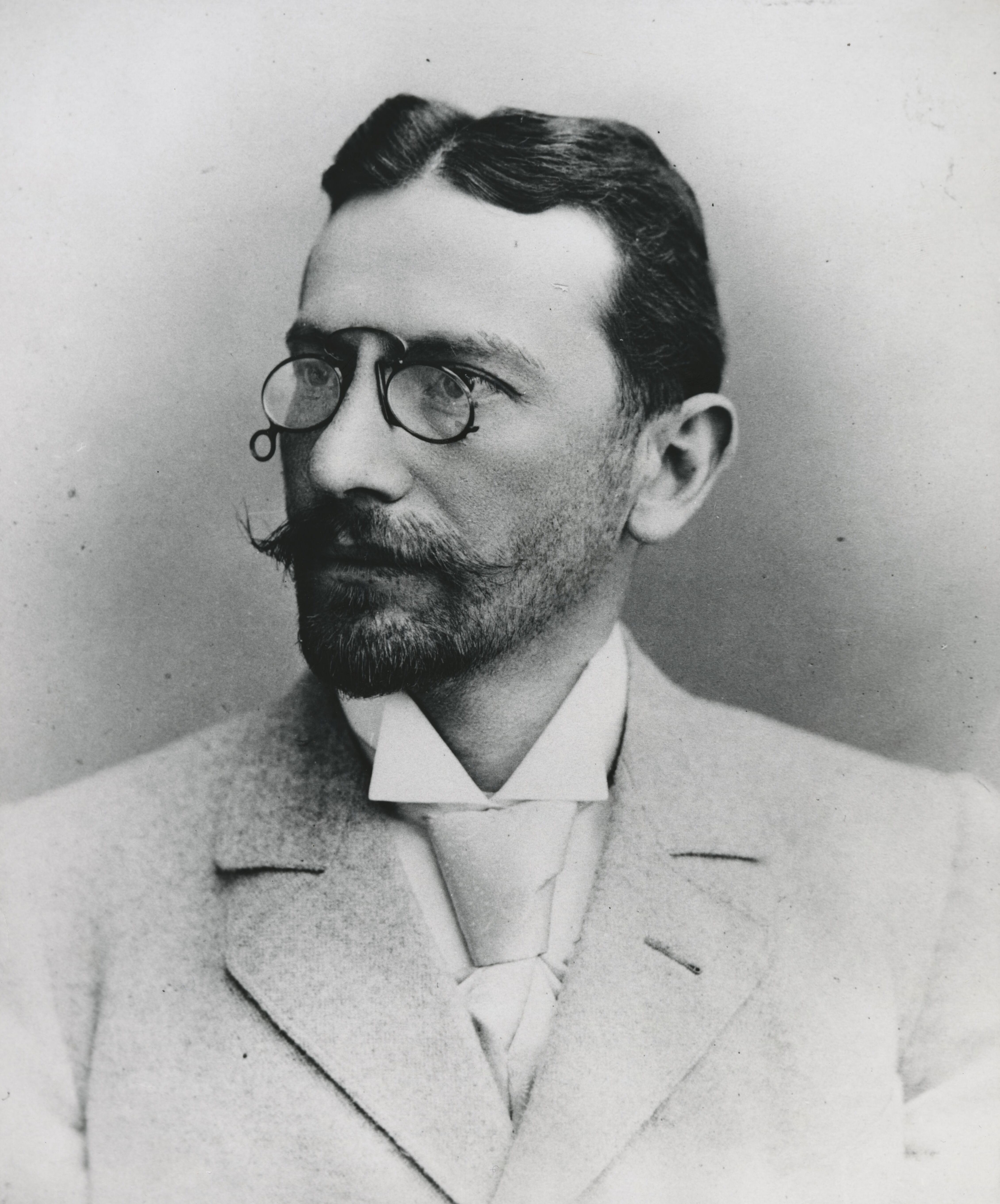
World Chess Championship 1908
They had been avoiding each other since 1892. For sixteen years, Emanuel Lasker and Siegbert Tarrasch - the two strongest German chess players alive, possibly the two strongest players alive anywhere - had circled the world's tournament halls without ever sitting across the board for anything that mattered. They disliked each other personally. They disagreed almost completely about how chess should be played. And in the summer of 1908, after Tarrasch finally qualified to challenge for the world title, they ran out of excuses. The match opened on 17 August in Düsseldorf, moved to Munich for its second half, and ran until 30 September. The result was decisive enough that Tarrasch, ever the rationalist, eventually blamed the Düsseldorf maritime climate.
A Quarrel Older Than the Match
Lasker had become world champion in 1894 by defeating Wilhelm Steinitz. By the standards of the era, Tarrasch should have challenged him long before, but he never did. In 1892 it was Lasker who had issued the challenge, and Tarrasch who had declined, telling the younger man to win an international tournament first. Lasker won one. The two then spent more than a decade avoiding each other. A match was almost arranged in 1904, only to collapse in a dispute over a postponement - Tarrasch claimed he had been hurt in a skating accident, which not everyone believed. It took Tarrasch's victory at the Ostend 1907 chess tournament, by half a point, to set the trap shut. By July 1908 the German Chess Federation had brokered terms: first to eight wins, one hour per fifteen moves, adjournment after six hours of play, a prize fund of 4,000 marks for the winner and 2,500 for the runner-up. Lasker also pocketed a 7,500-mark appearance fee.
Lasker's Pragmatism Versus Tarrasch's System
Most contemporary commentators predicted a close struggle. Tarrasch had spent two decades publishing books and articles that codified what would later be called classical chess principles: control the centre, develop your pieces, do not waste tempi, do not play loose pawns. He wrote like a man certain that chess could be reasoned out from first principles. Lasker, who had a doctorate in mathematics and would later write on philosophy and game theory, treated the board as something messier and more human. He played for the opponent more than for the position, willing to choose objectively inferior moves if they unsettled the man sitting across from him. The match would become, in retrospect, an early demonstration of how psychological chess could outperform pure dogma.
Eight Wins, Three Losses
Lasker took an early lead and never gave it back. He won the first game when Tarrasch failed to capture a knight on move 35 and walked into a king-and-pawn endgame collapse. In the second, Tarrasch found a powerful kingside breakthrough with 15. Bxg7 but missed the strongest follow-up, recaptured carelessly, and watched Lasker counterattack from a position that should have been losing. By Game 5, Lasker was openly dismissive of his opponent's choices - he called 17...Qb6 'too passive' - and built a steady attack that ended in mate in nine. Game 14 went 119 moves to a draw, the longest game in world championship history until Karpov-Korchnoi finally beat it in 1978. The match ended in Game 16, the shortest of the encounter: Tarrasch missed a ladder mate tactic with the catastrophic 26. Nd4??, and Lasker simply took the bishop. Final score: 8 wins to 3, with 5 draws.
The Maritime Climate
Tarrasch's post-match book was a small masterpiece of denial. He acknowledged the score but argued it gave a misleading picture of his actual playing strength relative to Lasker. He blamed his loss on a lack of recent match practice. He blamed it, memorably, on the 'maritime climate' of Düsseldorf, which lies roughly 200 kilometres inland from the North Sea coast and is not noticeably maritime to anyone who lives there. Lasker, for his part, went on to defend the title two more times and held the world championship until 1921, when Capablanca finally took it from him in Havana. Tarrasch never again played for the world crown. He kept writing, kept teaching, kept losing to younger players, and outlived his great rival's reign without entirely accepting that it had been earned.
The Match That Mapped Modern Chess
What happened in Düsseldorf and Munich that summer still echoes in how the game is taught. The Tarrasch tradition - the textbook clarity, the principles, the careful logic - became and remains the spine of how children learn the openings. Lasker's tradition is harder to systematize, but every modern world champion has drawn on it, the willingness to choose the move that breaks the opponent over the move that satisfies the position. The 1908 match did not settle the argument between them. Engines and grandmasters still debate it. But it ended the older man's claim to the throne, and it confirmed Lasker as the longest-reigning world champion in history - a record no one would touch for the rest of the twentieth century.
From the Air
The Düsseldorf venue for the 1908 match sat in the city centre at roughly 51.23°N, 6.77°E, on the east bank of the Rhine just south of the Altstadt. From the air, Düsseldorf is unmistakable for the great horseshoe bend of the river, the Rheinturm telecommunications tower on the southern waterfront, and the dense modern Medienhafen redevelopment of the old harbour basins. The second half of the match was played in Munich, roughly 470 km south-southeast. Nearest major airport: Düsseldorf International (EDDL), about 8 km north of the historic match venue.