Wort Hotel
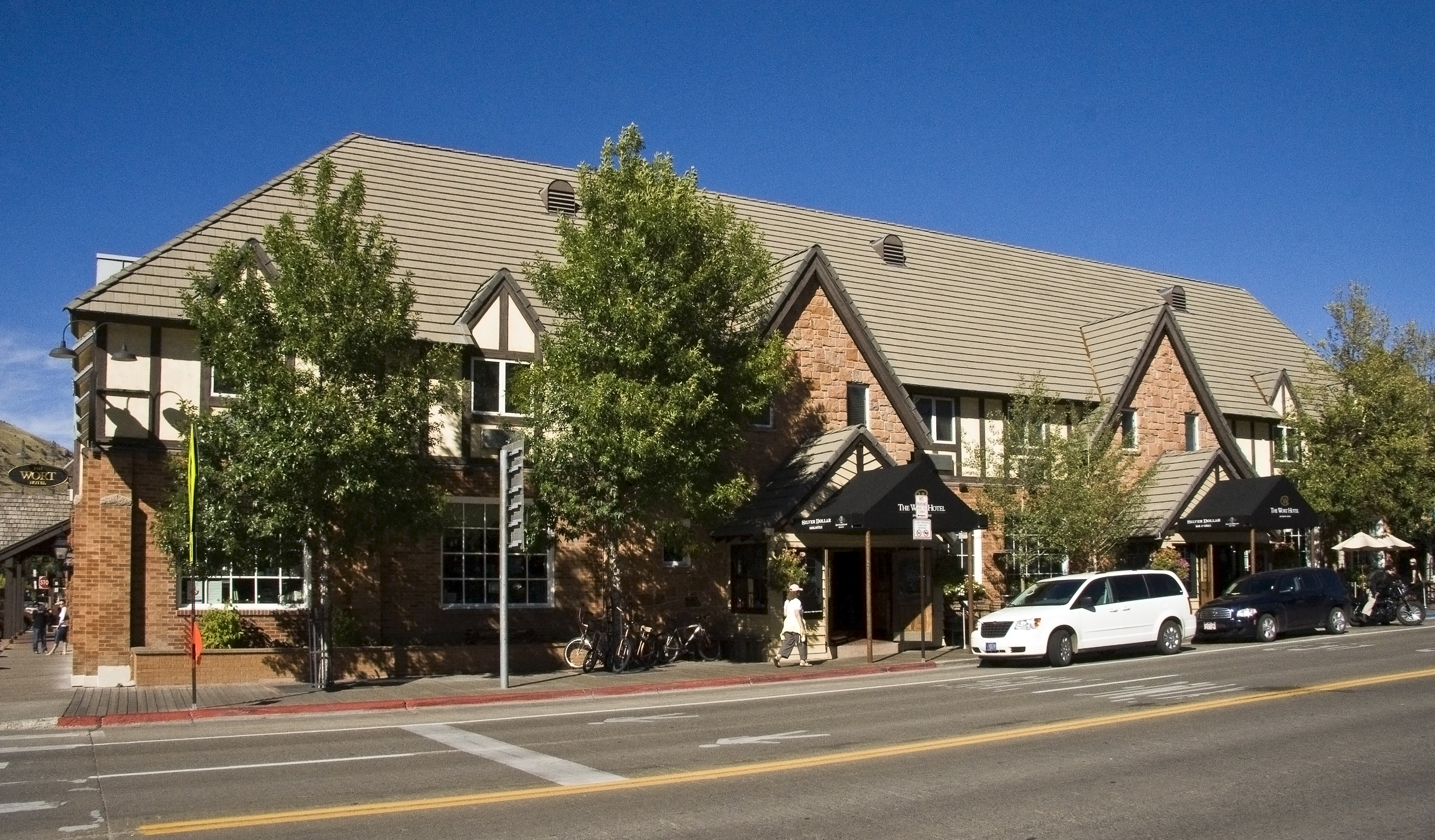
Count the silver dollars embedded in the bar at the Wort Hotel and you will reach 2,032 before your drink is empty. Each coin, uncirculated, was pressed into the counter in 1950, a glittering declaration that Jackson Hole had transformed from cattle country into something altogether different. The Wort family understood this transformation better than anyone; they helped engineer it. Their somewhat Tudor-style building, with its brick facing and half-timbered second floor, became Jackson's first luxury hotel when it opened in 1941, a full generation before ski resorts would make the valley famous.
Three Generations of Ambition
Charles J. Wort arrived in Jackson Hole in 1893, a 19-year-old Nebraskan visiting his brother Hamilton. He stayed to homestead in Teton County's South Park region, then returned to Nebraska only long enough to marry Luella Perkins in 1899. The Worts began assembling land in downtown Jackson in 1915, their eyes already fixed on a hotel that would take decades to realize. In the meantime, Charles built a livery stable and corral on the property, operating until 1932. A small log cabin he constructed for his sons John and Jess, so they would have shelter when bad weather kept them from the trip home after school, still stands in Jackson's Town Square, now used by a stagecoach concession.
From Jenny Lake to Signal Mountain
The Worts understood that Jackson Hole's future lay in its wild beauty. In the 1920s, they secured the first concession in Grand Teton National Park, running boats on Jenny Lake. Their hunting concession in the Gros Ventre Mountains operated from what is now the Gap Puche Cabin. In 1932, they purchased the Ole Warner Camp on Jackson Lake, renaming it Wort Lodge and Camp. They ran it until 1940, when they sold it as Signal Mountain Lodge. The proceeds from that sale finally provided the capital Charles had dreamed of for thirty years. But Charles himself had died in 1933; his sons John and Jess would see their father's vision through.
A Self-Taught Architect's Vision
Lorenzo 'Ren' Grimmett of Idaho Falls designed the Wort Hotel without formal architectural training. His Tudor-inspired creation, with its series of gables facing the street, stucco and half-timbering on the second floor, struck a note of Old World elegance in a frontier town. The hotel was completed just before Pearl Harbor, and despite wartime restrictions, it quickly became popular with servicemen on furlough. Grimmett was so pleased with his creation that he built a near-identical twin, the Stage Coach Inn, in West Yellowstone, Montana, which he owned and operated himself. The success of the Wort had proven that wilderness tourism could support genuine luxury.
The Snake Pit Years
Gambling was officially illegal in Wyoming, but the Wort operated under a convenient local blindness until the 1950s. When Governor Milward Simpson launched his campaign against gambling, the games retreated to the basement Teton Room, which locals knew simply as 'The Snake Pit.' By the mid-1950s, even that refuge closed. The Silver Dollar Bar, added in 1950 with its gleaming mosaic of coins, suggested the hotel's gambling history while pointing toward its more respectable future. Those 2,032 silver dollars represented both an ending and a beginning: the Wort was becoming what it remains today, a historic landmark rather than a frontier establishment.
A Family's Monument
The Wort Hotel stands as the culmination of one family's half-century relationship with Jackson Hole. From Charles's arrival in 1893 to the hotel's opening in 1941, the Worts evolved alongside the valley: homesteaders became outfitters, outfitters became hoteliers. Their legacy extends beyond the hotel itself to Signal Mountain Lodge, still operating in Grand Teton National Park, and to the story of how American wilderness was gradually opened to those who came seeking its beauty rather than its resources. Listed on the National Register of Historic Places, the Wort anchors downtown Jackson as both a working hotel and a monument to the transformation it helped create.
From the Air
Located at 43.48N, 110.76W in downtown Jackson, Wyoming. The hotel sits at the base of the Teton Range, with Grand Teton National Park to the north. Jackson Hole Airport (KJAC) is approximately 9 miles north. The valley floor sits at roughly 6,200 feet elevation, with the Tetons rising dramatically to the west. Best appreciated as part of a broader flight through the Jackson Hole valley, with views of the mountain range providing context for the town's development as a tourism destination.