Wright Brothers Park
On a spring morning in 1910, five men stood in a cotton field on the outskirts of Montgomery, Alabama, staring at a machine most people still considered impossible. Orville Wright had come south to teach them to fly. That field, where the nation's first civilian flight school opened on March 19, 1910, would eventually become Maxwell Air Force Base. A century later, a full-scale steel replica of the Wright Flyer hangs above the Alabama River at a modest park on Maxwell Boulevard, catching the light at an angle that makes it look, for just a moment, like it might still be climbing.
The Cotton Field Where Aviation Began
The Wright brothers chose Montgomery for practical reasons: flat terrain, mild weather, and a local business community willing to fund a flying school. Orville arrived with a Wright Model B Flyer and set up operations on a former cotton plantation. His first class of students included Walter Brookins, who would go on to set altitude records, and Arch Hoxsey, who would become one of the era's most famous exhibition pilots. The school's brief tenure produced historic firsts -- on May 25, 1910, the field outside Montgomery hosted the first nighttime flights in aviation history. Mechanical trouble and Alabama's unpredictable spring storms forced the school to close earlier than planned, but by then the seed was planted. The field became an aircraft repair depot during World War I, and on November 8, 1922, the installation was officially designated Maxwell Field.
From Overlook to Tribute
For decades, a patch of parkland on Maxwell Boulevard known as Overlook Park offered quiet views of the Alabama River and little else. That changed when local steel fabricators at Burt Steel built and donated a full-scale replica of the Wright Flyer -- the same model Orville brought to Montgomery in 1910. On July 2, 2013, the city rededicated the park as Wright Brothers Park, mounting the gleaming replica on a pedestal above the river bluff. The ceremony marked both a recognition of Montgomery's largely forgotten role in aviation history and a civic renewal of the waterfront. The replica's steel frame and fabric-stretched wings are exact duplicates, and from the walking trails below, the aircraft appears frozen in a permanent climbing turn over the water.
Along the River Bluff
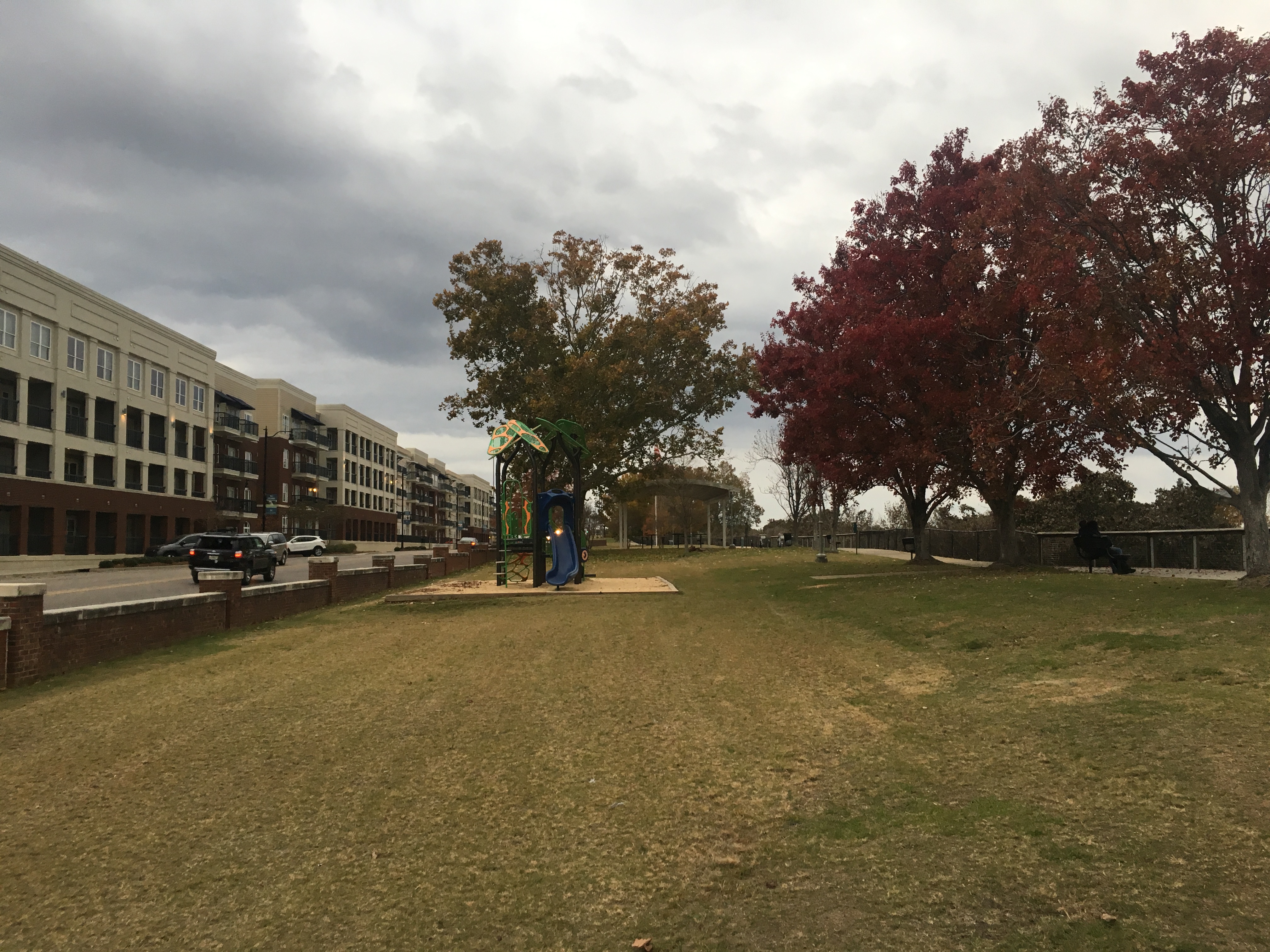
Wright Brothers Park is a small, unhurried place. Four picnic tables sit beneath a gazebo overlooking the Alabama River, which curves past Montgomery in a wide brown arc on its way toward Mobile Bay. Walking trails wind along the bluff edge, offering views of the river and the flat bottomland forests on the far bank. A playground tucks into one corner. The park's real draw, though, is the perspective it offers -- standing beneath the Wright Flyer replica with the river behind it, you can almost reconstruct the sight lines those five students must have had, watching a biplane stutter into the Alabama sky for the first time. The connection between this quiet bluff and the sprawling air base just upstream is invisible but unbroken.
Maxwell's Long Shadow
The flight school Orville Wright opened in that cotton field grew into one of the most important military installations in the American South. Maxwell Air Force Base today serves as headquarters for Air University, the intellectual center of the United States Air Force. Every year, thousands of officers pass through its classrooms studying strategy, doctrine, and leadership. The base's runway lies less than a mile from Wright Brothers Park. It is a peculiar thing -- the distance between where aviation was taught for the first time and where it is taught still, measured in a short walk along the Alabama River. Montgomery does not always advertise this connection, but the park on the bluff makes it hard to miss.
From the Air
Located at 32.378N, 86.318W on the bluffs above the Alabama River in Montgomery, Alabama. The park sits immediately east of Maxwell Air Force Base (KMXF), making it easily identifiable from the air by the base's runway complex. Montgomery Regional Airport (KMGM/Dannelly Field) lies 7 miles southwest. Best viewed at 2,000-3,000 feet AGL; the Wright Flyer replica on the river bluff is visible in clear conditions. The Alabama River curves distinctively through this section of Montgomery, providing a reliable visual reference. Expect haze in summer months.