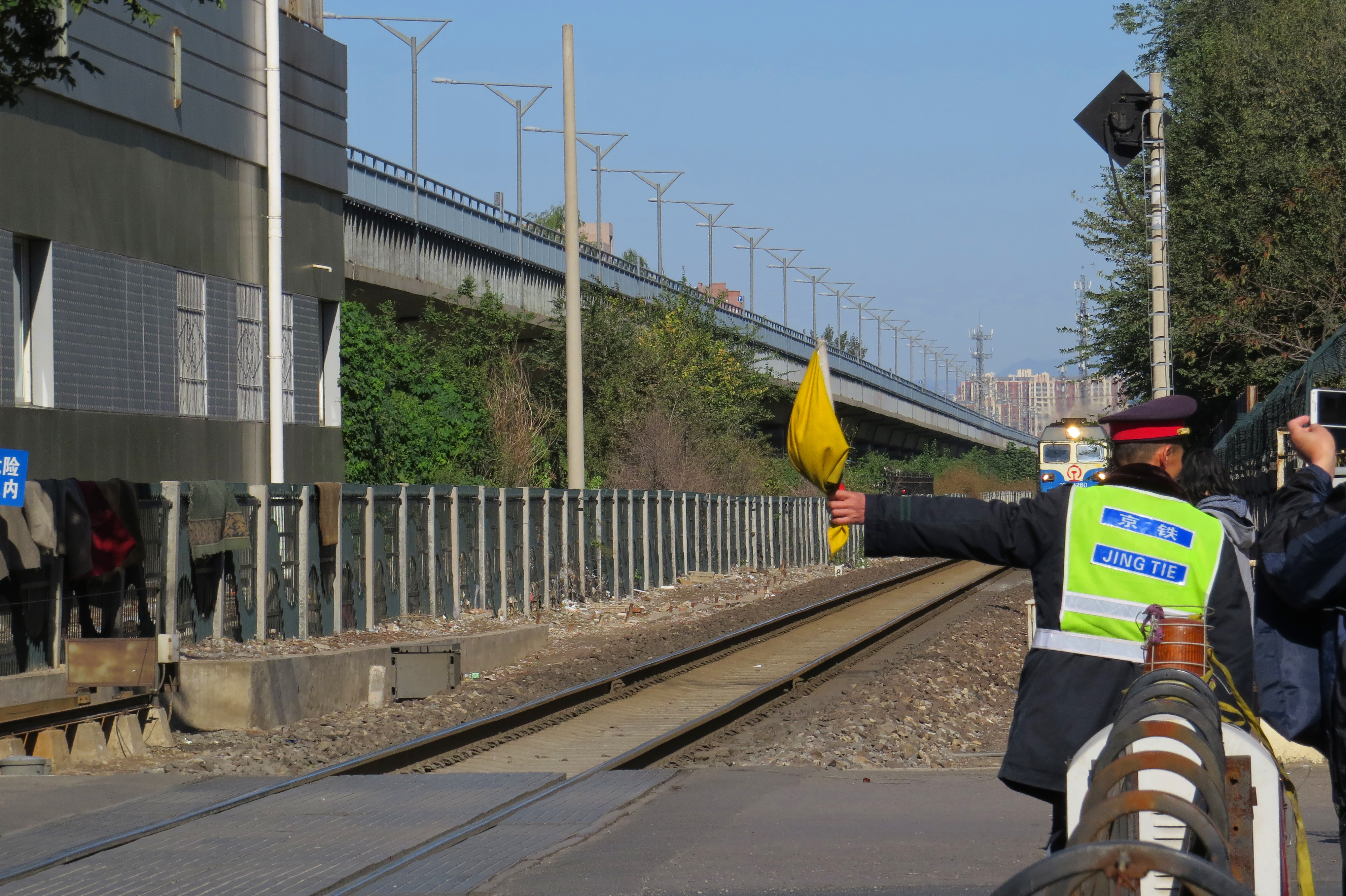
Wudaokou
The fifth level crossing of the Jingbao Railway is gone now, buried underground as part of the Beijing-Zhangjiakou intercity rail project. But the name it gave this neighborhood -- Wudaokou, literally 'Fifth Crossing' -- endures, along with a local nickname that captures the area's outsized self-regard: the Center of the Universe. The phrase started as a joke about real estate prices in a neighborhood where a clutch of China's most prestigious universities creates relentless demand for housing, food, entertainment, and space. It became something more like a statement of fact. Within a 10-minute walk of the former crossing, students from Tsinghua University, Peking University, and half a dozen other institutions pour into streets where Korean barbecue restaurants sit next to tech startup offices, and nightclubs offer cheaper drinks than the fashionable bars of Sanlitun.
A Crossing Becomes a Center
Wudaokou became a commercial center in the 1950s, following the establishment of several universities in Beijing's Haidian District. For decades, it remained a modest neighborhood of hutong alleyways and 1960s apartment blocks. Until as recently as 2001, much of the old fabric survived. Then development arrived with force, erasing the hutongs and replacing them with luxury apartments and technology parks. The area sits between Beijing's Fourth and Fifth Ring Roads, about 10 kilometers from the city center, connected by Line 13 of the Beijing Subway. Google China once operated an office here. The transformation from quiet crossing to buzzing urban node happened within a single generation, leaving few physical traces of the neighborhood that existed before the universities drew the world to its doorstep.
Where Seoul Meets Beijing
Walk through Wudaokou and you will notice the signs are often in Korean as well as Chinese. Beginning in the early 1990s, South Korean students studying Chinese for one- or two-year programs before entering Chinese universities began congregating in the neighborhood. Their presence attracted Korean restaurants, bars, businesses, and eventually a permanent residential community that earned Wudaokou a secondary identity as Beijing's Koreatown. Korean students remain the largest foreign student population in the area. Although the growth of the Wangjing district in Chaoyang has drawn some of the Korean community eastward, Wudaokou retains its bilingual character and its reputation as the most international neighborhood in Beijing's university belt.
The Student Republic
The density of universities surrounding Wudaokou is extraordinary. Tsinghua University and Peking University are the giants, but Beijing Language and Culture University, Beihang University, China University of Geosciences, University of Science and Technology Beijing, and Beijing Forestry University all lie within walking distance or a short subway ride. This concentration creates a population that skews young, international, and perpetually caffeinated. The nightlife scene -- clubs with names like Wu Club, Propaganda, and Sensation -- reflects student budgets, offering lower prices than Beijing's more central entertainment districts. But the real energy of Wudaokou is intellectual rather than social. The neighborhood functions as a laboratory where Chinese students, international students, tech entrepreneurs, and researchers collide in coffee shops, shared offices, and dormitory common rooms, generating ideas at a rate that justifies the neighborhood's grandiose nickname.
From the Air
Coordinates: 39.992N, 116.324E. Located in Haidian District, northwest Beijing, between the Fourth and Fifth Ring Roads. The area is identifiable from the air by the large campus complexes of Tsinghua and Peking Universities to the west and south, with dense urban development filling the spaces between. The Beijing-Zhangjiakou railway corridor runs through the area. Nearest major airport is Beijing Capital International (ZBAA/PEK), about 25 km northeast.