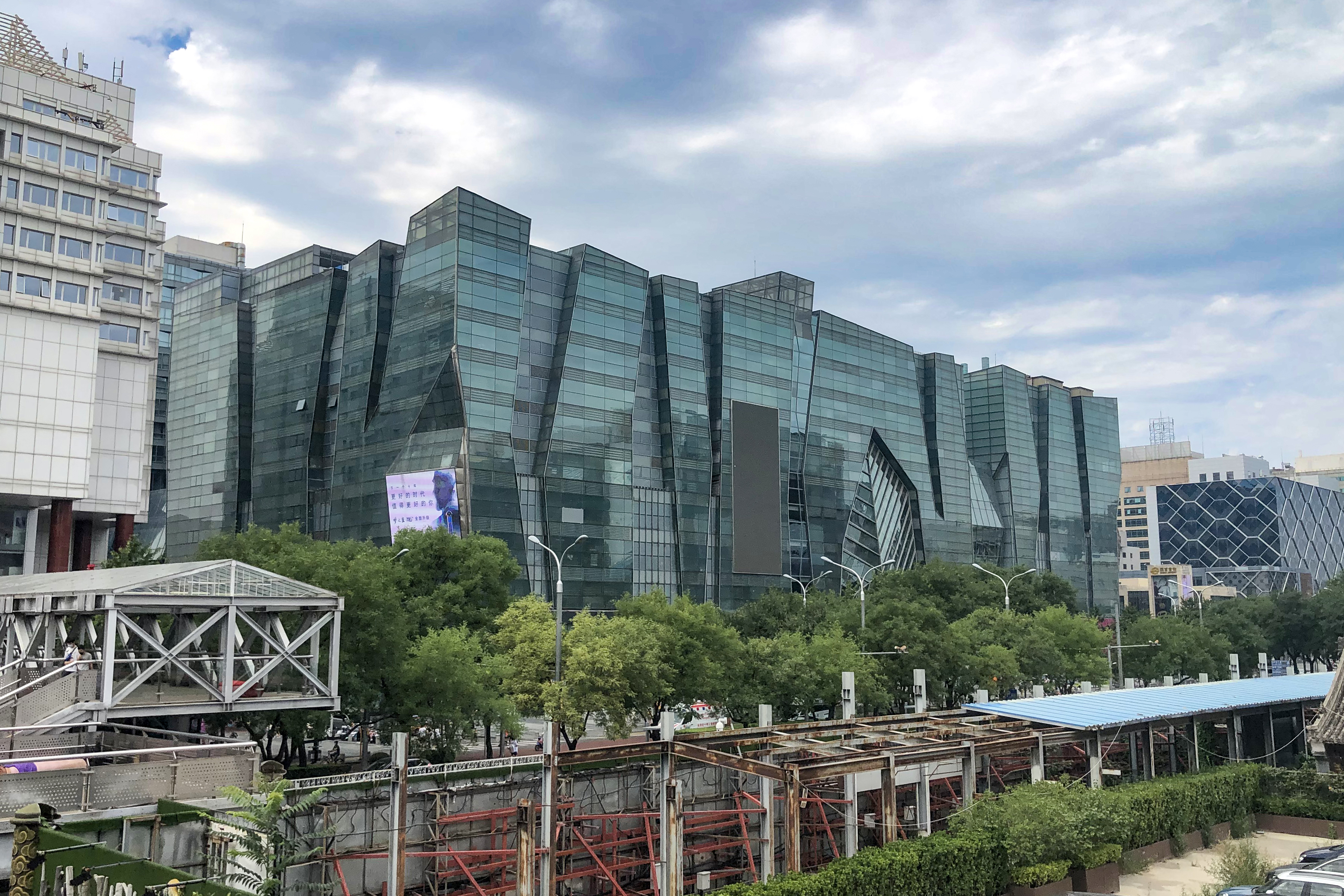
Xidan
The name is a riddle in two characters. Xi means west. Dan means single. Xidan -- West Single -- refers to a lone paifang, an ornamental archway, that once stood on the western side of old Beijing. The arch is gone, rebuilt in 2008 and relocated to the Xidan Culture Square, but the name persists, attached to one of the capital's oldest and most politically layered commercial districts. What makes Xidan fascinating is not its shopping, though there is plenty of that. It is the collision of commerce, architecture, and political defiance packed into a few city blocks.
Merchants from the Southwest
Xidan's commercial roots stretch back to the Ming dynasty, when the area lay along the route that traders from southwestern China used to enter the capital. Restaurants and shops grew up to serve these merchants, and the district's identity as a marketplace was set. When the western part of the city became the residential quarter for government officials during the Qing dynasty, Xidan evolved to meet their needs. During the Republic of China era, the proximity of government agencies further fueled the area's commercial growth. By the 1970s, Xidan had joined Qianmen and Wangfujing as one of Beijing's three major shopping centers. The oldest department store in the district is a branch of the Taiwanese chain Chungyo, a detail that captures the complex cross-strait economic ties that thread through Chinese commercial life.
Beijing's Widest Alley
Xidan contains a geographic curiosity: Lingjing Alley, which at 32 meters wide is considered the broadest hutong in Beijing. Hutongs -- the narrow residential lanes that define historic Beijing's urban fabric -- are typically associated with intimacy and compression, not breadth. Lingjing Alley upends that expectation, a reminder that the category of "hutong" encompasses more architectural variety than the word's common usage suggests. The Xidan Culture Square, meanwhile, functions as the area's public gathering space and the largest venue for cultural events in downtown Beijing, hosting performances and exhibitions in the shadow of surrounding malls and department stores.
The Wall That Spoke
In 1978, a long brick wall on Xidan Street became the most important surface in China. Known as the Democracy Wall -- or simply the Xidan Wall -- it erupted with handwritten posters criticizing the country's leadership and calling for political reform. The event is generally recognized as the beginning of the Beijing Spring, a brief flowering of political expression that saw ordinary citizens publicly debating ideas about democracy and human rights. Even the Canadian journalist John Fraser posted a dazibao, a big-character poster, on the wall -- a notice about a lost gold signet ring that concluded with vague political sentiments and improbably led to his addressing crowds in Tiananmen Square during the summer of 1979. By December of that year, Beijing's municipal government banned wall posters on the Xidan Wall, and the brief experiment in open political expression was over.
Commerce Prevails
Today, Xidan is served by a subway interchange between Lines 1 and 4, and the district bristles with shopping centers: Joy City, the Hua Wei Center, the underground New Xidan plaza. The Chinese Ministry of Education is headquartered here, adding a governmental layer to the commercial bustle. The government targeted Xidan in its Eleventh Five Year Plan with a mission to improve the area's environment and diversify its retail offerings, portions of which were completed before the 2008 Olympics. Walking through Xidan today, the Democracy Wall is easy to miss -- a historical marker in a district that has moved on, its identity once again defined by the flow of goods rather than the flow of ideas. But the wall was there. The words were written. And the memory of what a brick wall on a shopping street briefly meant has not been entirely erased.
From the Air
Located at 39.91°N, 116.37°E in Beijing's Xicheng District, approximately 2 km west of Tiananmen Square along Chang'an Avenue. The dense commercial blocks of Xidan are visible from altitude as a cluster of modern shopping centers west of the Forbidden City. Beijing Capital International Airport (ZBAA/PEK) lies 27 km to the northeast. Best viewed at 3,000-5,000 feet.