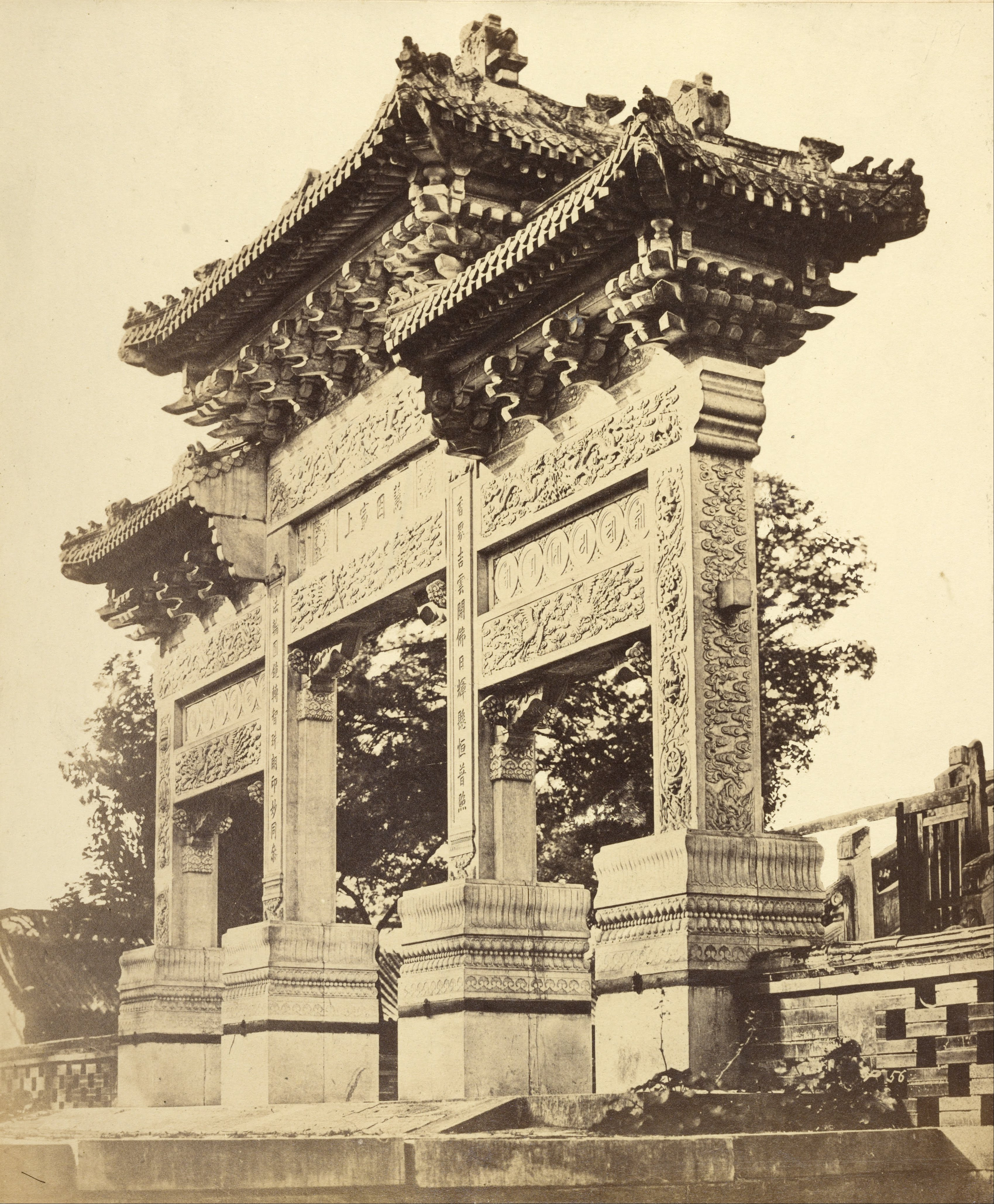
Xihuang Temple
When the Shunzhi Emperor invited the 5th Dalai Lama to Beijing in 1651, the visit was as much about politics as religion. The Qing dynasty was barely seven years old, and its Manchu rulers needed allies to consolidate power over a vast, restive empire. Tibetan Buddhism offered spiritual legitimacy, and the Dalai Lama offered a connection to it. The temple the emperor built for his guest -- Xihuang Temple, in what is now Beijing's Chaoyang District -- would go on to host a succession of Tibet's highest religious figures across three centuries of imperial rule and beyond.
A Temple Between Empires
Xihuang Temple was more than a place of worship from its inception. It was a diplomatic instrument, a guesthouse for visiting Tibetan leaders whose spiritual authority the Qing emperors found useful and occasionally threatening. When the 6th Panchen Lama died in 1780 during his own visit to Beijing, the Qianlong Emperor ordered a white pagoda built within the temple grounds to commemorate him, naming it the Qingjing Huacheng Pagoda. The gesture was genuine mourning wrapped in statecraft -- the Panchen Lama's death during a visit to the imperial capital was a political complication that required careful handling, and a memorial pagoda demonstrated both respect and control.
Twice Ransacked, Still Standing
The temple's location in Beijing's diplomatic quarter made it a target during the capital's worst crises. In 1860, combined British and French forces devastated Xihuang Temple during the Second Opium War, part of a broader campaign of destruction that included the burning of the Old Summer Palace. Forty years later, the Eight-Nation Alliance ransacked the temple again during its 1900 invasion of Beijing. Each time, the temple was rebuilt. Each time, it continued to serve its dual purpose as a place of genuine religious devotion and a symbol of the relationship between Beijing and Tibet. In 1908, the 13th Dalai Lama lived at Xihuang Temple for nearly three months. Fifteen years later, the 9th Panchen Lama came to Beijing and also took up residence here.
Continuity Across Revolutions
The founding of the People's Republic of China did not end Xihuang Temple's role as a meeting point between Tibetan Buddhism and Chinese state authority. In 1954, both the 10th Panchen Lama and the 14th Dalai Lama paid religious homage at Xihuang Temple while attending the 1st National People's Congress -- one of the last occasions when both figures appeared together in Beijing. The temple was inscribed on the Beijing Municipal Cultural Preservation list in 1979, and in 1983 it was designated a National Key Buddhist Temple. Four years later, the 10th Panchen Lama established the High-Level Tibetan Buddhism College of China on the temple grounds, adding an educational mission to its long history of diplomacy and devotion.
Along the Central Axis
Xihuang Temple's architecture follows the traditional Chinese Buddhist layout, organized along a central axis that moves from the worldly to the sacred. Visitors pass through the Shanmen Hall, continue to the Hall of Four Heavenly Kings, and arrive at the Main Hall, where the central devotional space anchors the complex. A traditional paifang marks the transition between sections, while East and West Side Halls flank the procession. The white pagoda commemorating the 6th Panchen Lama, listed among Beijing's Major National Historical and Cultural Sites since 2001, remains the temple's most distinctive architectural feature. In May 2018, a museum opened within the temple grounds, making its history of cross-cultural religious exchange accessible to the general public for the first time.
From the Air
Located at 39.96N, 116.38E in Chaoyang District, Beijing. The temple compound is situated north of central Beijing. From the air, look for the distinctive white pagoda among the dense urban fabric. Nearest airport is Beijing Capital International (ZBAA/PEK), approximately 22 km northeast.