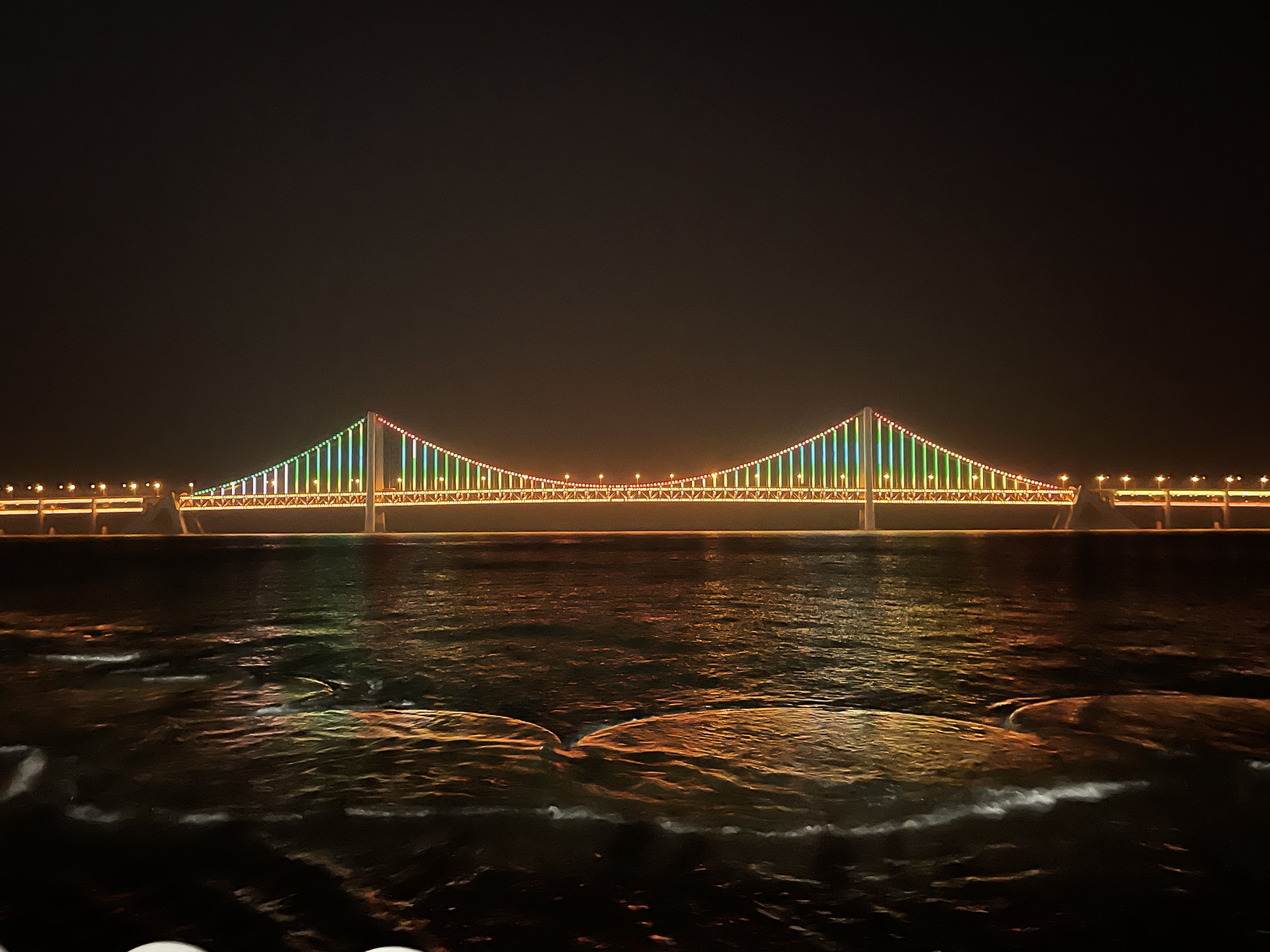
Xinghai Square
At 110 hectares, Xinghai Square is the largest city square in the world, and every inch of it was pulled from the sea. Created entirely through land reclamation on the southern coast of Dalian's Shahekou District, the square opened in 1999 to celebrate the city's hundredth anniversary. Its name means "Sea of Stars," and its design encodes dates and symbolism into its geometry with mathematical precision. But the most revealing story about Xinghai Square is the one the city will not discuss: the monument that once stood at its center, and why it was torn down at midnight.
Geometry as Calendar
The square's design turns measurement into meaning. An inner circle with a diameter of 199.9 meters represents the centennial year, 1999. An outer circle of 239.9 meters anticipates the city's 500th anniversary in 2399, encoding a future date that no living person will see. The center draws on the design concept of the Circular Mound Altar at Beijing's Temple of Heaven, paved with 999 pieces of Sichuan red marble carved with the Heavenly Stems, Earthly Branches, Solar Terms, and Chinese Zodiac. Nine bronze tripods stand in the square, each bearing a single character that together spell out a phrase of national unity. A sculpture of 1,000 footprints leads to the Centennial City Sculpture, an opened-book shape facing the sea, signifying a new chapter in the city's history.
The Midnight Demolition
A huabiao once stood at the heart of Xinghai Square. Built in 1997 to commemorate Hong Kong's handover to China, the ornamental column stood 19.97 meters tall with a diameter of 1.997 meters, every dimension encoding the year. It was the tallest huabiao in China and became one of Dalian's most recognizable landmarks. On August 5, 2016, at midnight, it was secretly demolished. The timing and secrecy were widely interpreted as political: the huabiao had been erected during the tenure of Bo Xilai as mayor of Dalian. Bo oversaw the construction of both Xinghai Square and its central monument before rising to national prominence and then falling spectacularly, expelled from the Communist Party and imprisoned for corruption, bribery, and abuse of power. Local media said nothing about the demolition. Reports from mainland outlets were quickly deleted.
Fountains Where a Column Once Stood
On November 26, 2017, a musical fountain opened at the spot where the huabiao had stood, replacing political symbolism with choreographed water. The fountain is billed as the largest musical fountain in Northeast China, one of three in downtown Dalian. The replacement was practical in its own way: a monument tied to a disgraced politician had become an embarrassment, but an empty center in the world's largest square would have been equally conspicuous. Water fills the gap nicely. Nearby, the Dalian Shell Museum opened in 2015 in a building shaped like a reclining seashell, housing over 50,000 specimens of more than 10,000 species. The China International Beer Festival has made Xinghai Square its Dalian venue since 2002, and an amusement park operates along the eastern edge.
Reclaimed Land, Reclaimed Narrative
Xinghai Square sits about one kilometer from Xinghai Park to the west, one kilometer from the Xinghai Bay Bridge to the south, and 4.5 kilometers from the Qingniwaqiao central business district to the north. Dalian Metro Line 1 connects directly via Xinghai Square Station. The square is both a civic gathering place and a monument to the engineering ambition of a city that decided, for its hundredth birthday, to build the world's largest public square on ground that did not previously exist. That the square's most prominent symbol was then erased at midnight, and the time capsule sealed for the bicentennial was quietly removed years ahead of schedule, suggests that the land may be reclaimed but the narrative is always under revision.
From the Air
Located at 38.88N, 121.58E on the reclaimed southern coastline of Dalian's Shahekou District. The massive square is visible from altitude as a distinctive oval development on the waterfront, with the Xinghai Bay Bridge arcing across the bay to the south. Nearest major airport is Dalian Zhoushuizi International (ZYTL/DLC), approximately 12 km north-northwest. The square is bordered by Zhongshan Road and faces Xinghai Bay on the Yellow Sea.