Xiong'an
On April 1, 2017, Beijing announced it was building a new city. Not an expansion of an existing one, not a suburb, but an entirely new urban center rising from the farmland and wetlands of Hebei Province, 100 kilometers south of the capital. Within hours of the announcement, property prices in the surrounding counties soared. Real estate offices were shut down by authorities. Speculators were arrested. The government called Xiong'an a "millennium plan and a national event" -- language so grand it sounded like propaganda, until the construction cranes arrived. By the end of 2025, the area had absorbed over 400 billion yuan in completed investment, and state-owned enterprises had begun relocating their headquarters from Beijing.
Blueprint for a Century
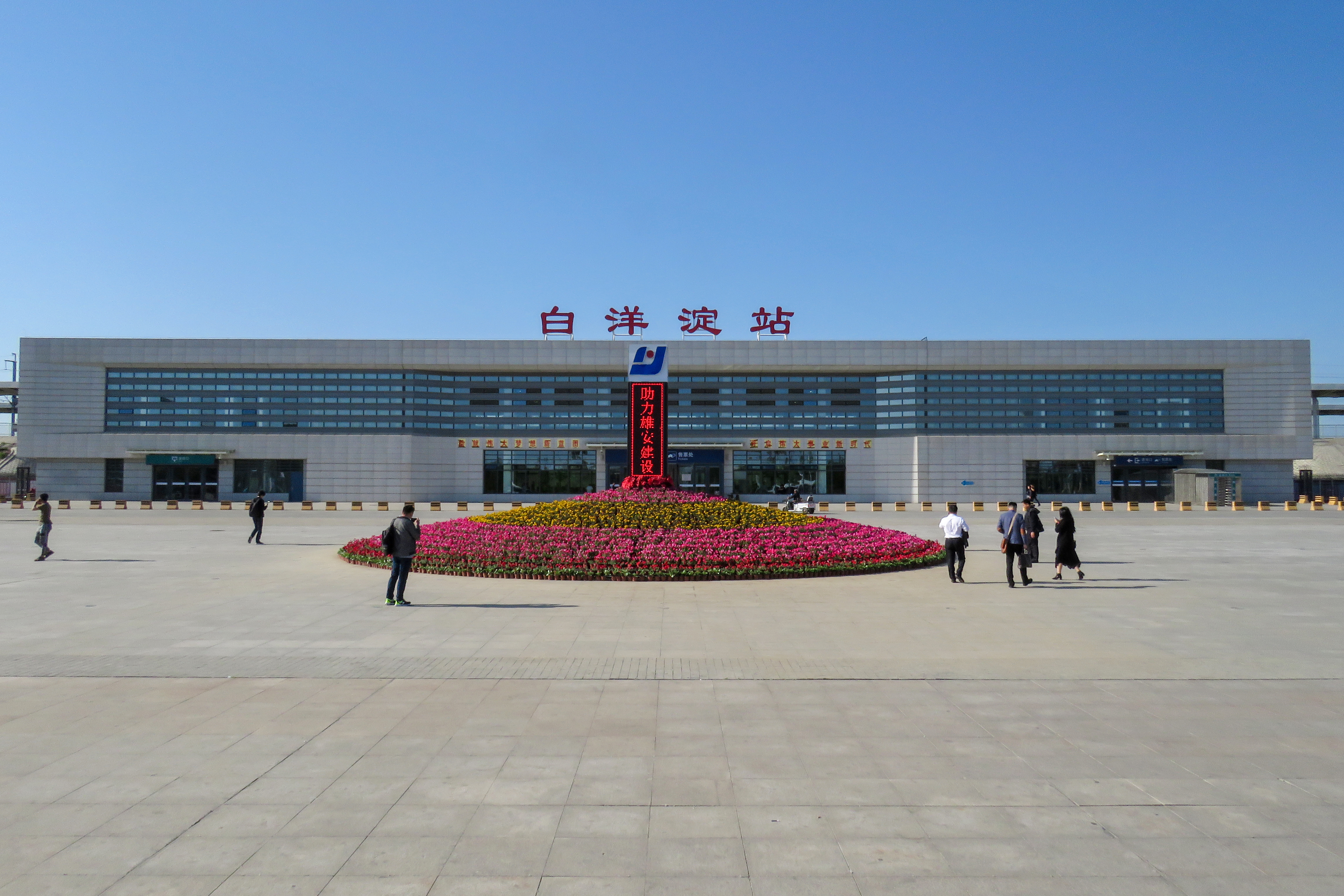
Xiong'an New Area covers three counties -- Xiong, Rongcheng, and Anxin -- its name a compound of the first characters of Xiong and Anxin. Sitting at the geometric center of the Beijing-Tianjin-Hebei economic triangle, the city is designed to absorb functions that Beijing no longer needs or can no longer sustain: offices of state-owned enterprises, government agencies, and research facilities. The planning guidelines, approved in April 2018, call for a city erected by 2035 and completed by mid-century, with a target population of 5 million. High-speed rail connects Xiong'an to Beijing Daxing International Airport in 20 minutes and to central Beijing and Tianjin in 30. The Xiong'an railway station opened in December 2020, anchoring the city's transportation spine before most of the city itself existed.
The Fifteen-Minute Life
Xiong'an is planned as a smart city built around a concept that urban planners worldwide have been debating for years: the fifteen-minute lifecycle, in which every good and service an urban person needs should be available within a fifteen-minute walk. Streets are designed for pedestrians and cyclists first, cars second. The digital infrastructure runs deep -- Xiong'an is one of China's pilot cities for the digital renminbi. Housing follows a model that draws explicit inspiration from Singapore's public housing system, with farmers whose land was acquired for development becoming shareholders in the urbanization process rather than simply displaced residents. The ambition is a city that avoids the sprawl, pollution, and social stratification that have marked China's previous waves of rapid urbanization.
Baiyang Lake and the Ghosts of War
At the heart of Xiong'an lies Baiyang Lake, the area's most significant natural feature and a landscape deeply embedded in Chinese cultural memory. Many Chinese know the lake from films and literature depicting its role during the Second Sino-Japanese War, when local residents and Communist guerrillas used its maze of reed beds and waterways as cover for resistance operations. The new city's master plan calls for restoring the wetlands surrounding the lake, an ecological commitment that sits in deliberate tension with the massive construction project unfolding around it. Whether a city of five million people can coexist with a healthy wetland ecosystem is one of Xiong'an's central experiments -- and one whose outcome remains genuinely uncertain.
Building Under Secrecy and Scrutiny
The planning of Xiong'an was carried out under extraordinary confidentiality. The name first appeared in government documents in May 2016, but the public announcement did not come until nearly a year later. The preparation was deliberate: by the time the news broke, the government had already frozen property transactions, established transitional governance structures, and begun moving officials into a rented hotel in Rongcheng County that served as the temporary seat of government. As of the 2020 census, the permanent population stood at 1,205,440, with an estimated 1.36 million by 2024. Most new household registration permits go to staff at large state-owned enterprises, top university graduates, and high-skilled workers in artificial intelligence, biotech, and fintech. Xiong'an is not just a new city; it is a curated population experiment, a place where the state is trying to design not just the buildings but the demographics of who lives in them.
From the Air
Located at 39.05°N, 115.91°E in Hebei Province, approximately 100 km south of Beijing. Baiyang Lake is visible from altitude as a large wetland area at the center of the new development zone. Major construction activity and new infrastructure are increasingly visible from the air. Beijing Daxing International Airport (ZBAD) is 55 km to the northeast, connected by high-speed rail. Recommend viewing at 5,000-10,000 ft to see the contrast between new urban construction and the surrounding wetlands and farmland.