Xizhimen
Every day for centuries, carts carrying fresh water from the Jade Spring Hills entered Beijing through a gate called Xizhimen -- the Western Straight Gate. The water was destined for the imperial household, and the gate's association with this essential delivery made it one of the most important openings in Beijing's city wall. In 1969, the gate was demolished as part of the city's modernization drive. Today, nothing of the original structure survives above ground, but the name endures as the designation for one of Beijing's most complex transportation interchanges, where three subway lines, a railway station, and a web of ring roads converge in a knot of infrastructure that carries hundreds of thousands of people daily through the space where water once entered the city for an emperor.
The Water Gate
Xizhimen's identity was shaped by geography and hydrology. The Jade Spring Hills, located to the west of Beijing, produced water prized for its quality, and the western gate was the natural entry point for the supply route. The gate was part of Beijing's inner city wall, a massive fortification system that defined the city's shape for centuries. Like the other gates, Xizhimen had both a gate tower and an outer barbican, creating a double-walled entrance that served defensive as well as practical purposes. The decision to demolish the gate in 1969, along with much of the remaining city wall, was driven by the need for road infrastructure and by an ideological rejection of imperial-era structures. What was lost was not merely a building but a physical link to the city's relationship with its water supply -- a relationship that stretched back through the Ming and Qing dynasties.
Layers of Infrastructure
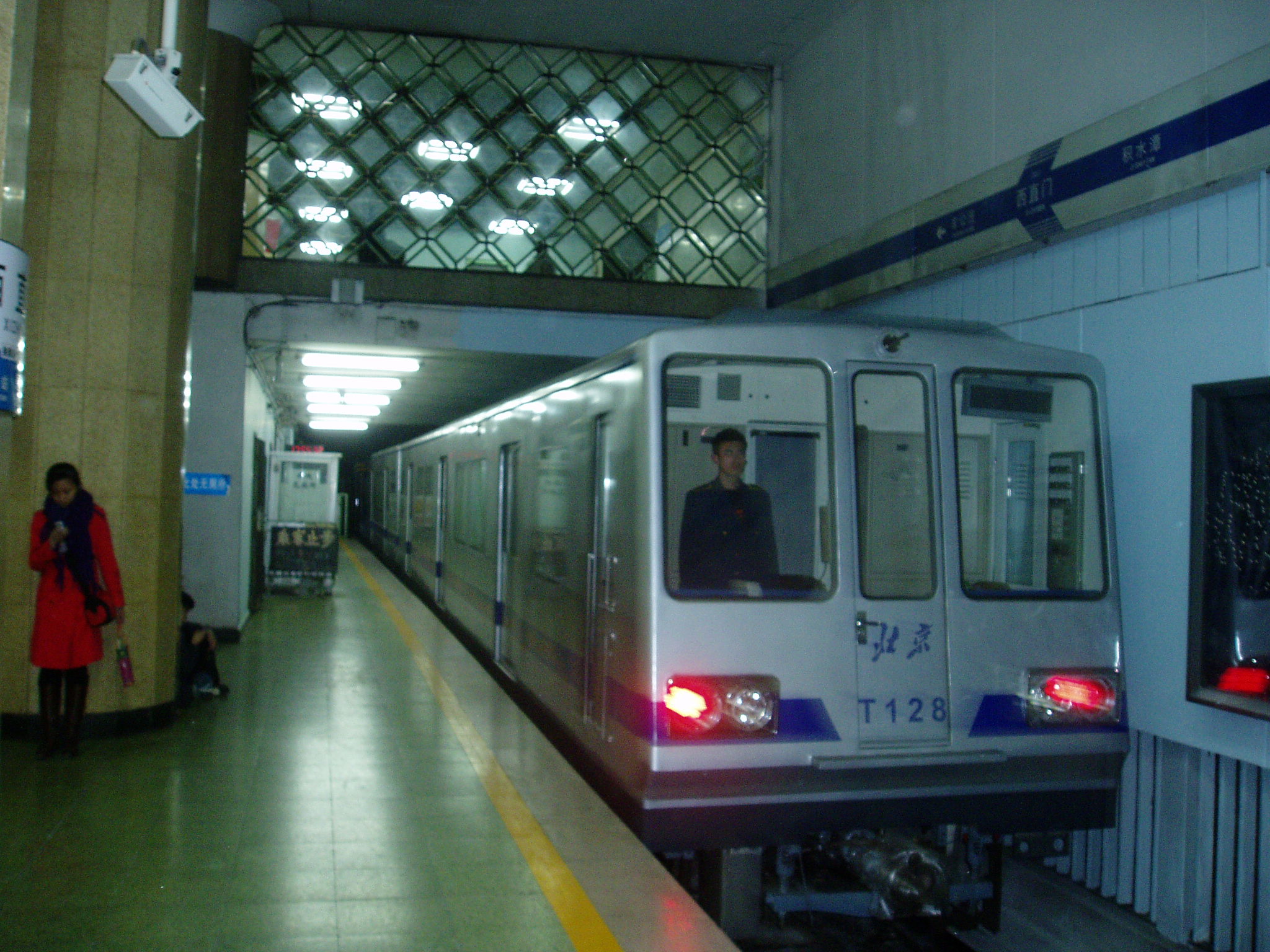
Modern Xizhimen is a study in vertical transportation. The area sits at the junction of Beijing's 2nd Ring Road and serves as a gateway to the western portions of the city. The original Xizhimen Bridge, built in the 1970s, was once the tallest bridge on the 2nd Ring Road at 5.5 meters and featured three layers, with the top functioning as a roundabout. That bridge was carefully dismantled in 1999 -- through structural removal rather than demolition by explosion -- and replaced with a series of modern spans. Below ground, Line 2, Line 4, and Line 13 of the Beijing Subway all converge at Xizhimen Station, connected by transfer passages with escalators. Line 13 has its western terminus here. Above ground, the Beijing North railway station anchors the area, providing intercity rail connections.
Olympic Transformation
The 2008 Beijing Olympics catalyzed Xizhimen's most dramatic recent transformation. A masterplan integrated the subway station, the railway station, and new commercial and office buildings into a unified transportation hub. The Xihuan Plaza project, designed under the direction of architect Li Xinggang, aimed to create a seamless connection between transit modes and the surrounding urban fabric. The construction was completed just in time for the Games, giving the area its current character: a dense cluster of towers, transit infrastructure, and commercial spaces that functions as a gateway between central Beijing and its northwestern suburbs. A triple-arched highrise building has become the area's most recognizable landmark, standing at the intersection where the old gate once filtered water and travelers into the imperial city.
From the Air
Coordinates: 39.940N, 116.355E. Located in Xicheng District, central-west Beijing, at the junction of the 2nd Ring Road. The area is identifiable from the air by the major road interchange and the cluster of modern highrise buildings at the intersection. The nearby Beijing Zoo provides a visual landmark to the southwest. Nearest major airport is Beijing Capital International (ZBAA/PEK), about 25 km to the northeast.