Xuzhou Museum
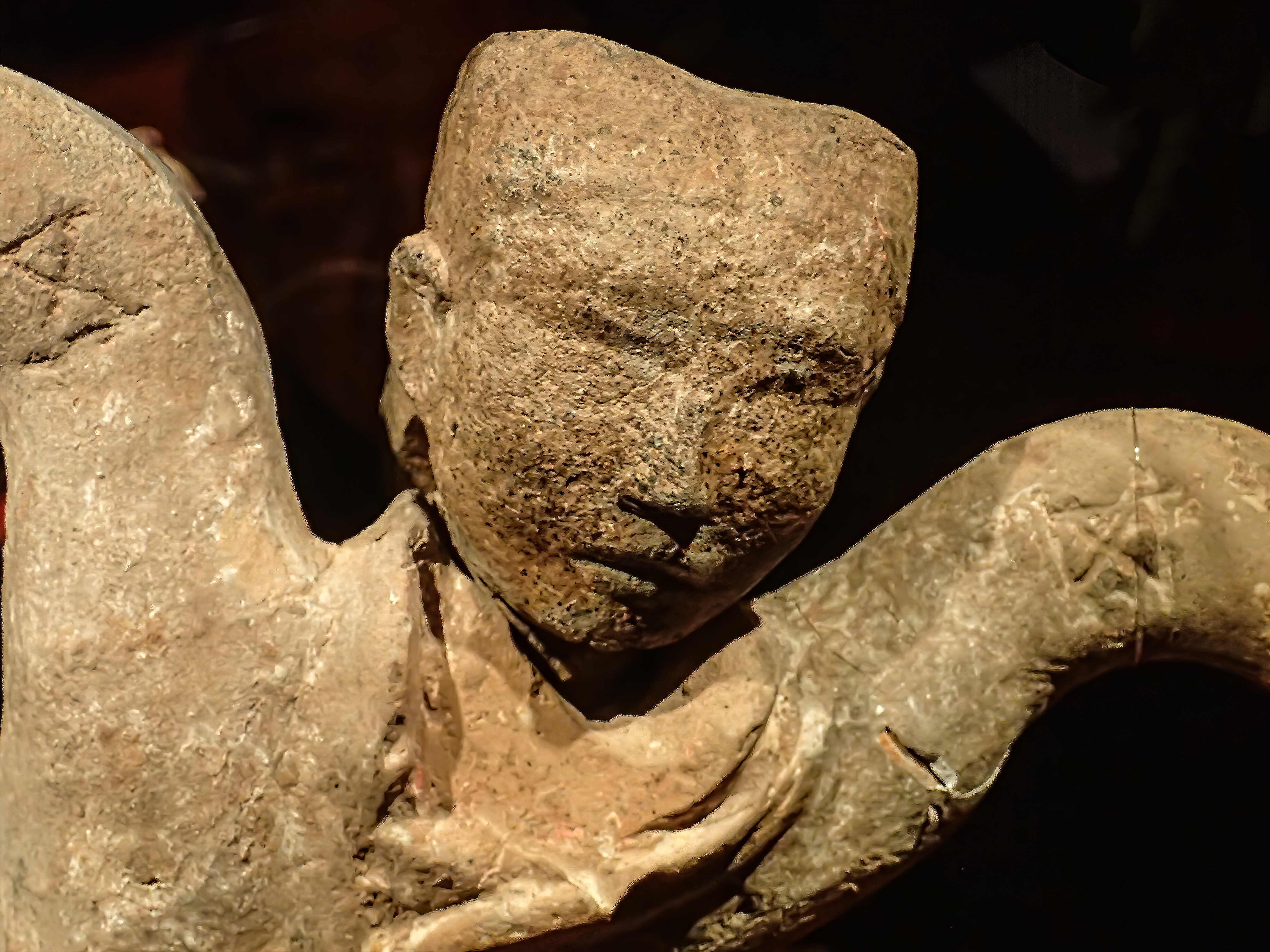
Everyone knows about the terracotta warriors in Xi'an. Far fewer know that Xuzhou has its own army of clay soldiers, discovered in 1984, arranged in battle formation, and standing barely a foot tall. These 4,800 miniature warriors were buried with Liu Wu, the third king of Chu during the Western Han dynasty, and they carry an emotional weight that their larger cousins in Xi'an do not. Where the Qin emperor's army projects raw imperial power, the Chu king's soldiers wear expressions of sorrow and respect, subjects mourning a ruler they followed into the afterlife.
An Emperor's Retreat, a Region's Memory
The museum sits at the northern foot of Yunlong Mountain, on ground the Qianlong Emperor chose for one of his traveling palaces during a 1757 inspection tour south of the Yangtze River. Founded in 1959 on this imperial site, the museum was expanded in 1999 and then rebuilt between 2010 and 2012 into its current form, a 40,000-square-meter complex anchored by a four-story exhibition building. It still administers the Xanadu Palace and Stone Tablet Garden from the Qing dynasty, as well as three tombs of the Pengcheng Kings from the Eastern Han dynasty in nearby Tushan. The location is fitting: Xuzhou, once known as Pengcheng, became a thriving trading center precisely because it sat at the strategic crossroads between north and south China, enriched for centuries by the alluvial soil the Yellow River deposited during its annual floods.
Six Millennia in Seven Galleries
The museum's 15,577 objects span roughly 6,000 years and fill seven themed galleries. "Metal Hardware and Battle Steed" showcases military artifacts from the Han and Chu periods through the Tang, Song, Yuan, and Ming dynasties, including armor, crossbows, and artillery pieces that trace the evolution of Chinese warfare. "Marvelous Jade of the Han dynasty" displays jade burial suits sewn with copper thread, artifacts created for kings who believed jade would preserve their bodies for eternity. The Xizyuandun Longshan Culture Ruins, remains of a Neolithic settlement of the Dawenkou culture dating back to 4100 BCE, supply some of the oldest pieces in the collection. From the other end of history, Qing-style furniture and a gallery of Chinese paintings and calligraphy donated by collector Deng Yongqing round out a collection that makes time feel compressed and continuous.
The Sorrowful Army
The terracotta warriors excavation site covers 6,000 square meters across six pits: three infantry, one pottery-guard, one cavalry, and one chariot pit. Only two infantry pits and the pottery-guard pit have been fully excavated, yielding 2,393 figures so far. The sculptures are arranged in a battle formation specific to the Chu Kingdom, soldiers armed with crossbows and wearing period armor, posed both standing and kneeling. What makes them remarkable beyond their sheer number is their individuality. Since citizens between the ages of 18 and 55 were required to join the army during times of conflict, the sculptors depicted both young and older soldiers. Their faces carry expressions described as respectful yet sorrowful, a mourning army standing vigil over their king's tomb rather than the conquering force projected by the Qin emperor's warriors further west.
A Crossroads Still Yielding Secrets
Museum archaeologists continue to work across the region, participating in excavations of Western Zhou and Han dynasty sites at Miao Taizi and Jiaozhuang in Jiawang, along with the Woniushan, Wanda Plaza, Kuishan, and Tiechashan tomb complexes. The area has yielded artifacts up to one million years old, a reminder that Xuzhou's strategic position made it a center of human activity long before dynasties claimed it. Gold belt buckles, bronze vessels, and dancer figurines with flowing robes continue to surface from tombs scattered across the surrounding hills. Each new discovery adds another layer to a collection that already demonstrates how one city at the junction of north and south China accumulated the cultural wealth of an entire civilization.
From the Air
Located at 34.265N, 117.187E at the northern foot of Yunlong Mountain in Xuzhou, Jiangsu Province. The museum complex and Yunlong Mountain are visible from moderate altitude. Nearest major airport is Xuzhou Guanyin International Airport (ZSXZ), approximately 45 km southeast. The surrounding city of Xuzhou is a major rail junction visible as an urban cluster in the flat North China Plain.