Yushukan
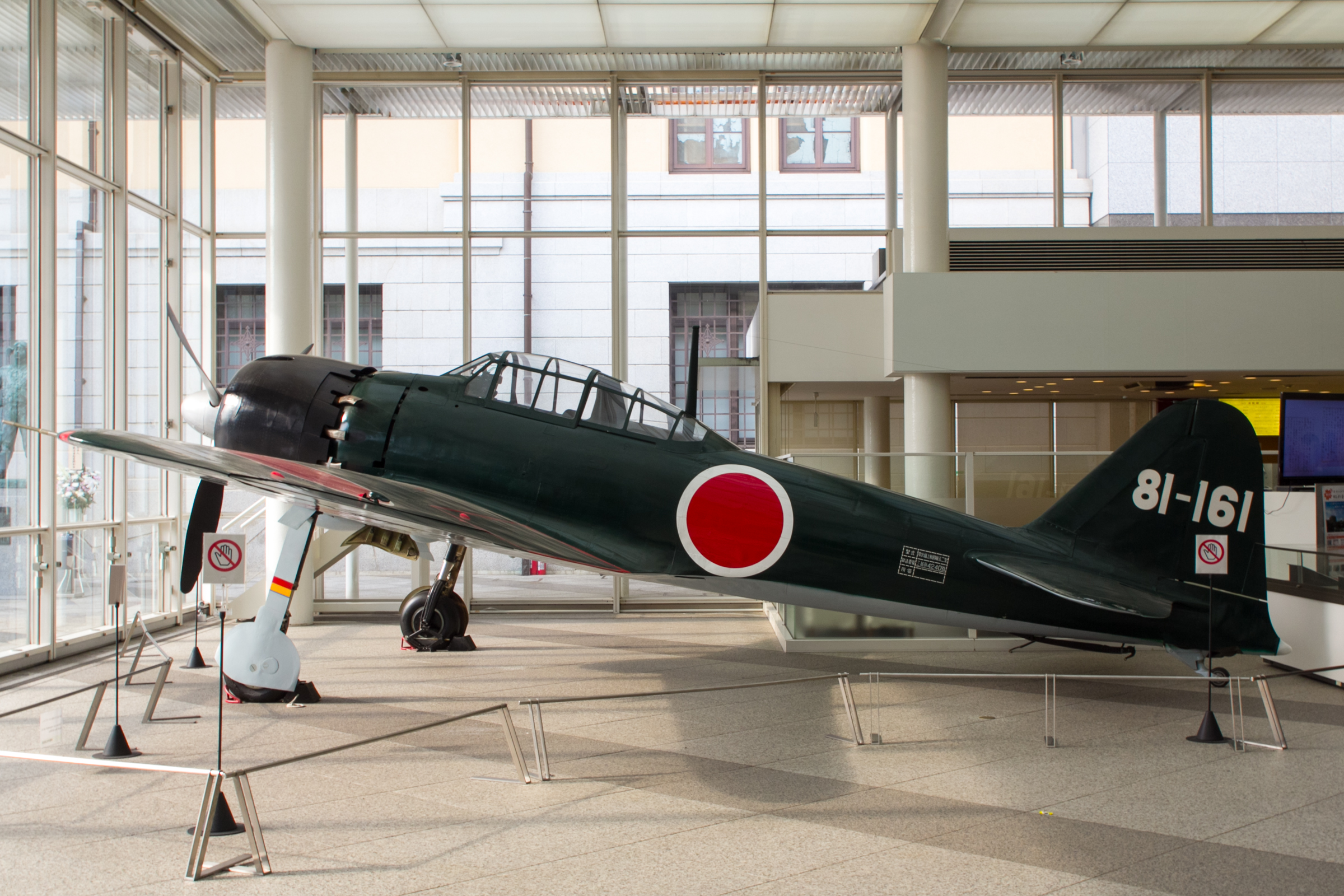
In the entrance hall, free of charge, visitors can walk up to an A6M Zero fighter aircraft and a Class C56 steam locomotive -- number C56 31 -- that once ran on the Thai-Burma Railway, known to prisoners of war as the Death Railway. These are not replicas. They sit under bright lights on polished floors inside a modern glass-fronted building within the grounds of Yasukuni Shrine in Chiyoda, Tokyo. The Yushukan is Japan's oldest military museum, established in 1882, the same year the Meiji government was consolidating its hold on a rapidly modernizing nation. What makes the museum impossible to ignore -- and impossible to visit casually -- is not just what it displays but what it says about why those objects matter.
Three Buildings, Three Eras
The original Yushukan was designed by Giovanni Cappelletti, an Italian architect, and looked like a European castle. It opened in 1882 as the first war museum in Japan, a place to honor soldiers who died fighting for the emperor during the turbulent early Meiji period. As collections grew, the building expanded. Then the 1923 Great Kanto earthquake demolished it. Architect Ito Chuta rebuilt the museum, and it reopened in 1932. During World War II, the Ministry of War loaned captured weaponry for display, but the museum closed during the American occupation. Under the Shinto Directive, Yasukuni Shrine lost government funding. To survive, the shrine rented the museum building to the Fukoku Mutual Life Insurance Company, which used it as an office from 1947 to 1980. The Yushukan reopened as a museum on July 13, 1985, and underwent a major renovation in 2002 that moved outdoor exhibitions indoors and redesigned the galleries.
Steel, Paper, and Silence
The first floor's large exhibit room holds a Yokosuka D4Y dive bomber and a Type 97 Chi-Ha tank recovered from Yap Island in the Pacific. A Kaiten -- a human-guided torpedo, essentially a manned suicide weapon -- sits alongside a replica of the Ohka, a rocket-powered aircraft designed for one-way kamikaze missions. At the far end of this hall, visitors reach a quiet, dimly lit room. Here the museum displays personal mementos of kamikaze pilots: handwritten farewell letters to mothers, wives, and children; small photographs in which young men look directly at the camera knowing they will not return. The emotional weight of this room is deliberate. Whatever one thinks of the museum's broader narrative, these letters are real artifacts of individual human beings facing certain death. The second floor traces military history chronologically through swords, armor, muskets, and a golden flag carried by the Imperial Japanese Army during the Boshin War of 1868-1869. The war flag of the 321st Imperial Japanese Army division, displayed here, is the only such flag recovered fully intact.
A Contested Telling
The Yushukan has attracted sustained international criticism for presenting a revisionist account of Japan's actions during World War II. The museum is maintained by Yasukuni Shrine, which enshrines not only ordinary soldiers but also convicted war criminals -- a fact that makes official visits by Japanese politicians a recurring diplomatic flashpoint with China and South Korea. The museum's exhibition texts frame Japan's wartime campaigns in language that critics describe as omitting atrocities and glorifying aggression. This is not a neutral space, and the museum does not claim to be one. It exists as an expression of the shrine's mission: to honor those who died in service of the emperor. Visitors must weigh what they see against a broader historical record that the museum chooses not to fully present. Literary figures have found the museum compelling enough to write about: Natsume Soseki and Ryunosuke Akutagawa, two giants of modern Japanese literature, both referenced it in their work.
Navy Recipes and Toy Flags
The museum's gift shop sells books, documents, regional souvenirs, and military-related toys including miniature army flags. English-language pamphlets are available for foreign visitors. There is also a cafe whose menu recreates dishes using ingredients and recipes resembling those actually served aboard Imperial Japanese Navy ships. Special exhibitions rotate annually: in 2024, the museum examined military rations, tracing the evolution from army and navy field meals to ceremonial offerings for the spirits of the war dead. In 2025, an exhibition of photographs marked 80 years since the end of the war. A cenotaph honoring war horses stands in the museum grounds, a reminder that the Japanese military narrative extends even to the animals that served. The Yushukan remains one of Tokyo's most visited -- and most debated -- cultural institutions, a place where the personal grief of families, the political uses of memory, and the obligations of honest history collide in every room.
From the Air
Located at 35.695N, 139.743E in Chiyoda, Tokyo, within the grounds of Yasukuni Shrine. From altitude, the shrine complex appears as a tree-covered enclave northwest of the Imperial Palace. The museum's modern glass-fronted entrance faces south. Nearby landmarks include Kitanomaru Park and the Nippon Budokan arena immediately to the east. Nearest airport is Tokyo Haneda (RJTT), approximately 15 km south-southwest. Narita International (RJAA) is about 62 km east-northeast. The Kudanshita area and the distinctive green expanse of the Imperial Palace grounds provide orientation from above.