Yaanga
Beneath the marble floors and vaulted ceilings of Union Station, beneath the tracks where Amtrak and Metrolink trains load and depart each day, the archaeological remains of a city lie waiting. Yaanga was the largest settlement of the Tongva people in the Los Angeles basin — a village of such size and significance that Spanish missionaries gave the people who lived there their own name: the Yaangavit. The name of the place itself translates as 'place of the poison oak,' a practical description rooted in landscape rather than mythology. The landscape is gone. The station stands in its place. The history persists.
A Village Centered on a Tree
At the heart of Yaanga grew a massive sycamore known as El Aliso — the alder, in the Spanish translation that displaced the Tongva name. The tree was enormous by any measure, old enough that its trunk was reported to be large enough for several people to stand inside its hollow. It served as a gathering place, a landmark, and in some accounts a site of spiritual significance for the Tongva who had lived in the region for thousands of years before European contact.
El Aliso appears repeatedly in early Spanish accounts of Los Angeles precisely because it was impossible to miss. The village of Yaanga clustered around it, with Tongva families occupying dome-shaped homes along the river. Archaeological evidence suggests continuous habitation in this area extending back well before the mission period — the Tongva had built a stable, complex society long before anyone arrived to record it.
The Mission and What It Cost
Spanish colonization of the Los Angeles basin brought catastrophic change to the Tongva. The mission system required indigenous labor — demanded it, enforced it through a combination of religious authority and physical coercion. Records from San Gabriel Mission document 179 people identified as Yaangavit being baptized, a number that represents not just religious conversion but absorption into a forced labor economy.
The population of the village collapsed. Disease, displacement, and the brutal conditions of mission labor killed people who had survived in this landscape for generations. The sycamore at the center of Yaanga outlasted the mission period and stood until 1891, when it was cut down. By then the village had long been depopulated, its former residents scattered or dead. The tree's removal was one of the last physical traces of what had been there.
Razed and Built Over
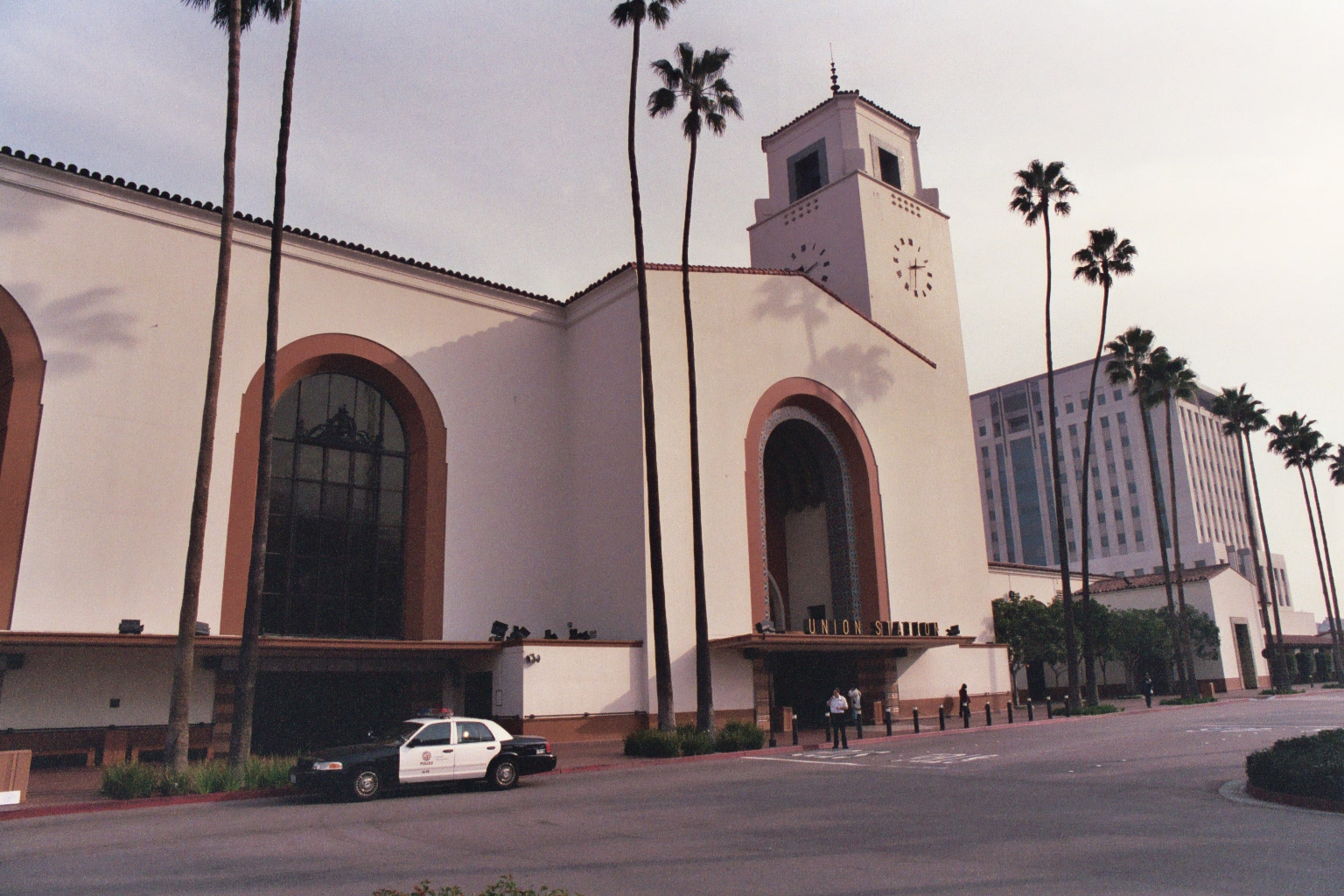
The Los Angeles City Council formally ordered Yaanga razed in 1847, after the American conquest of California. The location was needed. The city was growing. What had been the largest Tongva village in the region became first an open space, then a rail yard, then the site of Los Angeles Union Passenger Terminal — Union Station — which opened in 1939 after years of construction.
Building the station required moving enormous quantities of earth. What the construction crews moved included the archaeological record of centuries of Tongva occupation: tools, structures, refuse deposits, burial sites. Much of this material was not systematically documented. The protocols that govern archaeological discovery on construction sites today did not exist then, or existed only in early form. What was found was largely disregarded. What was disregarded was irreplaceable.
Memory, Acknowledgment, and What Remains
The Tongva — sometimes called the Gabrielino after the mission — have maintained their identity and cultural knowledge through two centuries of dispossession. Descendant communities have worked to document Yaanga's location and significance, to ensure that the history of the village is not simply absorbed into the history of the station that replaced it.
Union Station is now a landmark building in its own right, a stunning example of Mission Revival architecture that anchors the eastern end of downtown Los Angeles. The daily flow of travelers through its halls has no awareness, typically, of what the ground beneath the station holds. But awareness has been growing. Official land acknowledgments in Los Angeles increasingly name the Tongva as the original inhabitants of the region. The place that was Yaanga is still there, in some sense — compressed, buried, built over — but not entirely erased.
From the Air
The site of Yaanga corresponds roughly to the location of Los Angeles Union Station, at the eastern edge of downtown Los Angeles near the Los Angeles River. The station is visible from the air as a large complex just east of the downtown skyscraper cluster. Los Angeles International Airport (KLAX) lies approximately 14 miles to the southwest. The Los Angeles River, which the Tongva called Paayme Paxaayt, runs just east of the station.