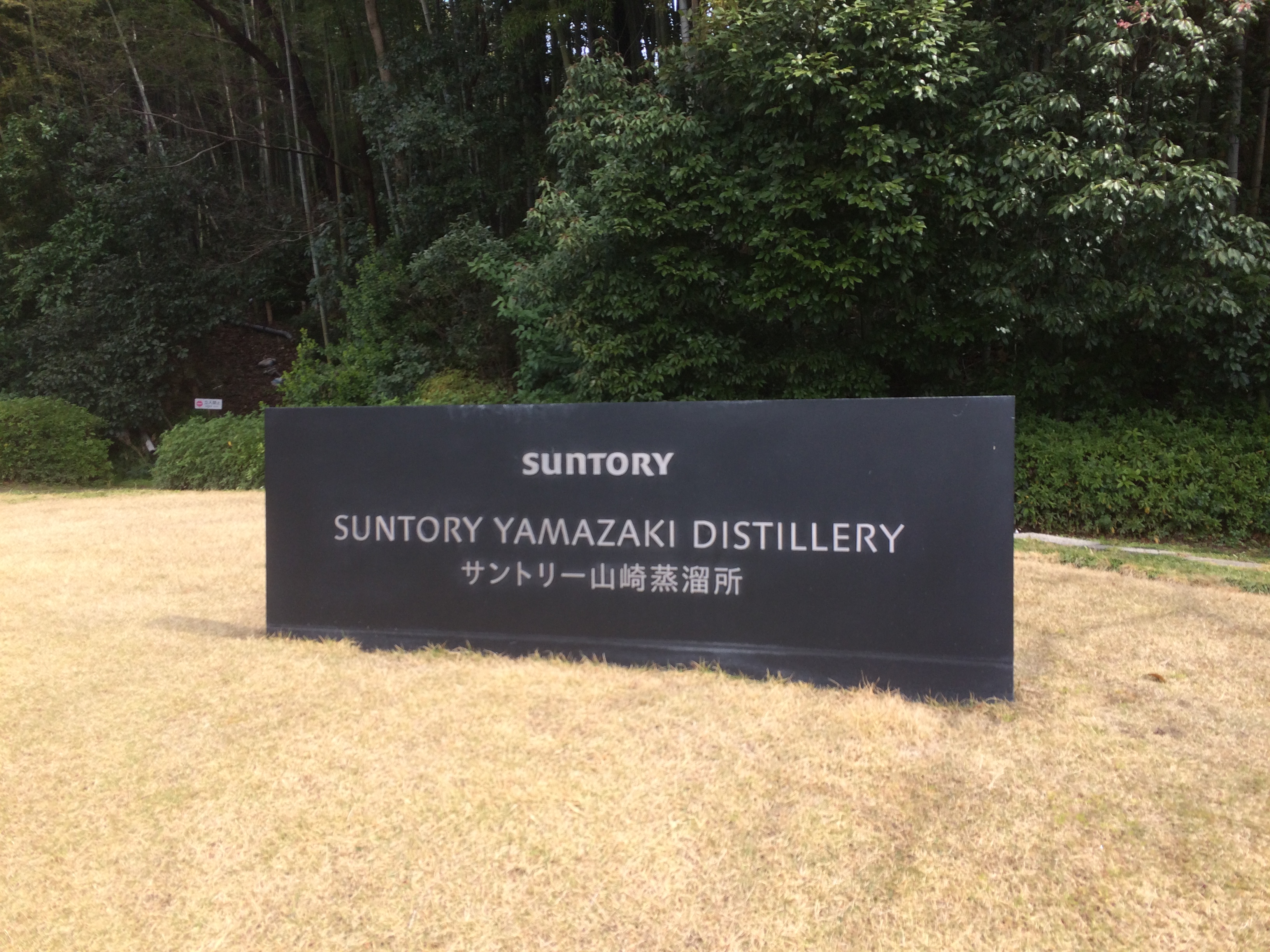
Yamazaki Distillery
Shinjiro Torii searched all over Japan for the right water. He tested rivers, springs, and wells, looking for the purity and softness that would let grain and yeast speak for themselves. He found it in Yamazaki, a valley between Kyoto and Osaka where the Katsura, Uji, and Kizu rivers converge. The water there had been famous for centuries -- the legendary tea master Sen no Rikyu had chosen the same spot to build his most celebrated tea house in 1582, drawn by the same pristine source. In 1923, Torii opened the Yamazaki Distillery on those banks, founding not just a company but an entire tradition: Japanese whisky.
A Sake Brewer's Son in Scotland
Torii had the vision, but he needed someone who understood Scotch whisky from the inside. He found Masataka Taketsuru, a young man from a sake-brewing family whose lineage in fermentation stretched back to 1733. In 1918, Taketsuru had traveled to Scotland to study at the University of Glasgow and apprentice at distilleries, learning the art of mashing, fermenting, and aging single malt. He returned to Japan in 1920 with a Scottish wife -- Jessie Roberta "Rita" Cowan -- and an encyclopedic knowledge of Scotch production. Torii appointed him factory director of Yamazaki in 1924. Together, they produced Japan's first whisky in 1929, sold under the Shirofuda (White Label) brand. It was too smoky for the Japanese palate, and sales were poor. But the years of aging that followed allowed Suntory to develop lighter, more refined blends, culminating in the acclaimed Kakubin in 1937.
Two Paths from One Valley
The partnership between Torii and Taketsuru did not last. The two men disagreed about the future direction of Japanese whisky -- Torii wanted to craft a spirit suited to Japanese tastes, while Taketsuru yearned to replicate the Scottish style as faithfully as possible. In 1934, Taketsuru left to found his own company in Hokkaido, eventually named Nikka Whisky Distilling. The split proved to be a gift to the industry. From one shared beginning at Yamazaki, two rival houses emerged, each pushing the other toward excellence. Suntory continued to refine its Yamazaki single malts, while Nikka developed its own celebrated expressions further north. Japanese whisky became a tradition with two founding fathers, both of whose legacies trace back to the same valley.
The World Takes Notice
For decades, Japanese whisky was largely unknown outside Asia. That changed in the early 2000s as international competitions began recognizing what the Yamazaki valley had been producing. The Yamazaki 18-Year-Old earned six consecutive double gold medals at the San Francisco World Spirits Competition between 2008 and 2013. The Yamazaki 25-Year-Old was named Best Japanese Single Malt at the 2013 World Whisky Awards. Then came the headline that stunned the Scotch world: Jim Murray's Whisky Bible 2015 awarded the Yamazaki Single Malt Sherry Cask 2013 the title of World Whisky of the Year. A Japanese distillery, barely a century old, had beaten centuries of Scottish tradition at its own game. Demand surged so dramatically that many age-statement bottlings became nearly impossible to find.
The Whisky Library
Today, visitors to the Yamazaki Distillery walk through the same humid, misty valley that Torii first surveyed more than a hundred years ago. The climate -- warm summers, cool winters, and perpetual moisture from the converging rivers -- remains essential to the aging process, allowing the whisky to breathe and develop complexity inside wooden barrels of Mizunara, the prized Japanese oak. Inside the distillery complex, the Whisky Library displays 7,000 bottles of unblended malt whisky, a living archive of every experiment and expression the distillery has produced. Wooden barrels line the aging warehouses, and the air carries the faint sweetness of evaporating spirit -- the so-called angel's share. It is a place where time, water, and grain converge, just as the three rivers do outside.
From the Air
Yamazaki Distillery is located at 34.893N, 135.675E in the valley where the Katsura, Uji, and Kizu rivers converge between Kyoto and Osaka. The river confluence is visible from the air as a distinctive geographic feature. The distillery grounds include low industrial buildings and barrel warehouses nestled among forested hills. Nearest airports are Osaka International/Itami (RJOO, approximately 18 km southeast) and Kansai International (RJBB, approximately 60 km south). Best viewed at 3,000-5,000 feet AGL. The surrounding valley terrain and river system provide clear visual navigation references.