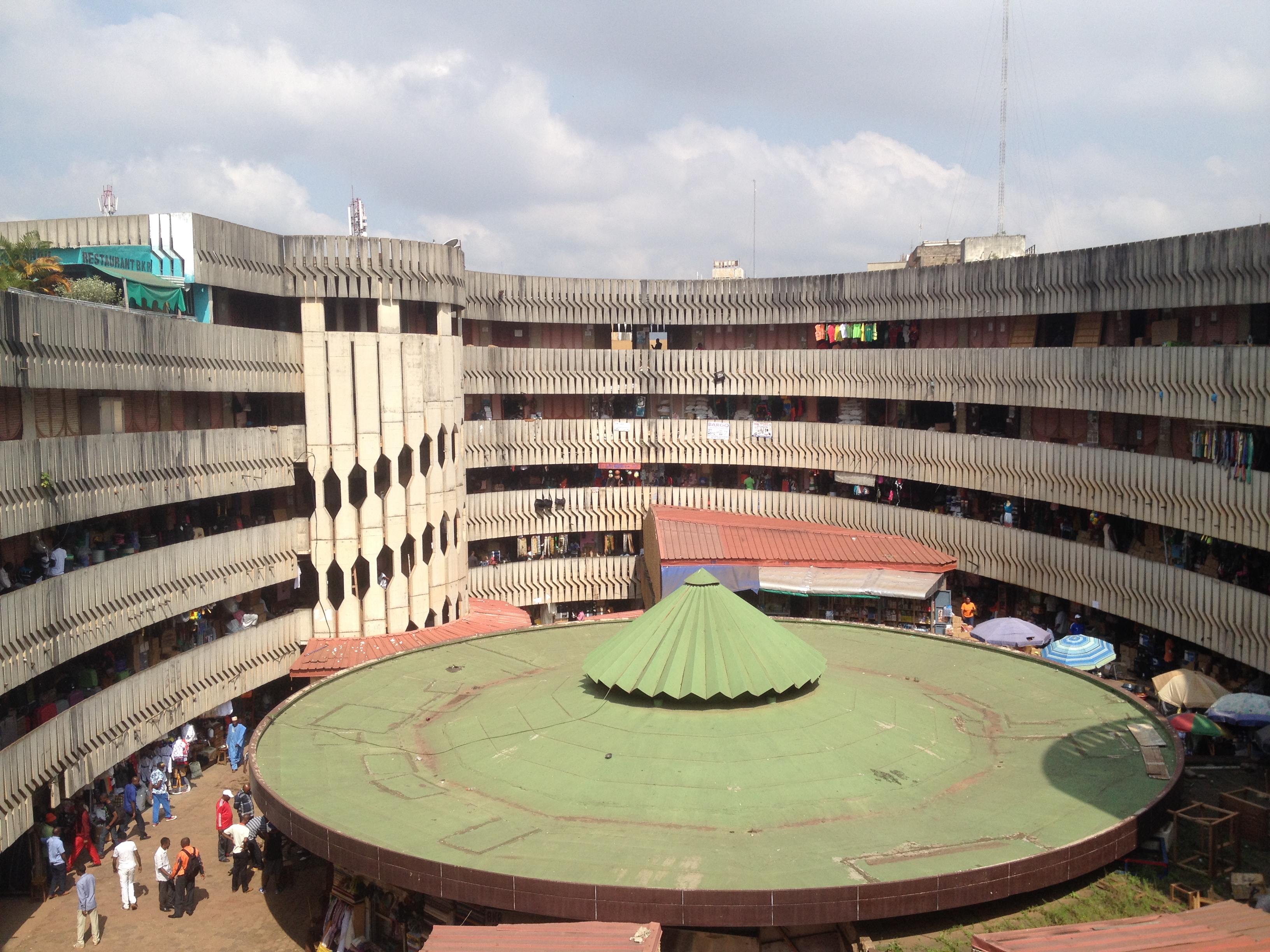
Yaoundé
Most streets in Yaounde have no names. Locals navigate by landmarks, roundabouts, and the quartier you happen to be in -- and they expect you to do the same. It is a city that refuses to be pinned down on a map, even as it serves as the political nerve center of Cameroon, home to the presidential palace, the national ministries, and the Bank of Central African States. Founded in 1889 as a German ivory trading post by the explorer Richard Kund, Yaounde sits at roughly 700 meters above sea level on the homeland of the Ewondo and Eton peoples, draped across seven hills that give the city its nickname and its character.
An Ivory Post Becomes a Capital
Kund established the trading post, and within a few years a German military garrison followed. Yaounde was an important colonial foothold until World War I, when Belgian troops invaded and ended German rule. After the war, the city became the capital of French Cameroon, and the shift from military outpost to administrative center changed its character permanently. Civilian institutions replaced the garrison. In 1939, the city held just 9,000 people. Two decades later, when French and British Cameroon merged into an independent nation, the population had grown tenfold. That trajectory has not slowed. Today Yaounde is home to roughly three million people drawn from every corner of the country. The main artery, called the axe presidentielle, runs from the presidential palace in Etoudi to the airport -- a straight line of power that defines the city's geography as much as its politics.
Seven Hills, A Thousand Quartiers
Yaounde sprawls across its hills in a patchwork of neighborhoods with distinct identities. Bastos, in the northwest, is the upscale quarter where embassies cluster and the palace-like home of Bernard Fokou, one of the country's richest men, rises above the residential streets. La Briquetterie -- La Brique to locals -- is a centrally located Muslim quarter known for its barbecue food and tailors, though it carries a rough reputation. Camp SIC Hippodrome occupies a central hill and doubles as the banking district. Mokolo, to the east, is industrial and chaotic, anchored by the Marche Mokolo, one of the city's great markets. And Omnisports, also called Mfandena, sits on a hill in the northeast where the Ahmadou-Ahidjo football stadium crowns the summit. Downtown itself is compact -- a cluster of high-rises along Boulevard du 20 mai and the Quartier des ministeres, flanked by the Hilton Hotel and the BEAC building. Beyond that core, the city dissolves into a seemingly endless expanse of small houses where businesses and homes share the same unpaved roads.
The Yellow Tide
Getting around Yaounde means understanding its taxis. The yellow shared cabs are everywhere, slowing down as they pass, waiting for you to shout your destination. There are no meters. A standard ride costs about 250 CFA francs, though you can try calling "cent francs" for short hops, and saying "depot" if you want the cab to yourself -- expect to pay around 1,000 francs for that luxury. Drivers pack up to six passengers in a car meant for four. If a taxi does not stop, it is probably already hired exclusively. Beyond taxis, the city bus system runs 13 lines radiating from the center, paid for with magnetic tap cards. Motorbike taxis handle the outskirts, though they are restricted to their own districts and their riders drive with a fearlessness that most passengers would prefer not to share. Walking requires constant vigilance: potholes, missing manhole covers, and vendors who have colonized the sidewalks with their merchandise all compete for the pedestrian's attention.
Markets and Monuments
Yaounde is not built for tourism, and it makes no apologies for that fact. Its attractions are woven into the fabric of daily life rather than cordoned off behind ticket booths. The Marche Mokolo is enormous, loud, and unapologetically in-your-face -- a sensory overload of produce, textiles, and commerce. The central market downtown is smaller but equally alive. The Mvog Betsi Zoo keeps primates and lions alongside a children's playground. Mont Febe, at the city's edge, offers a golf course and views over the urban sprawl. Boulevard du 20 mai itself serves as a kind of open-air landmark corridor, stretching from the government buildings and the Hilton in the northwest to the Central Post Office and Telecommunications Building in the southeast. For a deeper cultural experience, the real treasures come by invitation: weddings, funerailles celebrated between December and March to honor the dead, and other ceremonies where food, music, and dance offer a window into Cameroonian life that no museum can replicate.
A City on Its Own Terms
Yaounde operates by its own logic, and visitors who accept that will find it far more rewarding than those who resist. Punctuality is approximate. Directions are relative. The roundabouts run backward by European standards -- cars entering have right-of-way, not cars already circling. Turning right on red is not just allowed but expected. When the president travels to or from the airport, the main road can close for hours. Most people speak French, though younger residents often know more English than they let on. The dry season runs December to March, and the altitude keeps temperatures mercifully below 30 degrees Celsius even though the city sits near the equator. Yaounde will not simplify itself for you, but it will surprise you -- with its hospitality, its energy, and its stubborn, hill-cradled beauty.
From the Air
Yaounde sits at 3.86°N, 11.52°E at approximately 700 meters elevation in central Cameroon. From the air, the city's seven hills are visible amid dense tropical vegetation. Yaounde Nsimalen International Airport (ICAO: FKYS) is the primary airport, located south of the city center. Douala International Airport (ICAO: FKKD) is roughly 200 km to the west and offers an alternate arrival point. The small Mfoundi River is visible winding through the city from north to south.