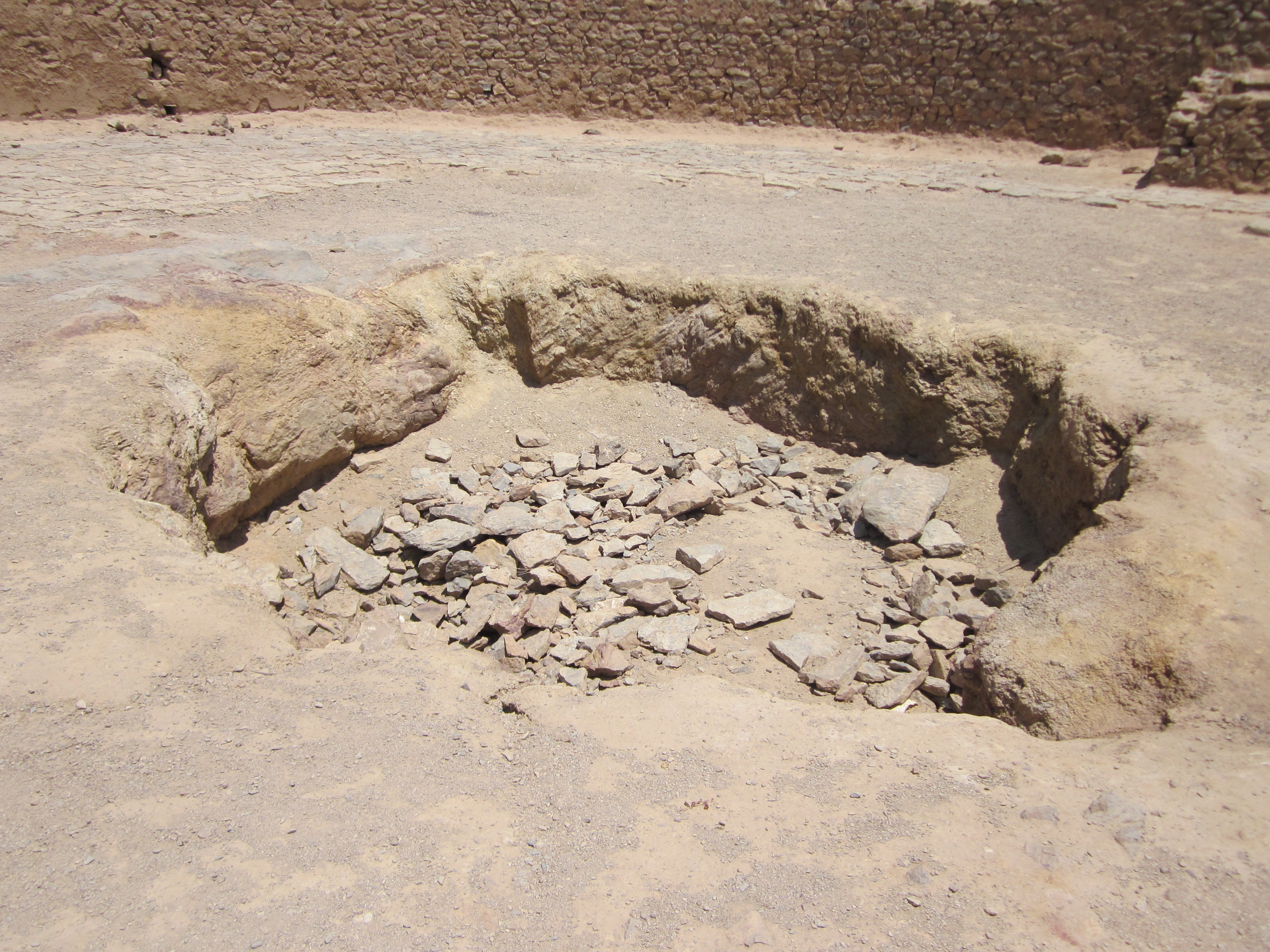
Yazd Tower of Silence
Fifteen kilometers southeast of Yazd, two stone towers rise from a barren ridge above the desert floor. They are empty now, and have been since 1974, when the city asked the Zoroastrian community to stop using them. Built in the 19th century, they are the most recent expression of a funerary tradition stretching back over two millennia: the dead were carried up the hillside, laid on the tower's open stone platform, and left for vultures to consume. The practice was not neglect. It was reverence. Zoroastrians considered earth, fire, and water sacred elements that must not be polluted by the contamination of death. Burial would defile the soil. Cremation would corrupt the flame. Submersion would poison the water. So they gave their dead to the sky, and the birds did the rest.
The Geometry of the Dead
A dakhma is a circular, raised structure, open to the air, with a carefully ordered interior. The Yazd tower follows the ancient pattern. Three concentric rings of stone beds radiate inward from the tower's rim. Men were placed in the outermost ring, women in the middle, and children in the innermost circle. The bodies were arranged with feet pointing toward the center, where a central pit called an ostudan collected the bones after vultures had stripped the flesh. Desert sun and wind bleached what the birds left behind. Once the bones were sufficiently purified, they were gathered and placed in ossuaries either near the tower or within it. The entire process was understood not as disposal but as transformation, a returning of the physical body to the natural cycle while the soul departed on its own journey.
A Faith Older Than Empire
The funerary traditions surrounding the towers of silence reach back to the Sassanid era of the 3rd through 7th centuries, though the beliefs that underpin them are older still. Zoroastrianism, founded by the prophet Zarathustra, is one of the world's oldest continuously practiced religions. Its central concepts of cosmic dualism, the battle between truth and falsehood, and the sacredness of natural elements shaped later Abrahamic traditions in ways scholars continue to trace. In Yazd, the Zoroastrian community has maintained its presence for over two thousand years, even as the city's population became predominantly Muslim after the Arab conquest of Persia. The fire temple in the city center, where a flame has burned continuously since approximately 470 AD, stands as testimony to that persistence. The towers of silence represent the other end of the faith's relationship with the physical world: not the eternal flame of devotion, but the deliberate dissolution of the body.
When the Towers Fell Silent
The practice of sky burial at the Yazd dakhmas continued into the 20th century, far longer than in most parts of Iran. But in 1974, growing concerns about public health and the city's expanding boundaries led authorities to ask Yazd's Zoroastrian community to cease using the towers. The community complied, shifting to cemetery burial with concrete-lined graves that prevent the body from touching the earth directly, a compromise that honors the spirit of the old prohibition if not its letter. The towers were left standing but unused, and over the decades they became one of Yazd's most visited sites. Tourists climb the hillside paths to peer into the empty stone rings, trying to reconcile the serenity of the desert setting with the starkness of the ritual it once hosted.
Desert Silence
Stand at the base of the towers today and the landscape explains the choice of location. The ridge sits well outside the city, elevated above the flat desert plain, exposed to constant wind and unobstructed sun. Vultures once circled above in numbers sufficient to clean a body within hours. The silence is profound: no traffic noise carries this far, and the wind across bare stone is the only sound. Small ancillary buildings at the base of the hill once served as preparation areas where mourners washed the body and said prayers before the pallbearers carried it up the narrow path. These structures still stand, low and roofless, adding to the sense of a place that has been respectfully abandoned rather than forgotten. The Yazd Tower of Silence is registered as Iranian national heritage site number 6312, an acknowledgment that even practices the modern world has set aside can hold historical and cultural significance worth preserving.
From the Air
Located at 31.824N, 54.357E, roughly 15 km southeast of central Yazd. The two circular stone towers are visible on a rocky ridge rising from the flat desert floor and are best spotted from 1,500-2,500 feet AGL. Yazd Shahid Sadooghi Airport (OIYY/AZD) is approximately 10 km northwest of the towers. The terrain is arid desert plateau at around 1,200 meters elevation. Look for the circular stone structures on the hilltops with low ruins at the base.