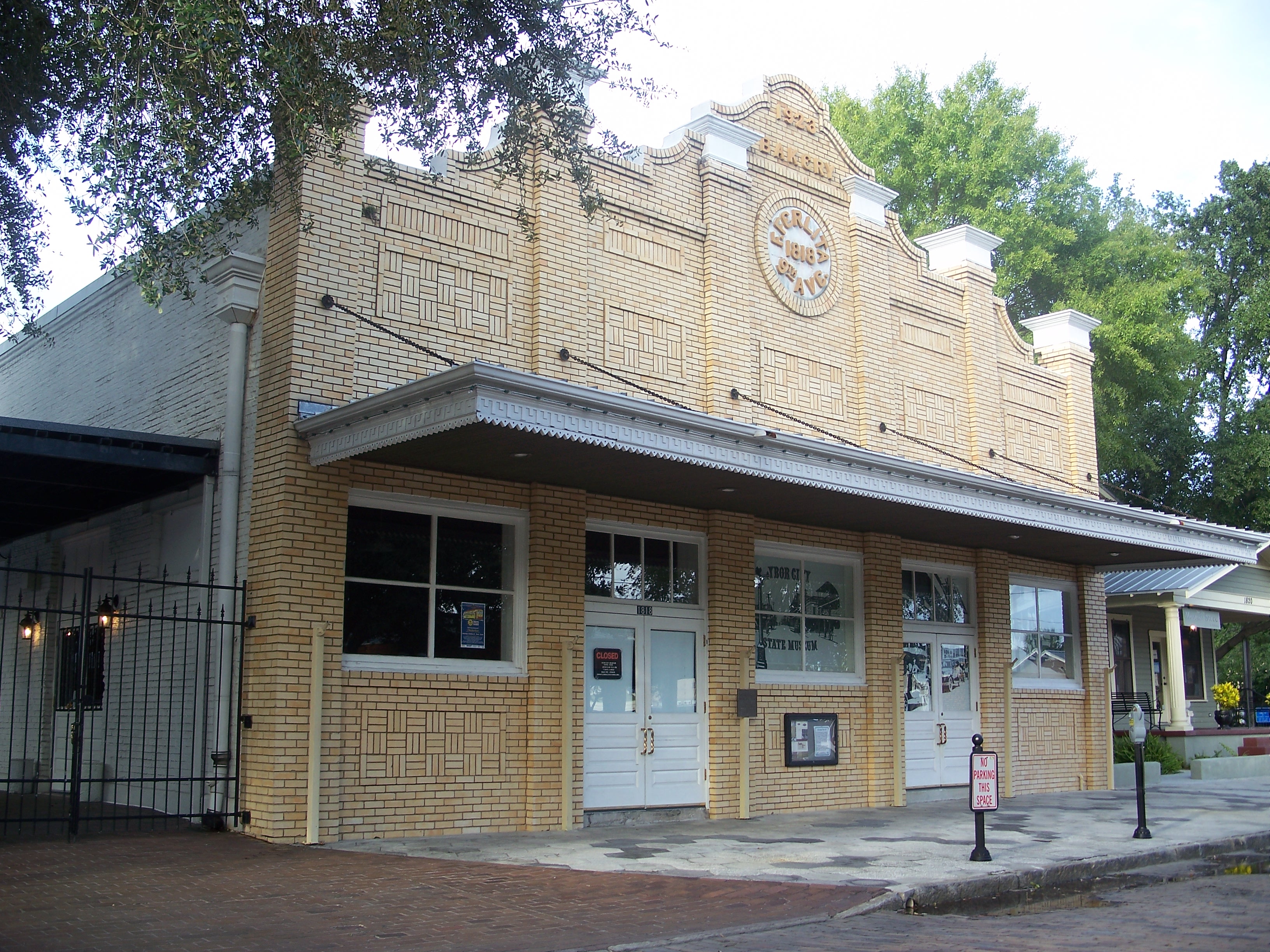
Ybor City Cigar Factories
In the 1890s, Ybor City was the cigar capital of the world. The Tampa neighborhood, founded by Spanish-born cigar manufacturer Vicente Martinez-Ybor, employed 10,000 workers who rolled over 700 million cigars annually. The workers - Cuban, Spanish, Italian, German, Jewish - created one of America's most diverse immigrant communities. What made Ybor City unique was the lectores: readers hired to stand on elevated platforms and read to the workers as they rolled cigars. The lectores read newspapers in the morning and novels in the afternoon - Dumas, Hugo, Cervantes, labor tracts, radical politics. The factory owners paid the lectores; the workers chose what they read. It was the original podcast, and it created a workforce unusually literate and politically engaged. The factories are mostly closed now, but the buildings remain - brick behemoths converted to restaurants, shops, and condos in a neighborhood that remembers its radical, aromatic past.
The Founder
Vicente Martinez-Ybor was born in Spain in 1818, learned cigar making in Cuba, and established factories in Key West before labor troubles and fire drove him to search for a new location. In 1885, he bought 40 acres of swampland northeast of Tampa and built a factory town. He recruited workers from Key West, Cuba, Spain, and Italy with promises of jobs, housing, and mutual aid societies. Within a decade, Ybor City had become the cigar capital of America, producing more cigars than anywhere else in the world. Ybor himself became wealthy and influential - Tampa's growth from village to city was largely his doing. He died in 1896, just as his creation reached its peak.
The Lectores
The lectores were unique to cigar factories. Because cigar rolling required skilled hands but not full concentration, workers pooled their pay to hire readers - usually one lector per 50-100 workers. The lector sat on an elevated platform called a 'tribuna' and read aloud for the entire workday. Mornings featured newspapers; afternoons brought novels and political works. The workers voted on what to read. When 'Les Misérables' proved popular, the workers named a cigar after it - 'Montecristo' honored another favorite. The lectores were often politically radical; they read Marx and anarchist tracts alongside Cervantes. Factory owners tolerated this because productivity increased when workers were entertained.
The Community
Ybor City was one of America's most diverse immigrant neighborhoods. Cubans formed the largest group, but significant Spanish, Italian, German, and Romanian Jewish populations also settled there. Each group established mutual aid societies - the Centro Español, Centro Asturiano, L'Unione Italiana, Círculo Cubano - that provided healthcare, insurance, social clubs, and ethnic solidarity. The societies built elaborate clubhouses, some still standing, that served as hospitals, theaters, and gathering places. Segregation ruled the South, but Ybor City's economic integration was unusual: Afro-Cubans worked alongside white Cubans, though they had separate mutual aid societies. The neighborhood was insular, proud, and politically active.
The Decline
The cigar industry collapsed in the 1930s due to machines, the Depression, and changing tastes. Machine-rolled cigars were cheaper; cigarettes were more popular. Factory after factory closed. The lectores were eliminated first - machines didn't need entertainment. By 1950, Ybor City's population had crashed. Urban renewal in the 1960s demolished much of the historic district. Only preservation efforts in the 1970s saved what remained. Today Ybor City is a nightlife district and tourist destination, its factories converted to restaurants and clubs. A few cigar shops still operate, rolling by hand for tourists. The tribuna platforms are gone; podcasts have replaced the lectores.
Visiting Ybor City
Ybor City is located just northeast of downtown Tampa, Florida. The historic district centers on Seventh Avenue (La Séptima), lined with restaurants, bars, and cigar shops. The Ybor City Museum State Park, in the restored Ferlita Bakery building, tells the neighborhood's history. The Centro Ybor entertainment complex occupies a former cigar factory. Several working cigar factories offer tours, including J.C. Newman Cigar Company, which has rolled cigars in Ybor since 1954. The neighborhood is accessible via the TECO streetcar from downtown Tampa. Tampa International Airport is 8 miles west. Visit during the day for history; visit at night for nightlife. The cigars are still excellent.
From the Air
Located at 27.96°N, 82.44°W in Tampa, Florida, just northeast of downtown. From altitude, Ybor City is visible as a grid of streets with distinctive brick factory buildings, adjacent to the port of Tampa and the main city center. The neighborhood is bounded by I-4 to the south and I-275 to the west. Tampa Bay is visible to the west and south. Tampa International Airport is 8 miles west. The terrain is flat coastal Florida - the urban grid gives way to bay waters and bridges. MacDill Air Force Base is visible on the peninsula to the south.