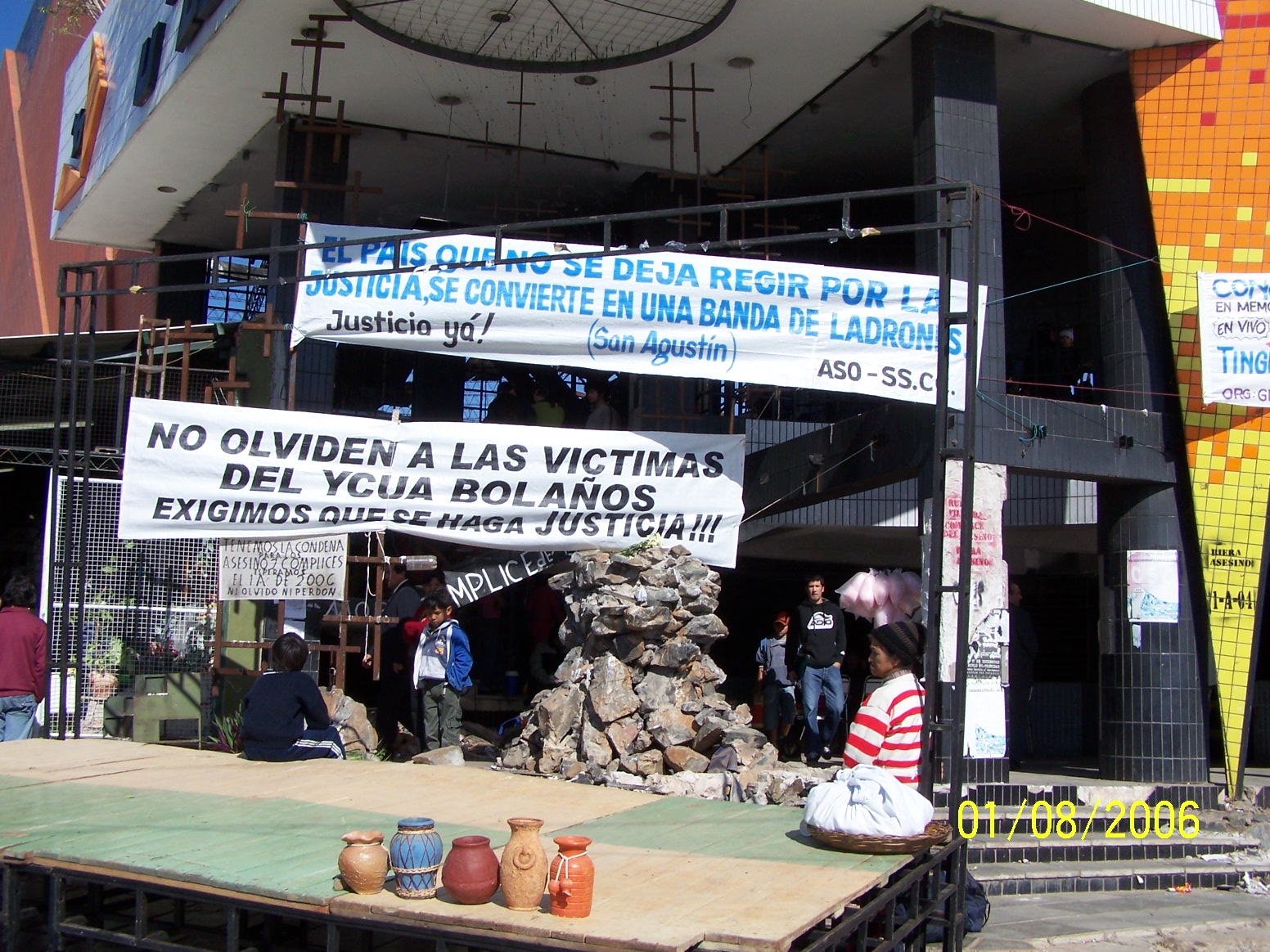
Ycuá Bolaños Supermarket Fire
It was a Sunday. Families were shopping, eating in the food court, going about the ordinary business of a weekend afternoon at the Ycuá Bolaños V supermarket in Asunción, Paraguay. When smoke began filling the building on August 1, 2004, the people inside did what anyone would do -- they ran for the exits. But the doors would not open. Survivors and volunteer firefighters later testified that the exits had been deliberately locked on orders from the owners, Juan Pío Paiva and his son Víctor Daniel, to prevent people from leaving with unpaid merchandise. More than 400 people died. Over 300 more were injured. The Ycuá Bolaños tragedy became one of the deadliest building fires in South American history, and a devastating testament to what happens when human life is valued less than inventory.
A Building Designed to Fail
The Ycuá Bolaños V supermarket had opened on December 7, 2001. The two-story structure housed an underground parking garage on its lower level and a sales area with a food court on the upper level, with two mezzanines containing administrative offices and additional food court seating. According to the defense attorney for the building's owner, the bakery and food court kitchen were not properly ventilated, allowing smoke and flammable gases to accumulate within the structure. The building lacked a fire sprinkler system. Its smoke detectors did not work. The fire is believed to have started from a faulty chimney in the barbecue section of the food court, which leaked hot gases into the ceiling cavity, where they ignited. Every safeguard that might have slowed the fire or warned the people inside had been neglected or was simply absent.
Locked Doors
What turned a building fire into a mass killing was the decision to lock the exits. Multiple survivors and volunteer firefighters described the same sequence: as the fire spread and smoke thickened, doors within the complex were closed on the direction of the ownership. The management denied the allegation, but the testimony was consistent and damning. People who had entered a supermarket to buy groceries found themselves sealed inside a burning building because someone calculated that the risk of stolen merchandise outweighed the urgency of letting hundreds of human beings escape. Families were trapped. Parents could not get their children out. The smoke and heat were relentless. More than 400 people -- shoppers, food court diners, employees -- lost their lives that afternoon.
Justice, Incomplete
Juan Pío Paiva, his son Víctor Daniel, and security guard Daniel Areco surrendered to police and were formally charged. The legal process was protracted. An initial December 2006 conviction for involuntary manslaughter carried a maximum penalty of just five years in prison. The prosecution had sought twenty-five years. A new court ruling on February 2, 2008, upgraded the charges to negligent homicide: Juan Pío Paiva received twelve years, Víctor Daniel received ten, and Areco received five. Shareholder Humberto Casaccia, also present when the fire began, was sentenced to two and a half years for endangering people in the workplace. The architect who designed and built the complex, Bernardo Ismachowiez, spent two years under house arrest for dangerous construction practices. Both Paivas were released on probation -- Víctor Daniel in 2013, Juan Pío in 2014 -- after an appeals court ruled they could serve the remainder of their sentences at liberty for good behavior.
What Remains
Víctor Daniel Paiva died in 2020 from complications of COVID-19. Juan Pío Paiva died in 2025 from diabetes. Neither served a full sentence for the deaths of more than 400 people. The Ycuá Bolaños fire forced a reckoning with building safety standards in Paraguay, but for the families who lost parents, children, and siblings on that August afternoon, no amount of regulatory reform could restore what was taken. The tragedy's core horror is its simplicity: a fire broke out, and the people in charge chose to protect their merchandise instead of the lives of their customers. It remains one of the deadliest commercial building fires in the world, and its lessons about the consequences of valuing property over people have lost none of their urgency.
From the Air
The Ycuá Bolaños supermarket site is at 25.26°S, 57.58°W in northeastern Asunción, in the Trinidad neighborhood. Silvio Pettirossi International Airport (ICAO: SGAS) is approximately 8 km to the east. The site is in a commercial district that is not readily distinguishable from the air. The broader Asunción metropolitan area extends along the east bank of the Paraguay River, with the historic center visible to the southwest.